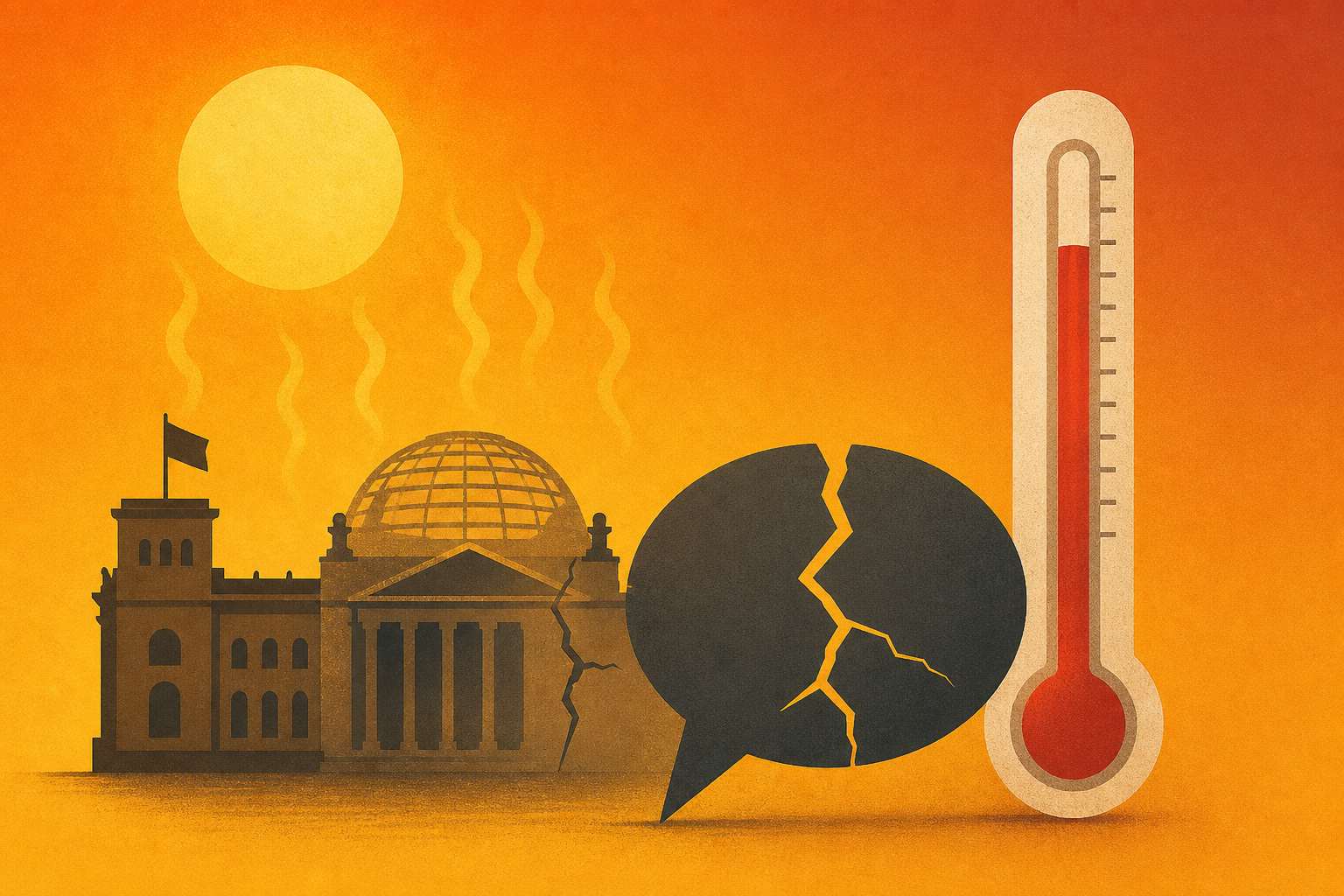
AI Generated Image
In Germany, political fallout from heat wave begins
DW.com • • world
Key Points:
- Germany experienced record-breaking temperatures exceeding 40°C (104°F) last weekend, creating life-threatening conditions for vulnerable populations in retirement homes and hospitals lacking air conditioning, partly due to the absence of national heat protection regulations.
- The extreme heat also disrupted infrastructure, halting trains and trams and causing road asphalt to crack, while experts warn that rising temperatures in Germany will continue as a result of ongoing climate change.
- Urban expansion has led to significant soil sealing, which exacerbates flooding risks and urban heat by preventing water absorption and evaporation, highlighting the need for long-term climate adaptation measures at the municipal and state levels.
- The federal government currently faces legal and financial constraints in leading climate adaptation efforts, though Environment Minister Carsten Schneider has indicated possible discussions to amend the Basic Law to enable greater federal involvement.
- Despite Germany's commitment to reduce greenhouse gas emissions by 65% by 2030, experts doubt the current government will meet this target, especially as it permits new oil and gas heating systems; opposition parties and environmental groups call for stronger climate actions and investments, including proposals like an ecological tax on billionaires.


