AI Generated Image
In June 1961, a UCLA graduate student's summer job at JPL was to solve a narrower trajectory problem, but on his own time he worked out gravity assist, the technique that now lets spacecraft borrow sp
Space Daily • • science
Key Points:
- In 1961, UCLA graduate student Michael Minovitch, working at the Jet Propulsion Laboratory, independently developed a method to calculate spacecraft trajectories using planetary gravity assists, enabling missions to visit multiple planets with significantly less fuel.
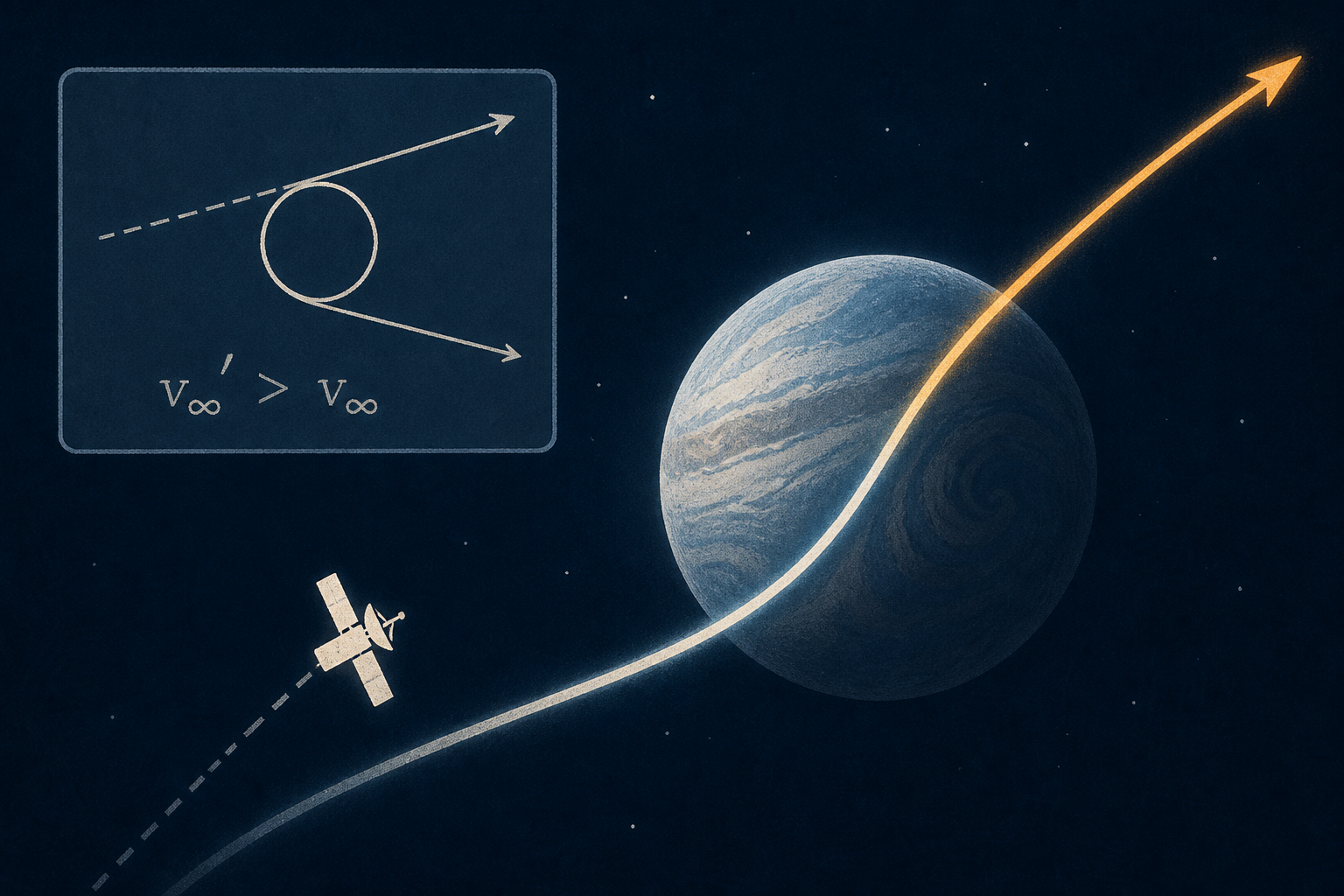
- Minovitch overcame the unsolvable three-body problem by numerically simulating thousands of trajectories on an early IBM 7090 computer, discovering that spacecraft can gain speed by "borrowing" momentum from moving planets during flybys without using onboard thrust.
- This gravity assist technique was first demonstrated in practice by Pioneer 10 and 11 in the 1970s, which used Jupiter’s gravity to accelerate and redirect their paths without rocket propulsion.
- Minovitch’s contribution sparked controversy and legal disputes over credit, which he ultimately lost, though the technique became foundational for many outer solar system missions, including Voyager 2’s 1977 planetary flybys.
- The story highlights how a groundbreaking scientific advancement emerged from a summer side project on primitive computing equipment, underscoring the unpredictable nature of innovation in space exploration.


