AI Image
Intrinsic physicochemical activity at microplastic-water interfaces
Nature • • general
Key Points:
- Various microplastic powders including PS, PE, PMMA, PVC, PET, and PP were sourced from commercial suppliers and characterized for surface purity before experiments, with aqueous solutions prepared using ultrapure water and HPLC-grade solvents.
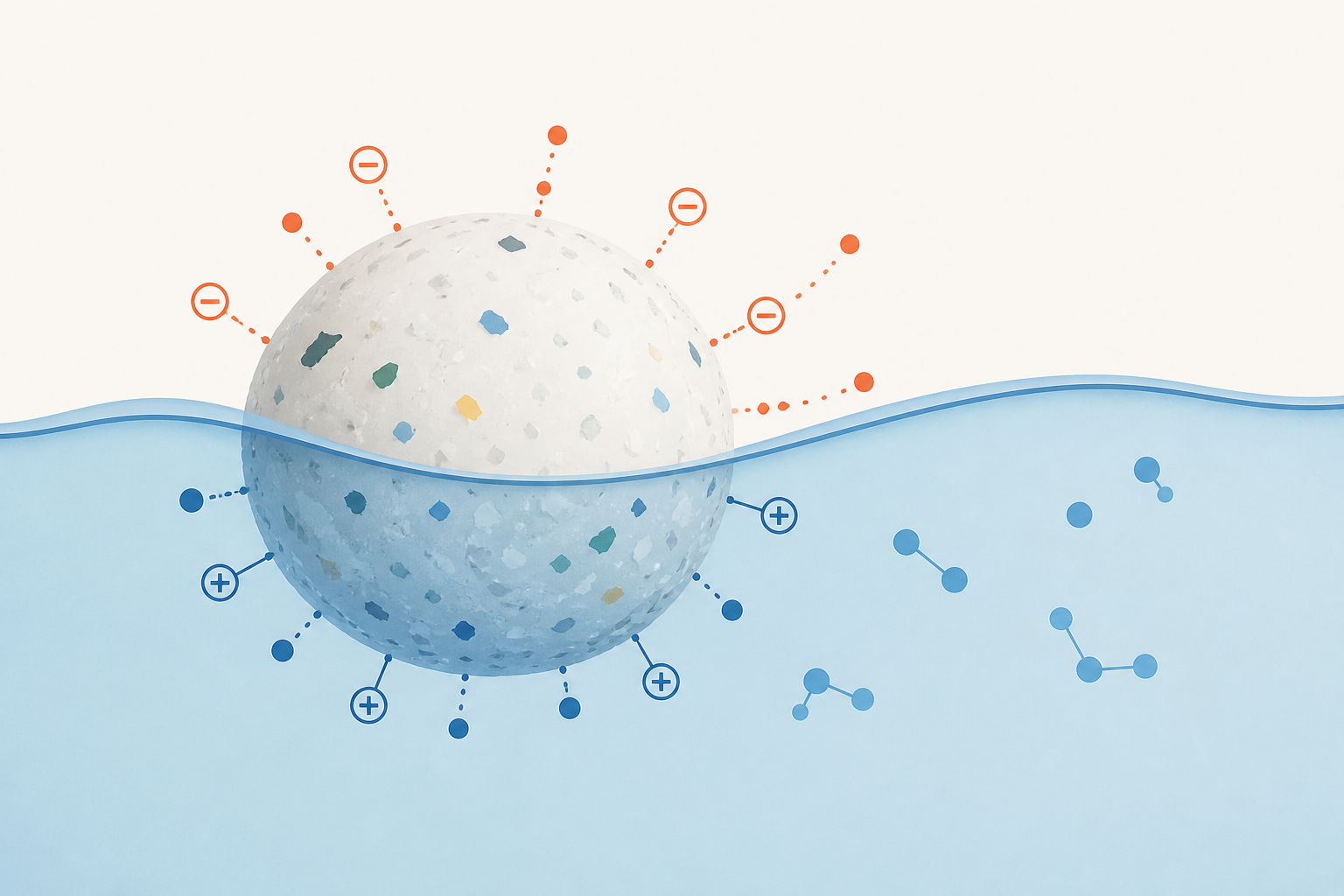
- Methyl orange degradation, ESR spectroscopy with DMPO radical trapping, and APF radical sensing assays were conducted to study radical formation and chemical reactivity at microplastic–water interfaces, employing confocal fluorescence and stimulated Raman scattering (SRS) imaging for spatial analysis.
- Surface localization of charged biomolecules (proteins, DNA) and protein aggregation on microplastic surfaces were investigated using fluorescence microscopy with specific dyes and conjugates, alongside ThT assays to detect amyloid fibril formation influenced by microplastic presence.
- Molecular dynamics simulations combined reactive (ReaxFF/C-GeM) and non-reactive (OPLS-AA/SPC/E) force fields to model polymer–water interfaces, with electrostatic embedding to accurately capture interfacial hydration, ion mobility, and polymer surface functional group distributions, validated against density functional theory benchmarks.
- Vertical ionization energy (VIE) calculations for hydroxide ions near microplastic surfaces were performed using quantum chemistry methods, showing that local solvation environments dominate ionization energies and that simulation approximations excluding direct polymer–OH− contacts do not significantly affect results.


