AI Image
James Webb Space Telescope helps detect the most distant Fast Radio Burst ever seen - and scientists are surprised by its source
Space • • general
Key Points:
- Astronomers have detected the most distant Fast Radio Burst (FRB) ever observed, named FRB 20240304B, originating from a galaxy about 11 billion light-years away, dating back to when the universe was roughly 3 billion years old.
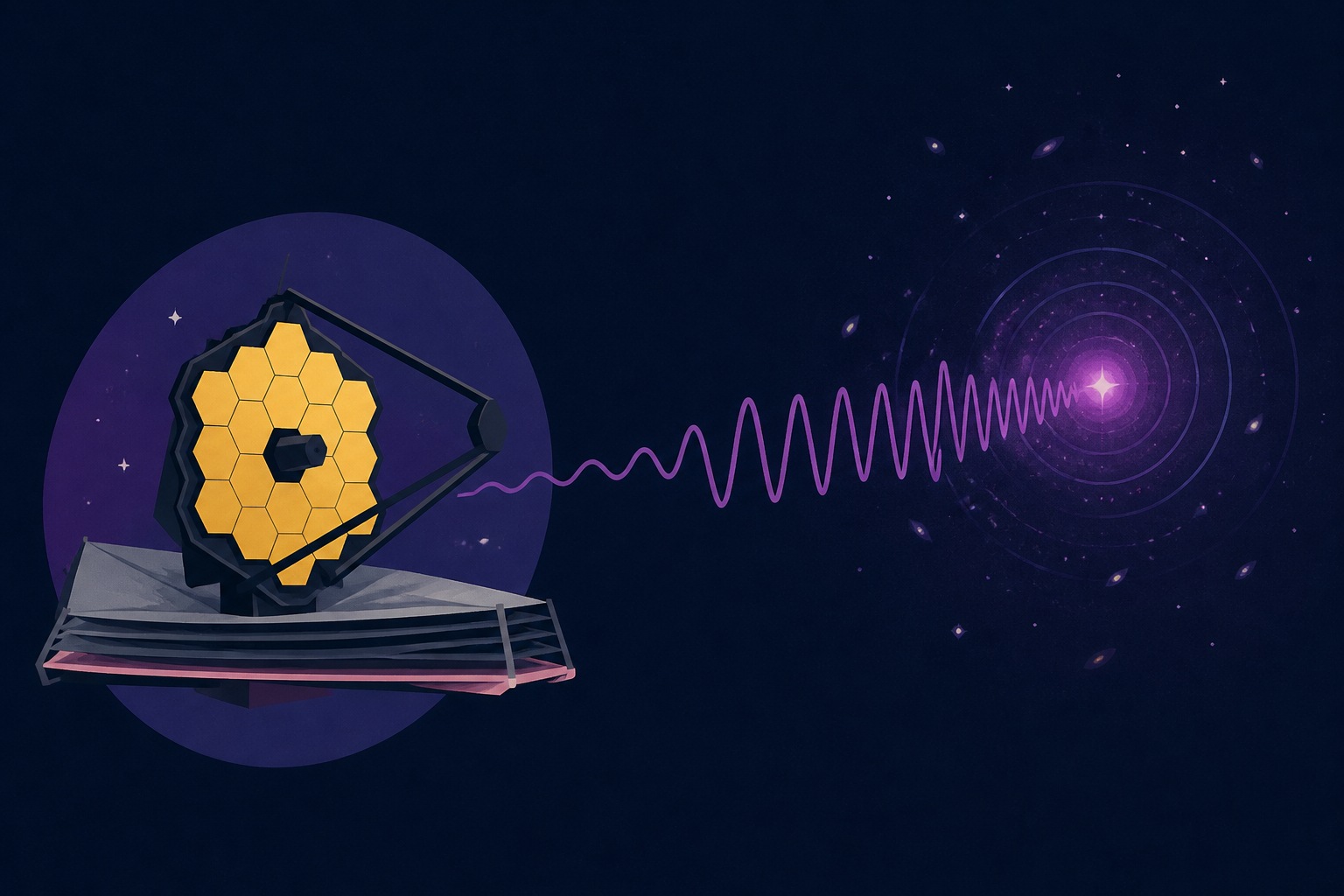
- This discovery, made using the MeerKAT radio telescope and the James Webb Space Telescope (JWST), more than doubles the distance of the previous FRB record and provides insights into 11 billion years of cosmic evolution.
- FRB 20240304B's host galaxy is small, metal-poor, and undergoing intense star formation, supporting theories that FRBs may originate from magnetars formed in starburst environments.
- FRBs serve as valuable cosmic probes by passing through intergalactic matter, allowing scientists to map the distribution of gas and dust in galaxies and better understand galaxy formation and evolution.
- The study highlights the powerful combination of JWST and radio telescopes in tracing FRBs to their origins, opening new possibilities for studying the early universe and the formation of the first stars and galaxies.


