AI Image
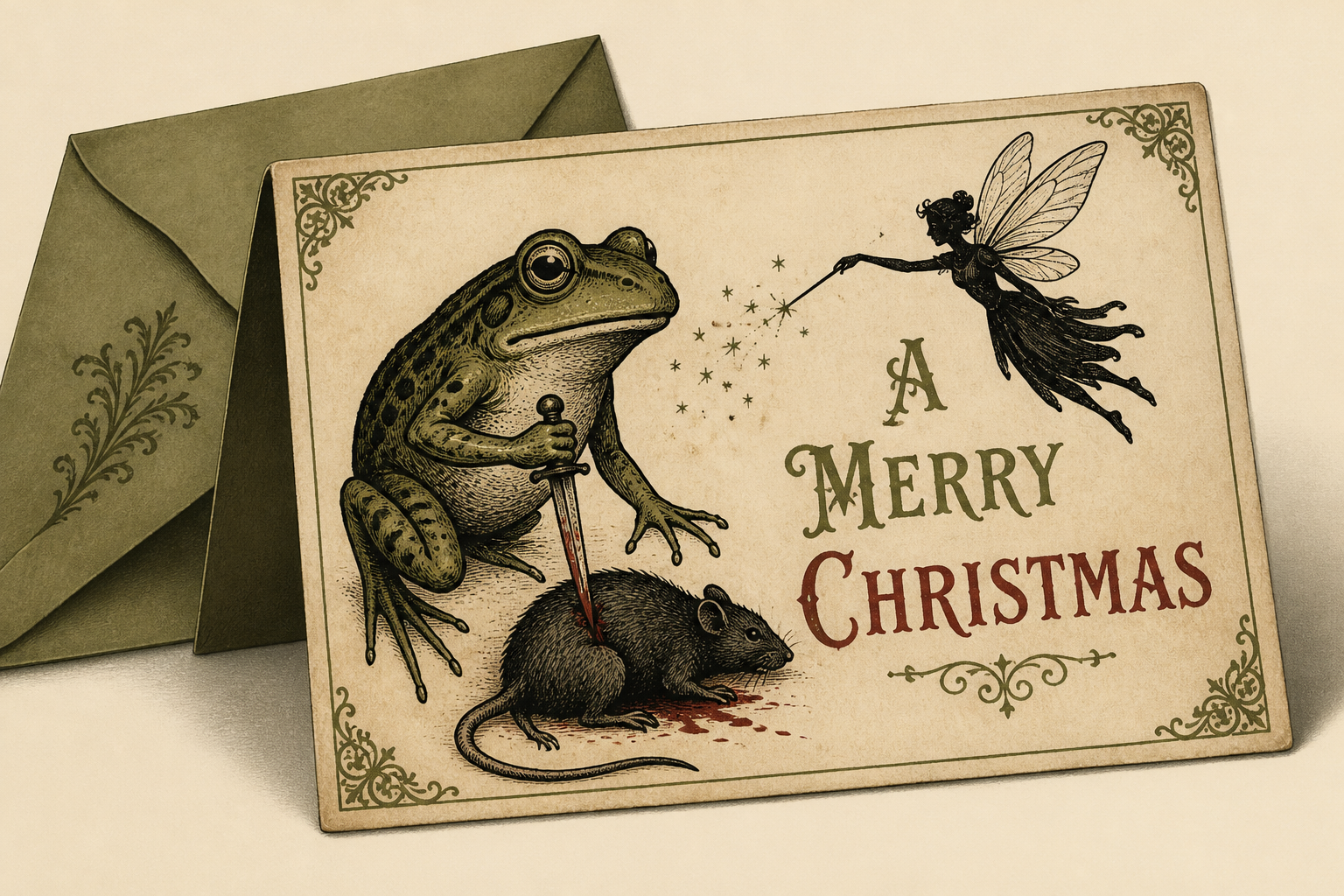
Killer frogs and rat-murdering fairies: the macabre cards Victorians sent at Christmas
The Guardian • • world
Key Points:
- Victorian Christmas cards often featured dark, macabre, and bizarre imagery, contrasting with the sentimental and warm festive scenes commonly associated with the era today.
- English Heritage has reproduced a collection of these historic cards, showcasing unusual designs such as dead animals and anthropomorphic figures engaged in violent or absurd acts, reflecting a darker, subversive side of Victorian holiday culture.
- The emergence of such twisted Christmas imagery coincided with the mid-19th century expansion of the card industry, driven by advances in printing and postal services, leading publishers to compete with eye-catching and sometimes unsettling illustrations.
- These cards also connect to older European winter traditions that acknowledge the season's darkness and themes of death and redemption, such as Saturnalia and the Welsh Mari Lwyd, highlighting a complex cultural backdrop to Victorian festive customs.
- Some images, like the dead robin or rat-murdering fairies, had symbolic or folkloric significance to Victorians, though their exact meanings and public reactions remain uncertain due to limited historical records.


