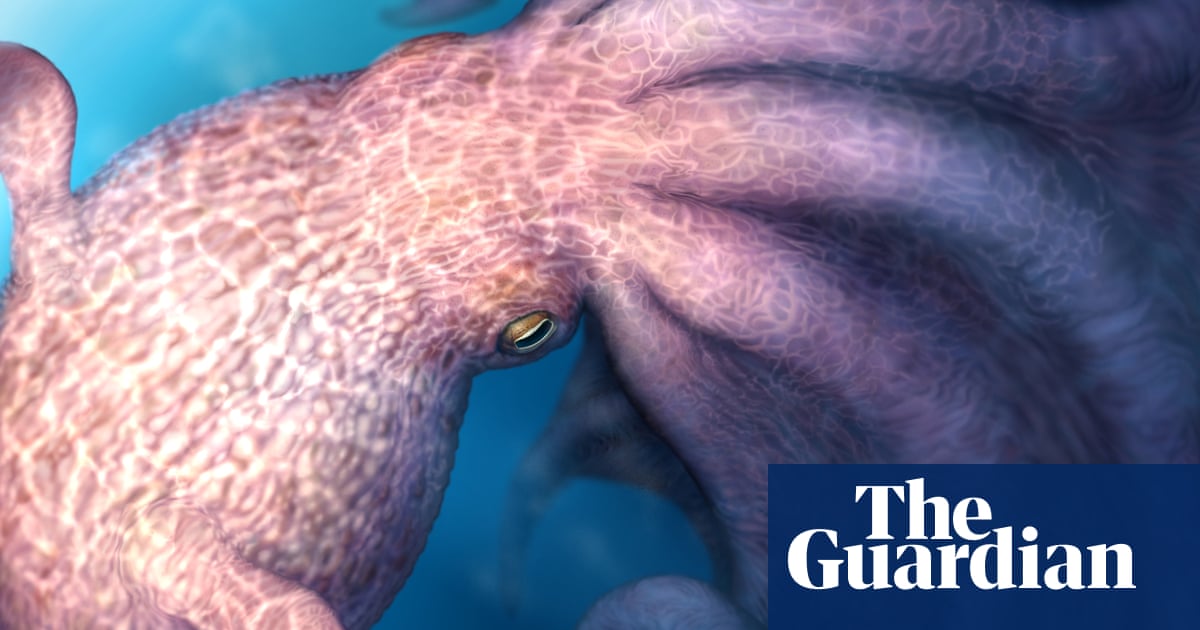
‘Kraken-like’ giant octopuses 100m years ago crunched bones of prey
The Guardian • • science
Key Points:
- Research reveals that giant "kraken-like" octopuses from the Cretaceous period reached up to 19 metres in length and were formidable predators, potentially rivaling apex marine reptiles like mosasaurs and plesiosaurs.
- Analysis of fossilized beaks, the only rigid part preserved, shows these ancient octopuses had powerful jaws capable of crushing bones and shells, indicating a diet that included hard-shelled prey and possibly large marine reptiles.
- The study reclassified 27 fossil beaks, previously thought to belong to vampire squids, as belonging to ancient octopus relatives Nanaimoteuthis, with one species, N. haggarti, possibly being the largest invertebrate on record.
- Wear patterns on the beaks suggest these octopuses used their arms to capture prey and their strong beaks to dismantle it, similar to modern octopuses, and exhibited lateralized behavior indicating arm preferences and sophisticated hunting strategies.
- Experts highlight the significance of these findings, which challenge the view that Cretaceous seas were dominated solely by vertebrate predators, showing that invertebrates also played a top predatory role.


