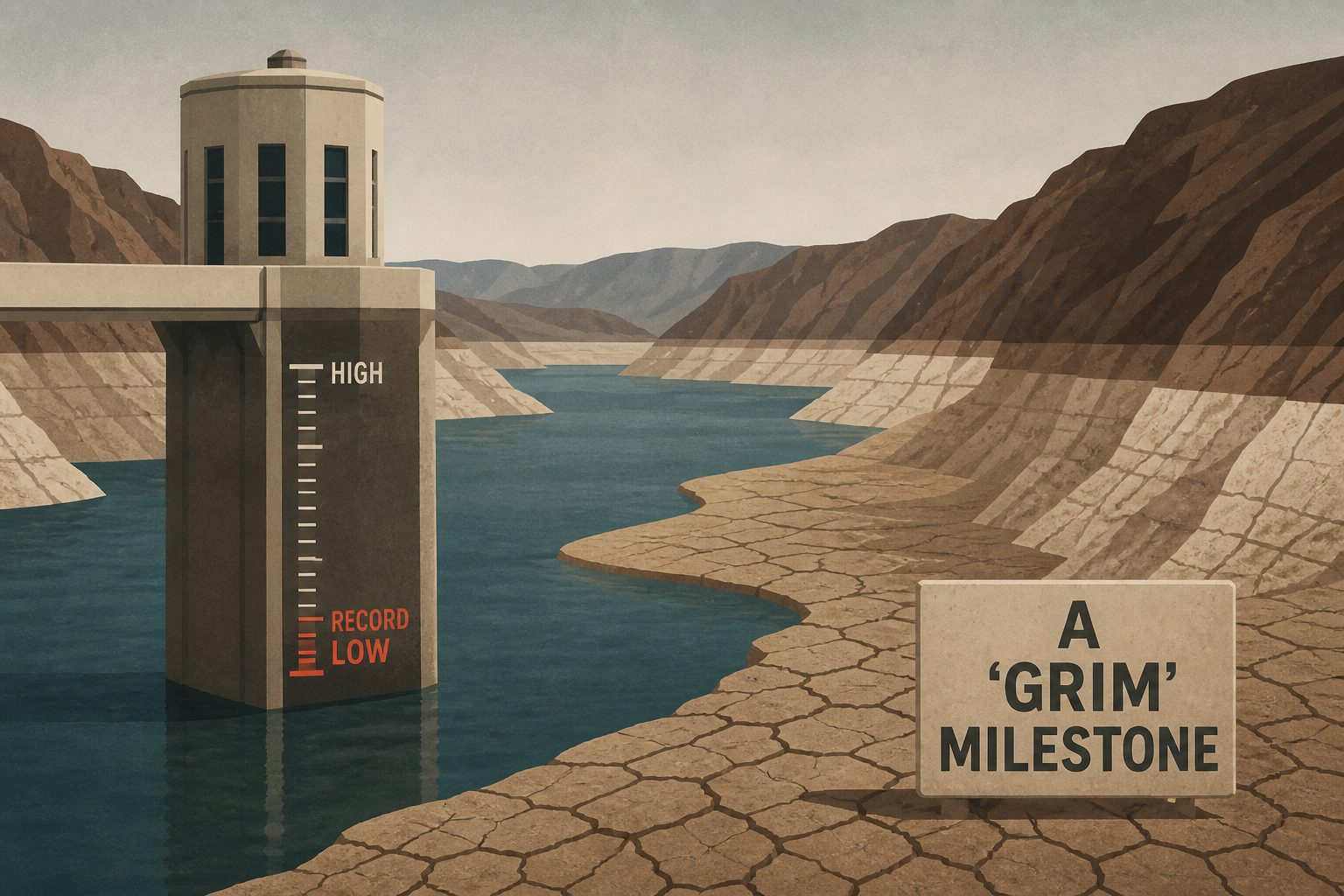
AI Generated Image
Lake Mead hits record-low water level, a 'grim' milestone
USA Today • • nation
Key Points:
- Lake Mead, the largest reservoir in the U.S., dropped to a record-low elevation of 1,040.5 feet on August 7, exacerbating the ongoing water crisis in the drought-affected Western states.
- The reservoir supplies water to about 25 million people and irrigates 5 million acres of farmland, but long-term drought and climate change have drastically reduced inflows from the Colorado River.
- Federal authorities have released a 10-year plan calling for significant water-use cuts in lower basin states like Arizona, California, and Nevada, sparking negotiations amid concerns over future shortages.
- Lake Powell, the Colorado River's second-largest reservoir, is also at historic lows and may reach its lowest level ever by early spring, increasing risks to the entire water system.
- Despite conservation efforts in places like Las Vegas, including reducing per capita water use by 58% and infrastructure upgrades, experts warn that without major water-use reductions across states and stakeholders, the future of Lake Mead and regional water security remains dire.


