AI Generated Image
Lake Mead, the Nation’s Largest Reservoir, Is Smaller Than Ever
The New York Times • • nation
Key Points:
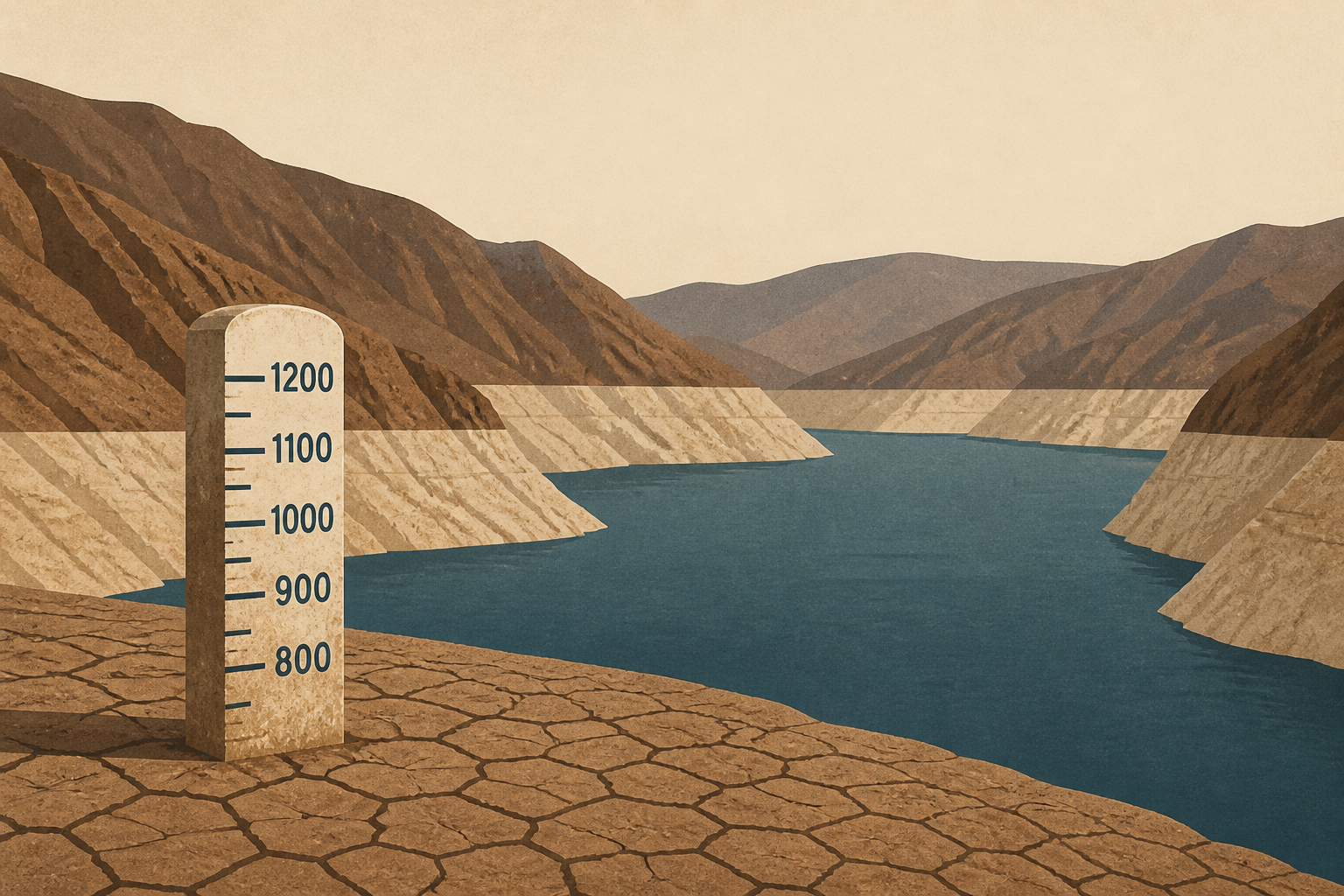
- Lake Mead, the largest reservoir in the U.S. and a crucial water source for over 25 million people in the Southwest, has reached its lowest recorded water levels amid a severe drought.
- The declining levels highlight the critical state of the Colorado River, which faces threats from rising temperatures and prolonged overuse, affecting seven states reliant on its water.
- Negotiations between the upper basin states (Colorado, New Mexico, Utah, Wyoming) and lower basin states (Arizona, California, Nevada) over water allocation have stalled, prompting federal intervention.
- The federal government, under the Trump administration, proposed a plan in July that could impose significant water cuts on lower basin states, with the Bureau of Reclamation expected to announce specific reduction mandates soon.
- Officials warn that Lake Mead’s record low is a "wake-up call," emphasizing the urgent need for long-term solutions to prevent further water scarcity in the region.


