AI Generated Image
Lunar eclipse set to transform night sky in August
The Boston Globe • • general
Key Points:
- August offers excellent night sky viewing opportunities, including the Perseid meteor shower peaking on August 12 with up to 100 shooting stars per hour, aided by a new moon providing dark skies.
- A total solar eclipse will occur on August 12, visible primarily in the Arctic, Greenland, Iceland, and northern Spain, marking the first mainland Europe total eclipse in 27 years; New England will see only a 14% partial eclipse requiring eye protection.
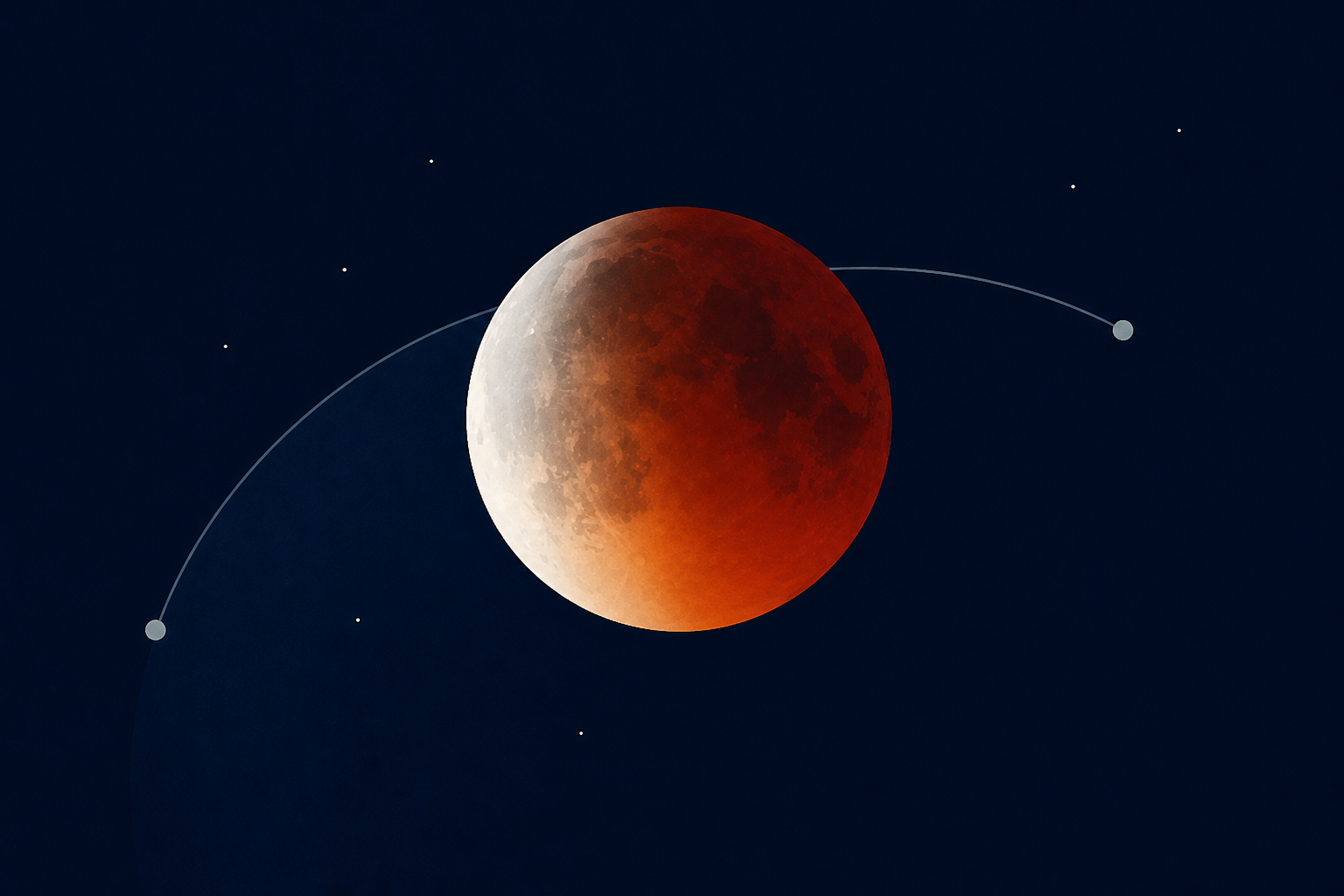
- On the night of August 27-28, a deep partial lunar eclipse will occur, with 96% of the moon covered by Earth's shadow, creating a "blood moon" effect coinciding with the Sturgeon Moon, August’s full moon.
- In late July, Venus dominates the evening sky, while Mars and Saturn are visible in the pre-dawn hours, with Saturn’s rings becoming visible as it rises earlier each night.
- Lesser meteor showers, the Southern Delta Aquariids and Alpha Capricornids, peak at the end of July but will be mostly obscured by the nearly full Buck Moon’s brightness.


