AI Generated Image
Magnetic dopants help quantum dots use light for chemical reactions
Phys.org • • science
Key Points:
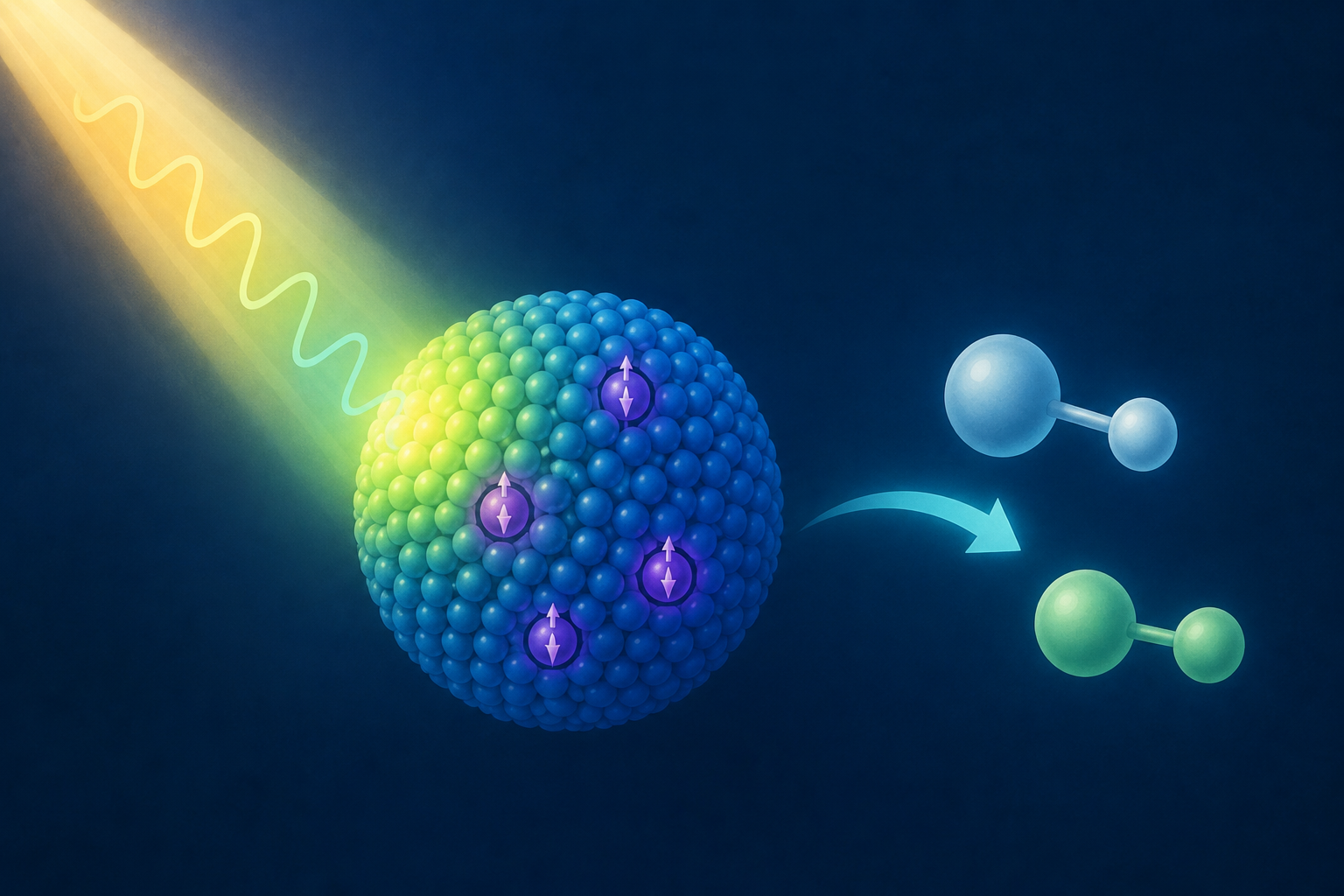
- Scientists at Los Alamos National Laboratory developed a quantum-dot mechanism using magnetic manganese dopants to capture hot-electron energy before it dissipates as heat, enabling efficient light-driven chemical reduction.
- Published in Nature Communications, the study demonstrates that manganese-doped quantum dots transfer electrons faster than undoped ones and can drive reduction even when traditional band-edge energetics are unfavorable.
- The team used femtosecond transient absorption spectroscopy to reveal a two-step ultrafast spin-exchange process where hot excitons transfer energy to manganese ions, which then drive charge separation and molecular reduction.
- This mechanism overcomes the rapid thermalization losses that typically limit hot-electron photochemistry, opening new possibilities for photocatalysis and light-driven technologies requiring highly reducing electrons.
- The findings introduce a new class of spin-engineered nanomaterials that exploit magnetic dopants to generate and preserve hot carriers for advanced photochemical transformations.


