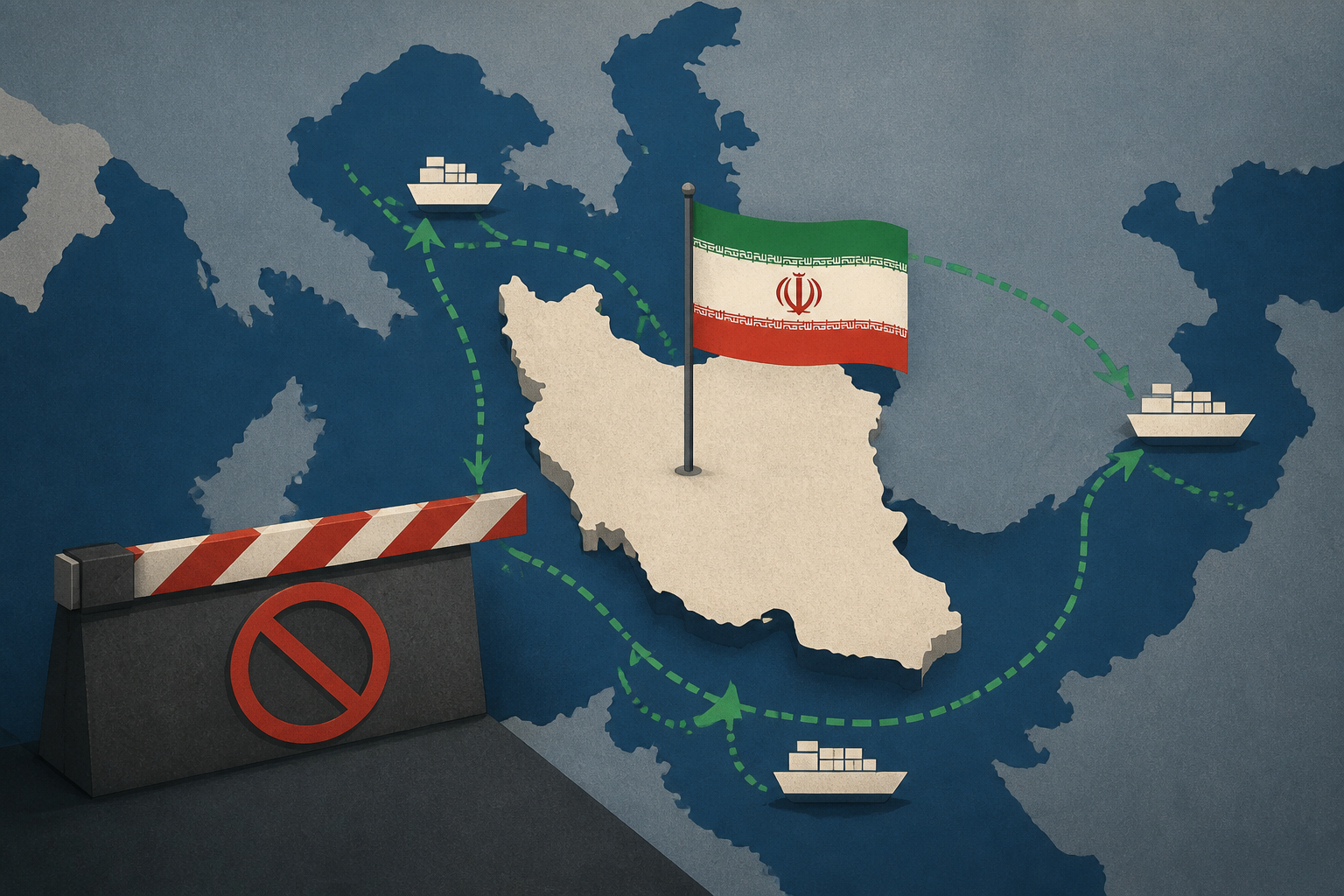
AI Generated Image
Map Shows How Iran Evades Trump’s Blockade Amid ‘Economic D-Day’ Threat
Newsweek • • world
Key Points:
- Iran is increasingly relying on its extensive land borders with seven neighboring countries to sustain trade and counteract the impact of a U.S. naval blockade that has limited its maritime commerce.
- Iraq, Turkey, and Pakistan are key partners providing vital overland trade routes, with Iraq being Iran's largest trading neighbor and Turkey serving as a crucial corridor connecting the Middle East to Europe.
- Other neighbors like Azerbaijan, Turkmenistan, Armenia, and Afghanistan play strategic roles in Iran's trade network, linking it to broader Eurasian transport corridors and providing access to markets less vulnerable to U.S. sanctions.
- Despite these efforts, experts acknowledge that overland routes cannot fully replace maritime trade's scale and efficiency, and Iran's economic resilience heavily depends on maintaining relations with major partners like China.
- The U.S. faces challenges in targeting Iran's trade through its neighbors without risking broader geopolitical conflicts, especially with China, which remains Iran's largest trading partner and a critical factor in its economic survival strategy.


