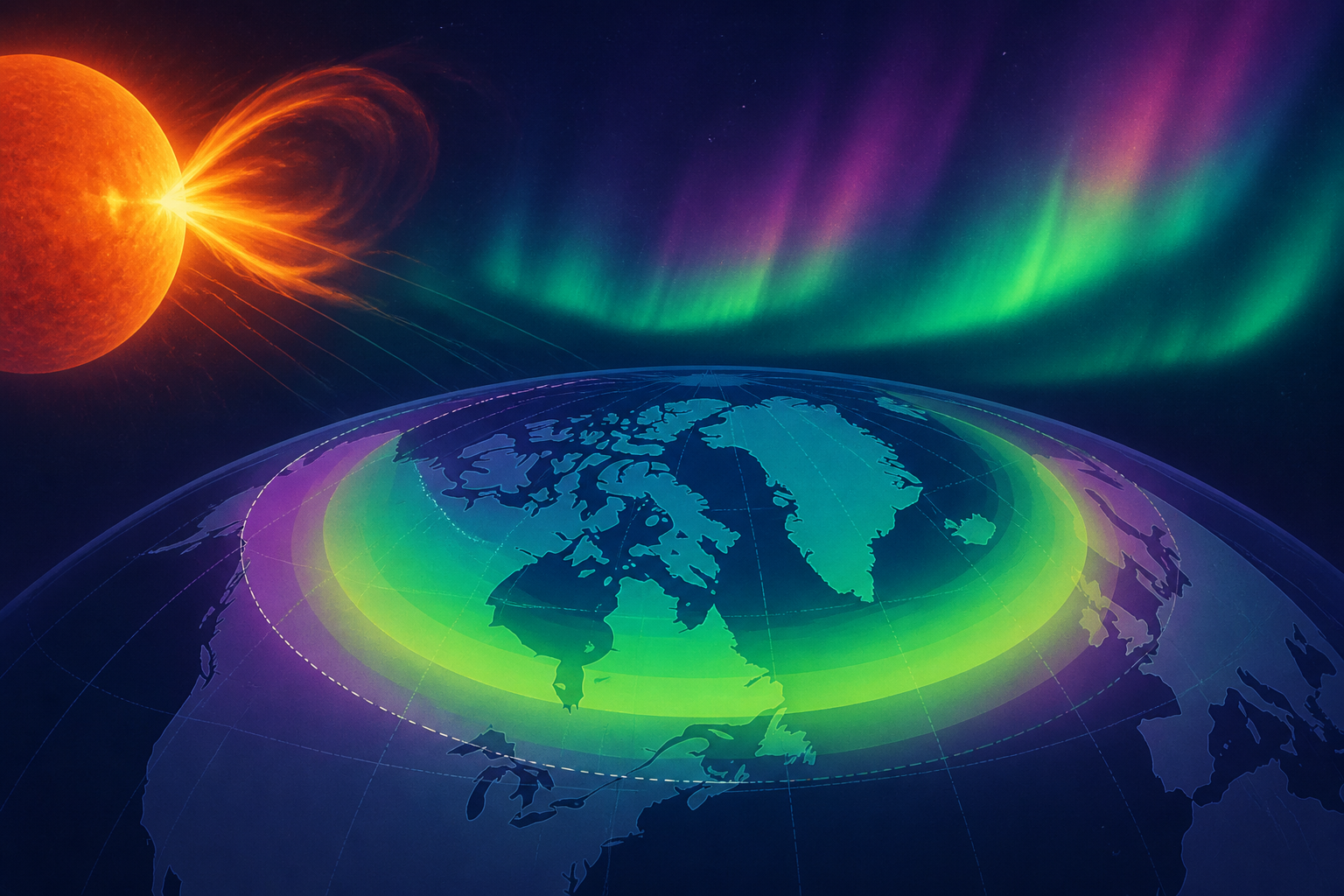
AI Generated Image
Map shows where Northern Lights could dazzle skies after solar flare
Yahoo • • science
Key Points:
- A powerful M6.9 solar flare and accompanying coronal mass ejection (CME) from sunspot 4513 on August 25 could trigger a moderate geomagnetic storm on Earth by August 27-28, potentially producing vivid Northern Lights in parts of the northern U.S.
- NOAA forecasts geomagnetic storm conditions ranging from minor (G1) to moderate (G2), with the Kp index possibly reaching 5.67, which could allow auroras to be visible as far south as New York and Idaho, especially in northern states.
- The Northern Lights occur when charged solar particles collide with Earth's atmosphere near the magnetic poles, and during stronger storms, the auroral oval expands southward, increasing visibility across Alaska, Canada, and northern U.S. states.
- The combined effects of the incoming CME and a high-speed solar wind stream expected to arrive around the same time may intensify geomagnetic activity and improve chances for aurora sightings, though clear, dark skies are necessary.
- Solar flares are intense bursts of radiation classified by intensity, with Tuesday's M-class flare being the second highest category, distinct from CMEs which are clouds of solar plasma that can disrupt Earth's magnetic environment.


