AI Generated Image
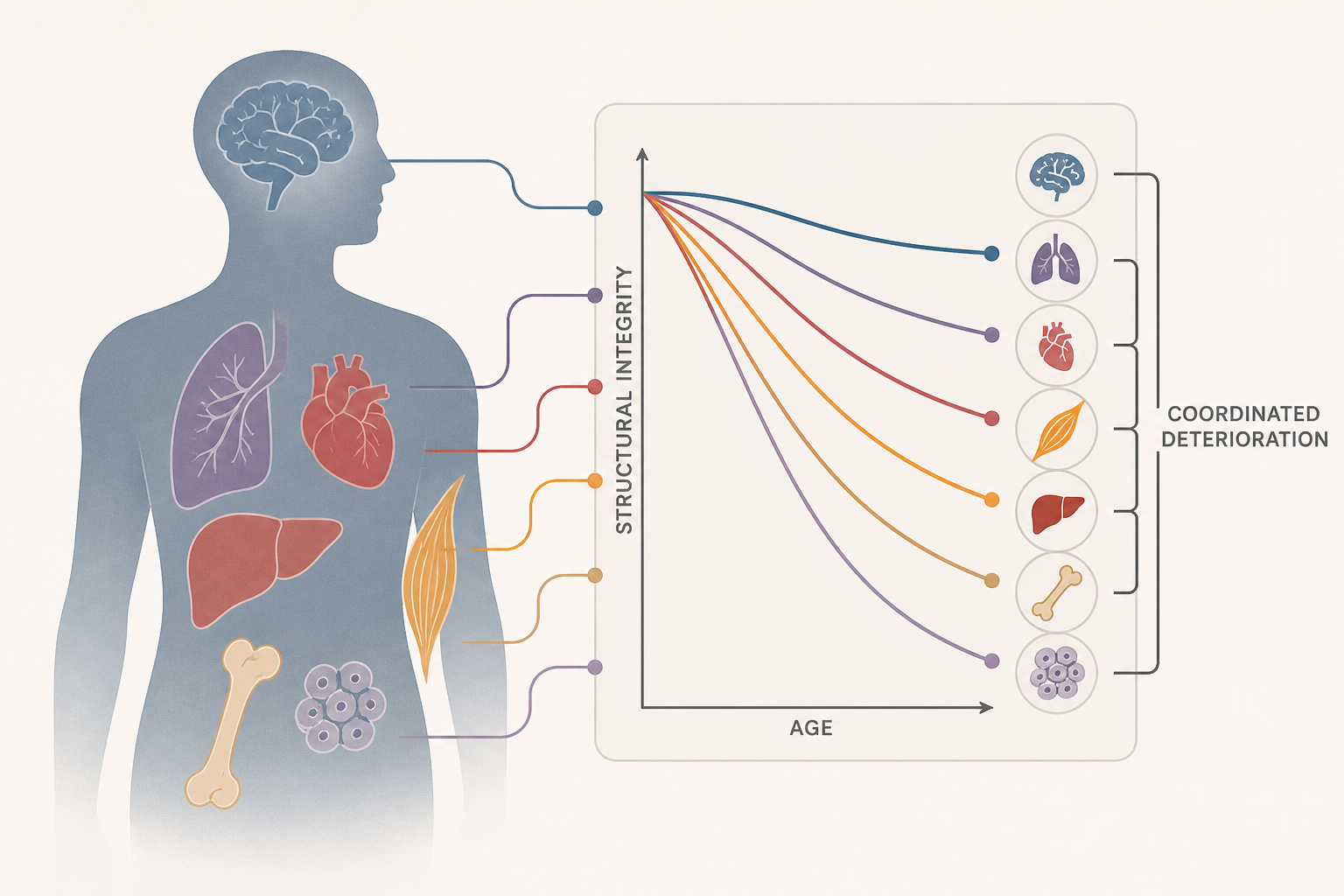
Mapping structural aging across human tissues reveals tissue-specific trajectories and coordinated deterioration
Nature • • health
Key Points:
- PathStAR is a computational framework developed to quantify tissue structural changes during aging using high-resolution histology images from the GTEx cohort, encompassing 970 nondiseased individuals across 40 tissue types and 25,306 biopsies.
- The pipeline involves three main steps: extracting morphological features from whole-slide images using a pretrained vision transformer (UNI), constructing tissue-specific structural aging trajectories by comparing consecutive age windows, and computing individual-level deviations from these population trajectories to identify accelerated or protected aging.
- Application of PathStAR revealed nonlinear aging patterns, exemplified by the ovary's bimodal structural aging peaks corresponding to fertility decline and menopause, which were not captured by molecular clocks trained on chronological age.
- Across 15 tissues with robust aging signals, three distinct temporal aging programs were identified: early-aging (e.g., vascular tissues aging in the 30s), late-aging (e.g., uterus and vagina aging in the 50s), and biphasic-aging (e.g., digestive and male reproductive organs showing two aging acceleration periods).
- Molecular analyses during accelerated structural aging (ASA) periods revealed a shared program of increased inflammation and decreased energy production, proliferation, and quality control pathways, with organ-specific vulnerabilities; genetic association studies linked variants in genes like SIRT6 to tissue-specific aging acceleration, highlighting tissue-selective aging mechanisms.


![Android Auto 17.6 update rolling out with redesigned logo [Gallery]](https://media-cdn.cashwalklabs.io/https%3A%2F%2Fs3.us-west-2.amazonaws.com%2Fimages.cashwalklabs.io%2F0_admin%2Fnews-ai-images%2F01a05db8-82ba-7268-b94e-0097aa064b94.webp?format=webp&w=120&h=80)


