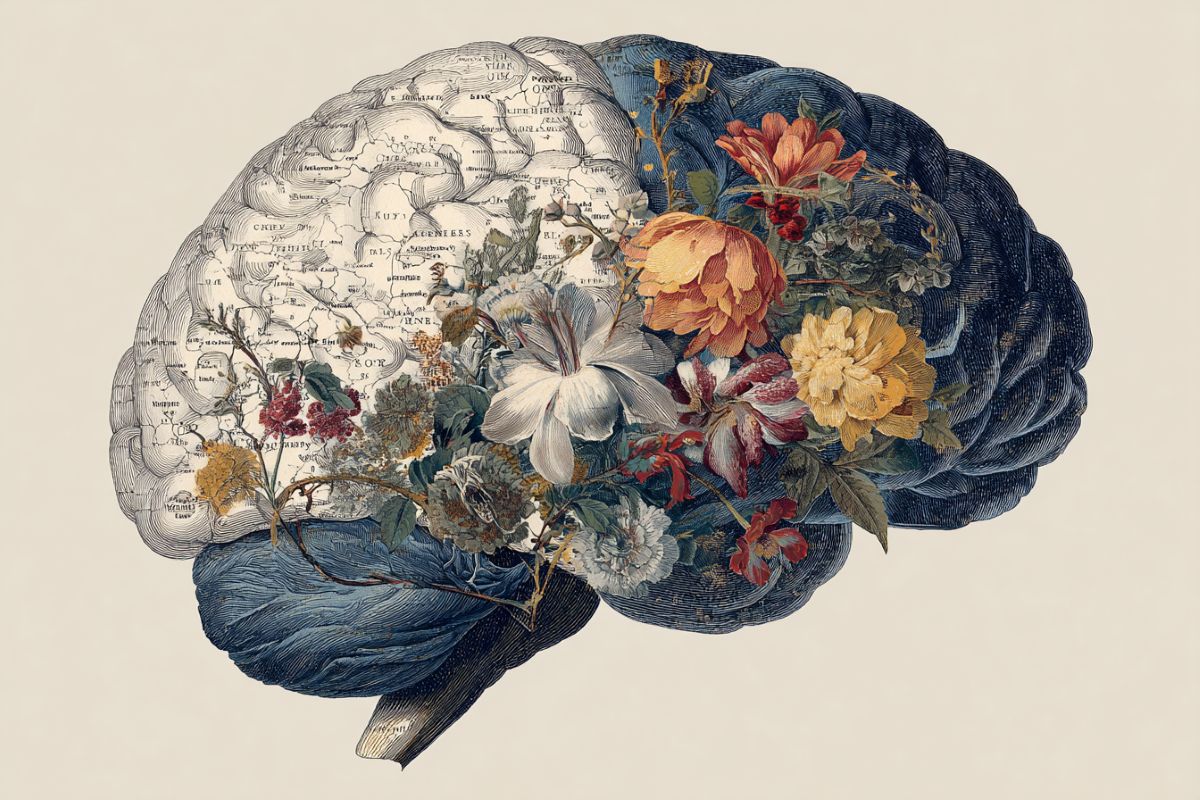
Mapping the Brain’s Hidden Hub for Creative Thought
Neuroscience News • • health
Key Points:
- A new study identifies the rostral prefrontal cortex as the critical “bridge” coordinating the Default Mode Network (DMN) and Executive Control Network (ECN), two opposing brain systems essential for creativity.
- Creativity depends not on the overlap but on the functional distance between the DMN and ECN, with a greater gradient amplitude predicting higher creative ability; this gradient is compressed in patients with behavioral variant frontotemporal dementia (bvFTD), impairing their creativity.
- The DMN is active not only during spontaneous thought but also during intentional creative processes, helping retrieve and reorganize memories to generate new ideas.
- Research on bvFTD patients reveals that diminished creativity affects everyday problem-solving and autonomy, highlighting creativity as a vital tool for adapting to social changes and a key focus for therapeutic care in neurodegenerative diseases.
- The study advances understanding of how the rostral prefrontal cortex’s mediolateral functional gradient supports creative cognition and how its disruption in bvFTD leads to deficits in generating and combining novel ideas.


