AI Image
Massive 2,600-year-old Egyptian complex under Nile discovered from space
The Independent • • world
Key Points:
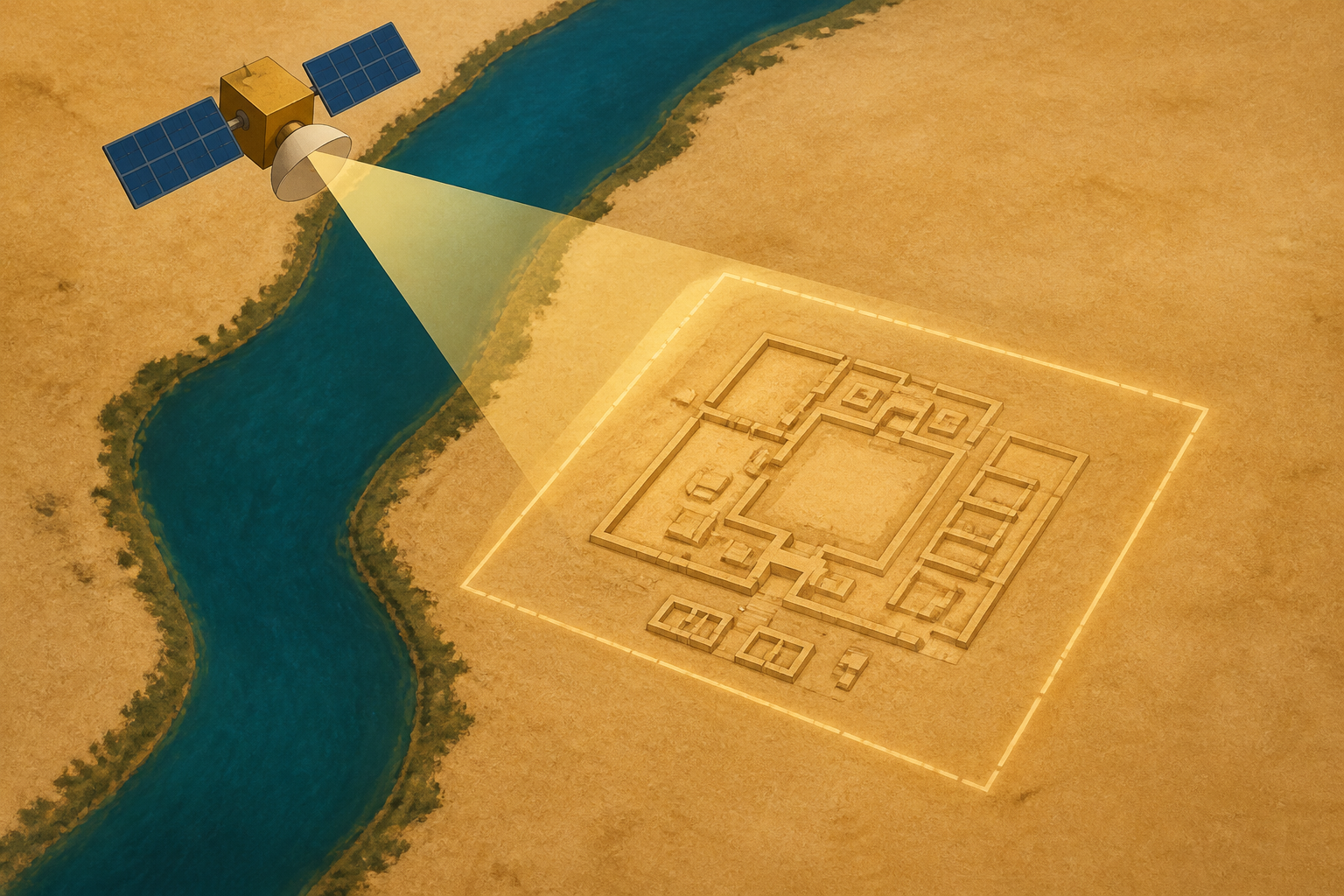
- Researchers used satellite radar (SAR) and soil electrical resistivity to discover a large 2,600-year-old mudbrick structure beneath the Nile at the ancient Egyptian city of Buto, dating to the Saite period.
- The technology allowed detection of buried settlements deep beneath layers of debris and mud, overcoming challenges of traditional excavation such as groundwater and thick deposits.
- A 3D model revealed a well-defined structure between three and six meters deep, possibly a large tomb or shrine, resting on an artificial sand foundation designed to distribute building weight.
- Excavations in a small area confirmed the presence of mudbrick walls and religious artifacts consistent with the sensor data, validating the combined remote sensing and geophysical approach.
- Researchers aim to expand surveys to explore deeper layers and suggest another temple may remain buried under thick clay, demonstrating the potential of integrated remote sensing to guide future archaeological digs.


