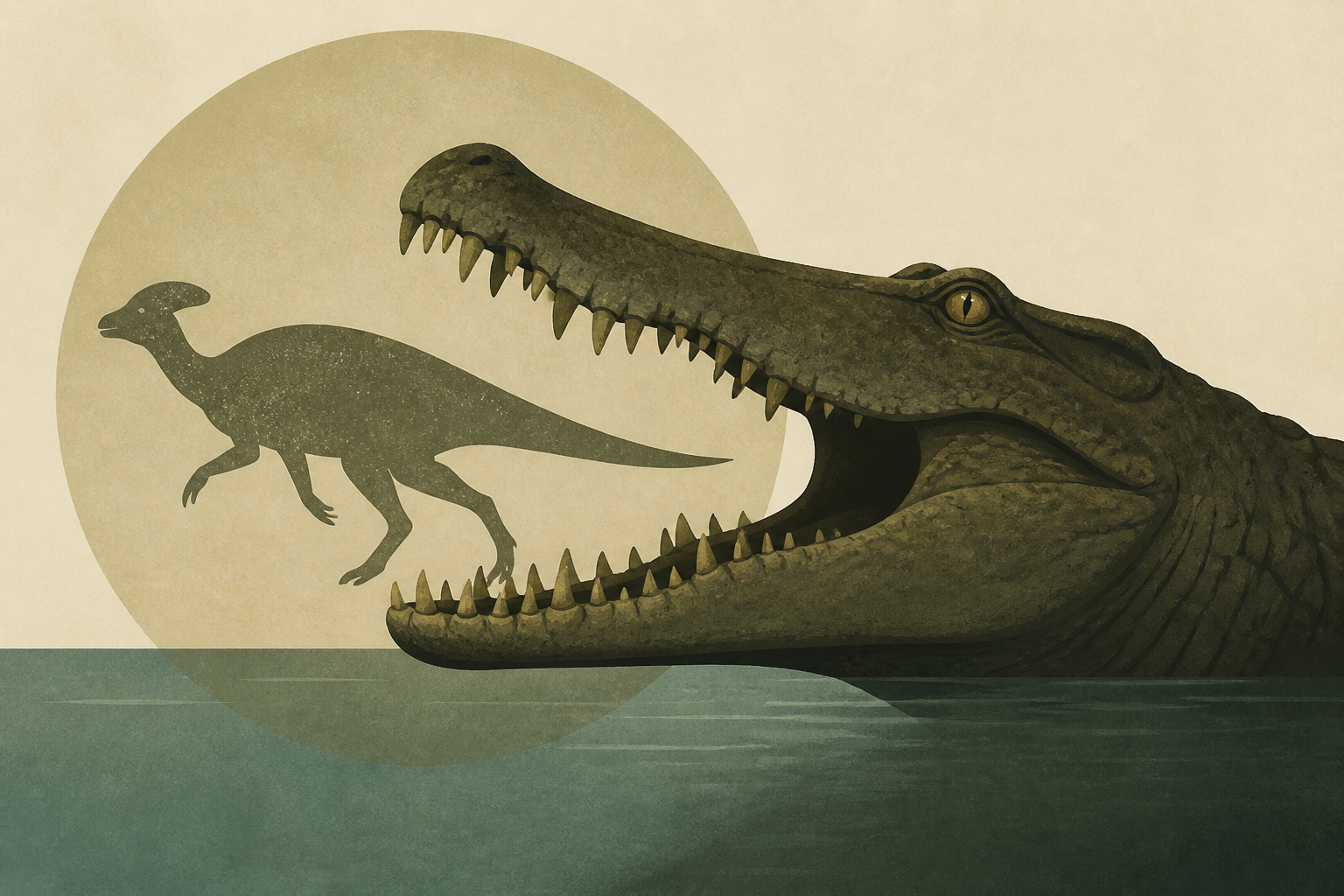
AI Generated Image
Massive Prehistoric Crocodylians Took a Brutal Approach to Hunting
Yahoo • • science
Key Points:
- Over 10 million years ago during the Middle Miocene, the Pebas megawetland system in northwestern South America was home to a diverse ecosystem dominated by giant crocodylians at the top of the food chain.
- Researchers from the University of Helsinki studied fossils showing that massive crocodylians, especially Purussaurus neivensis, were apex predators, preying on large herbivores like prehistoric rhino relatives and giant ground sloths.
- Fossil evidence includes circular puncture wounds on megafauna bones, indicating ambush predation techniques similar to modern crocodiles, with Purussaurus being the only species with a bite force strong enough to cause such damage.
- Purussaurus not only controlled herbivore populations but also contributed to the ecosystem by leaving remains for scavengers like terrestrial sebecid crocodylians, highlighting complex food web interactions in this ancient wetland.
- Despite competition from saber-toothed marsupials, terror birds, and giant anacondas, the abundance of prey allowed these giant crocodylians to thrive as dominant predators in their tropical habitat.


