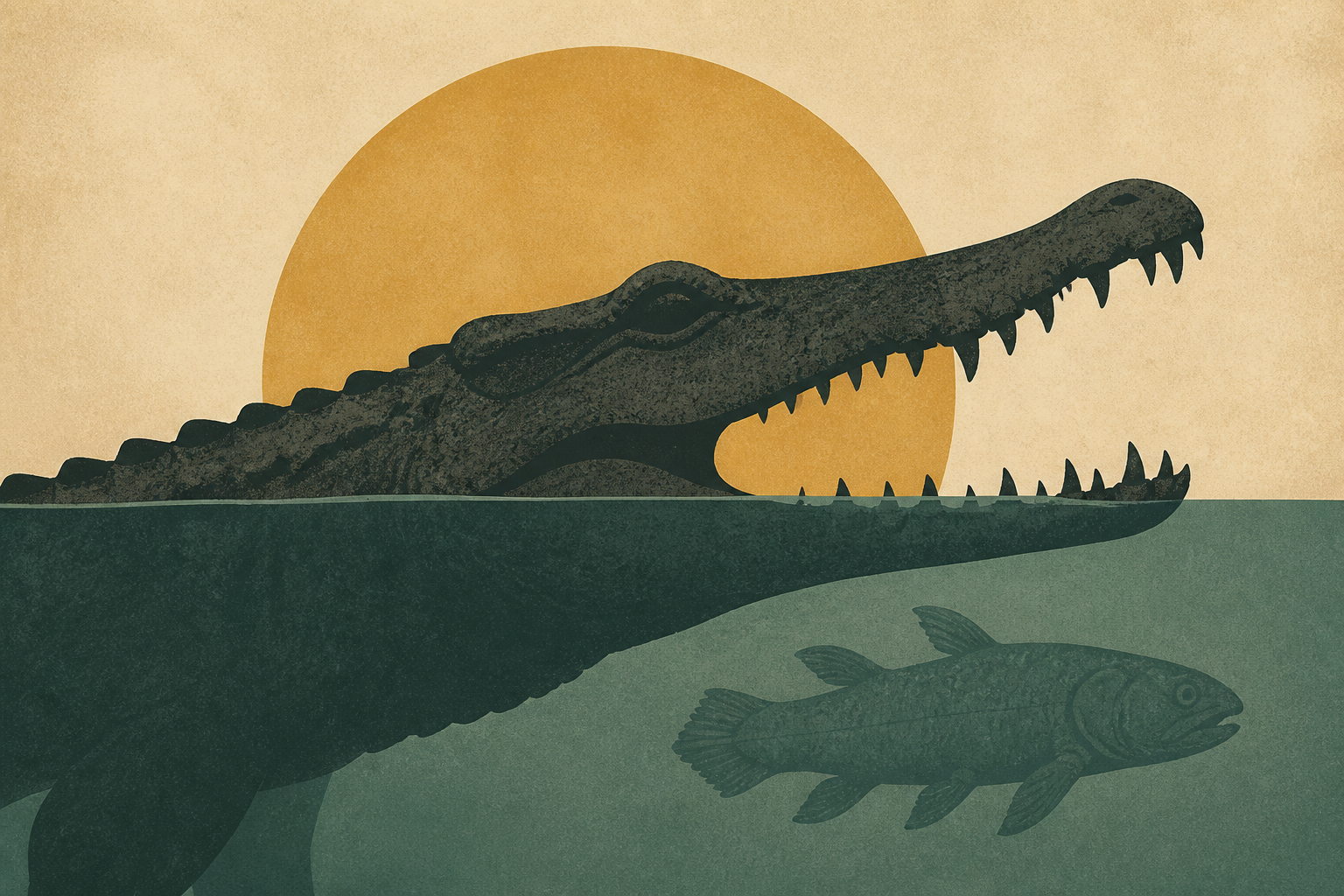
AI Generated Image
Massive Prehistoric Crocodylians Took a Brutal Approach to Hunting
Nautilus | Science • • science
Key Points:
- Over 10 million years ago, the Pebas megawetland system in northwestern South America supported a diverse ecosystem dominated by giant crocodylians as apex predators.
- Researchers from the University of Helsinki studied fossils showing that massive crocodylians, especially Purussaurus neivensis, preyed on large megafauna like prehistoric rhinos and ground sloths.
- Fossil evidence includes circular puncture wounds on prey bones, matching bite marks made by modern crocodiles, indicating ambush predation tactics.
- Purussaurus neivensis, a massive crocodylian up to two tons and the size of a school bus, played a key ecological role by controlling herbivore populations and providing food for scavengers like terrestrial sebecids.
- Despite competition from saber-toothed marsupials, terror birds, and giant anacondas, the abundant prey allowed this complex predator-prey dynamic to persist during the Middle Miocene.


