AI Image
Metastasis enables immunogenicity through migrasome-mediated antigen release
Nature • • science
Key Points:
- The tetraspanin protein Tspan4 suppresses breast cancer metastasis by promoting migrasome formation, which in turn activates adaptive immunity to inhibit tumor spread without affecting primary tumor growth.
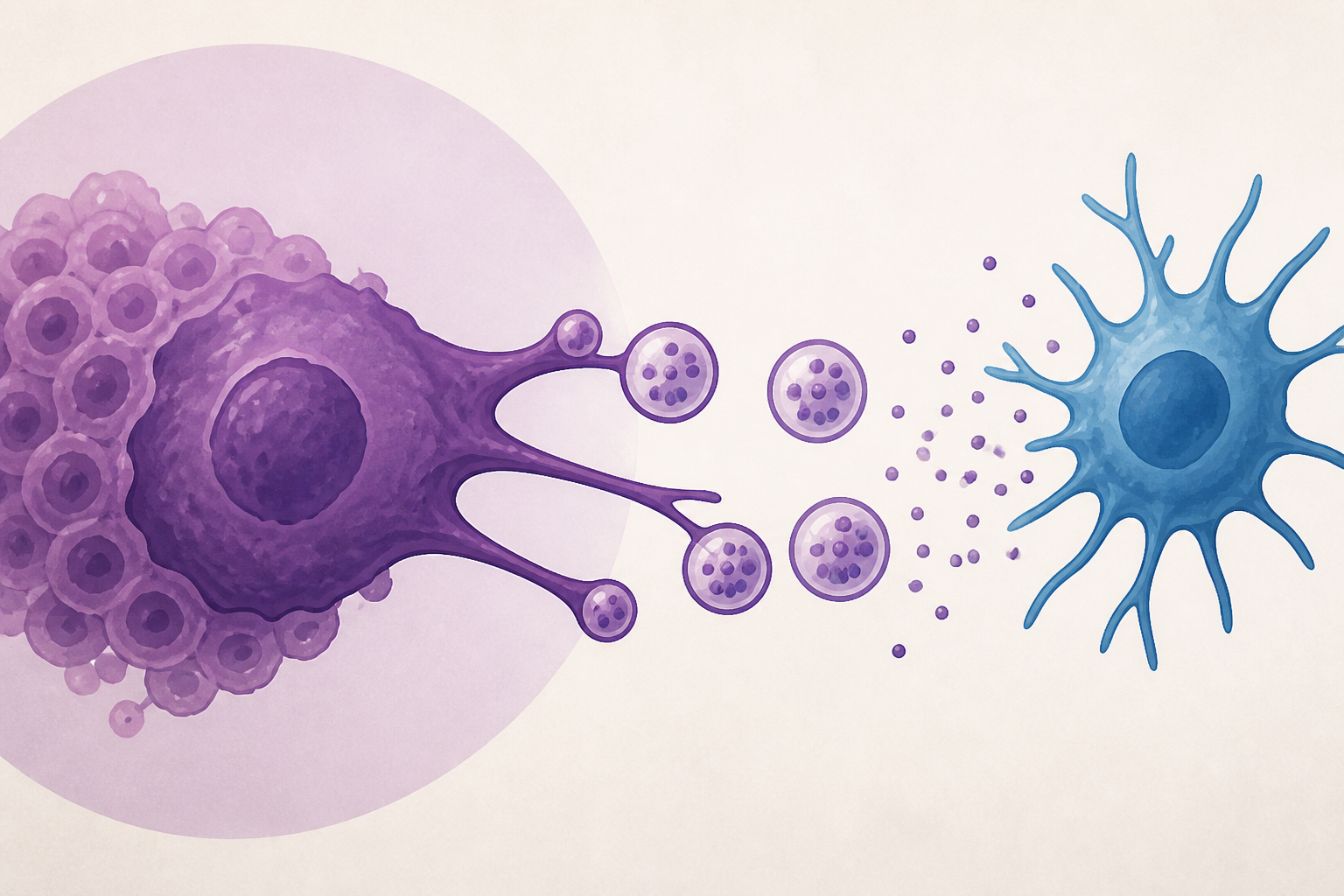
- Migrasomes derived from tumor cells carry tumor-specific antigens, including cancer-testis antigen BRDT and mutated neoantigens DDHD1(D318H) and SDC2(A18S), which prime CD8+ T cell responses via professional antigen-presenting cells, chiefly macrophages and dendritic cells.
- Injection of purified migrasomes into mice reduces metastatic burden and prolongs survival, with the anti-metastatic effect dependent on CD8+ T cells; migrasomes outperform other extracellular vesicles and tumor-derived materials in suppressing metastasis.
- Knockout of tumor-associated antigens BRDT, DDHD1, or SDC2 in 4T1 cells enhances metastasis in immunocompetent mice but not in T cell-deficient mice, underscoring their role as non-self antigens in eliciting antitumor immunity.
- Human oral squamous cell carcinoma (OSCC) cells produce migrasomes enriched with tumor-specific antigens, suggesting translational potential of migrasomes as biomarkers and therapeutic cancer vaccines; low Tspan4 expression in human breast invasive carcinoma correlates with poorer long-term survival.


