AI Generated Image
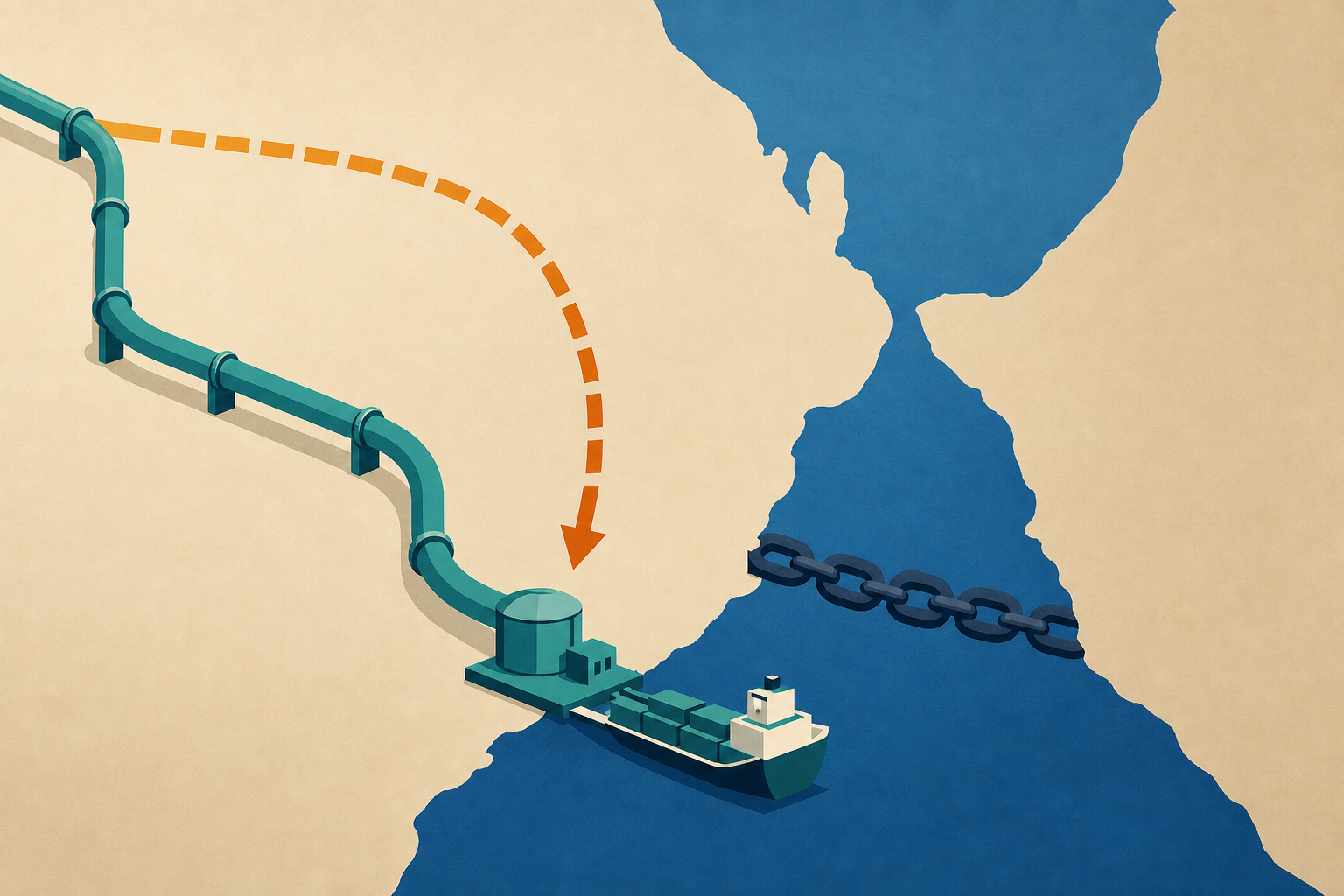
Middle East allies rushing new pipelines, port to bypass Iran's grip on Strait of Hormuz
New York Post • • world
Key Points:
- Persian Gulf oil producers are developing new pipelines and ports to bypass the Strait of Hormuz, aiming to reduce Iran’s leverage amid ongoing regional conflicts and attacks on shipping traffic.
- The UAE’s West-East Pipeline, halfway complete and expected by 2027, will double the country’s overland oil export capacity to 3.6 million barrels per day.
- Iraq has begun constructing the 435-mile Basra-Haditha pipeline, planned to connect with Jordan, Syria, and Turkey, with a capacity of 2.5 million barrels per day, while Saudi Arabia considers expanding its Red Sea pipeline capacity to 9 million barrels per day.
- The UAE is also planning a new port on the Arabian Sea side of the Strait of Hormuz to facilitate imports without passing through the strait, further decreasing dependence on this critical waterway.
- Despite these efforts, complete bypassing of the Strait of Hormuz is unlikely as 7 to 9 million barrels per day of oil and refined products still rely on the waterway, and regional instability, including threats in the Red Sea, poses ongoing risks.


