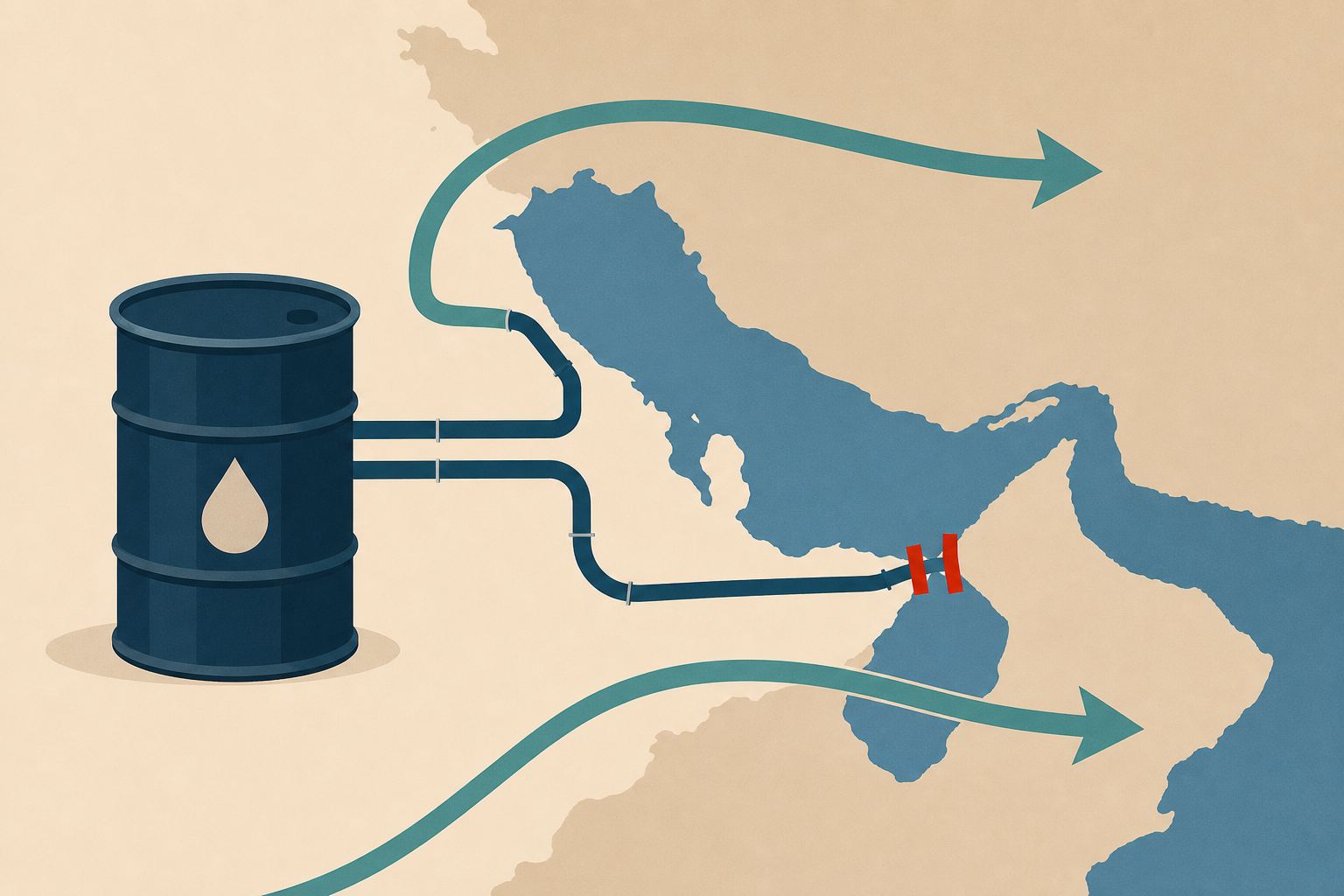
AI Generated Image
Mideast oil producers reduce their reliance on Hormuz
AP News • • world
Key Points:
- Gulf countries are investing billions in pipeline projects to bypass the Strait of Hormuz, aiming to reduce reliance on the Iran-adjacent chokepoint amid ongoing conflict and rising oil prices.
- At least seven major pipeline initiatives are underway or planned, including Saudi Arabia's East-West pipeline to the Red Sea and the UAE's expansion of oil transport to Fujairah on the Gulf of Oman.
- Iraq is developing pipelines to export oil through Turkey and Syria, and exploring routes to Jordan’s Red Sea port, though these alternatives involve longer, costlier routes vulnerable to geopolitical risks.
- Analysts estimate these projects could enable up to 60% of the Gulf’s prewar oil exports to bypass Hormuz by 2028, but the new routes remain susceptible to attacks, such as recent strikes by Yemen’s Houthi rebels on Saudi oil tankers.
- Despite these pipeline efforts, disruptions to liquefied natural gas (LNG) supplies through Hormuz remain unresolved, as LNG transport relies on shipping rather than pipelines.


