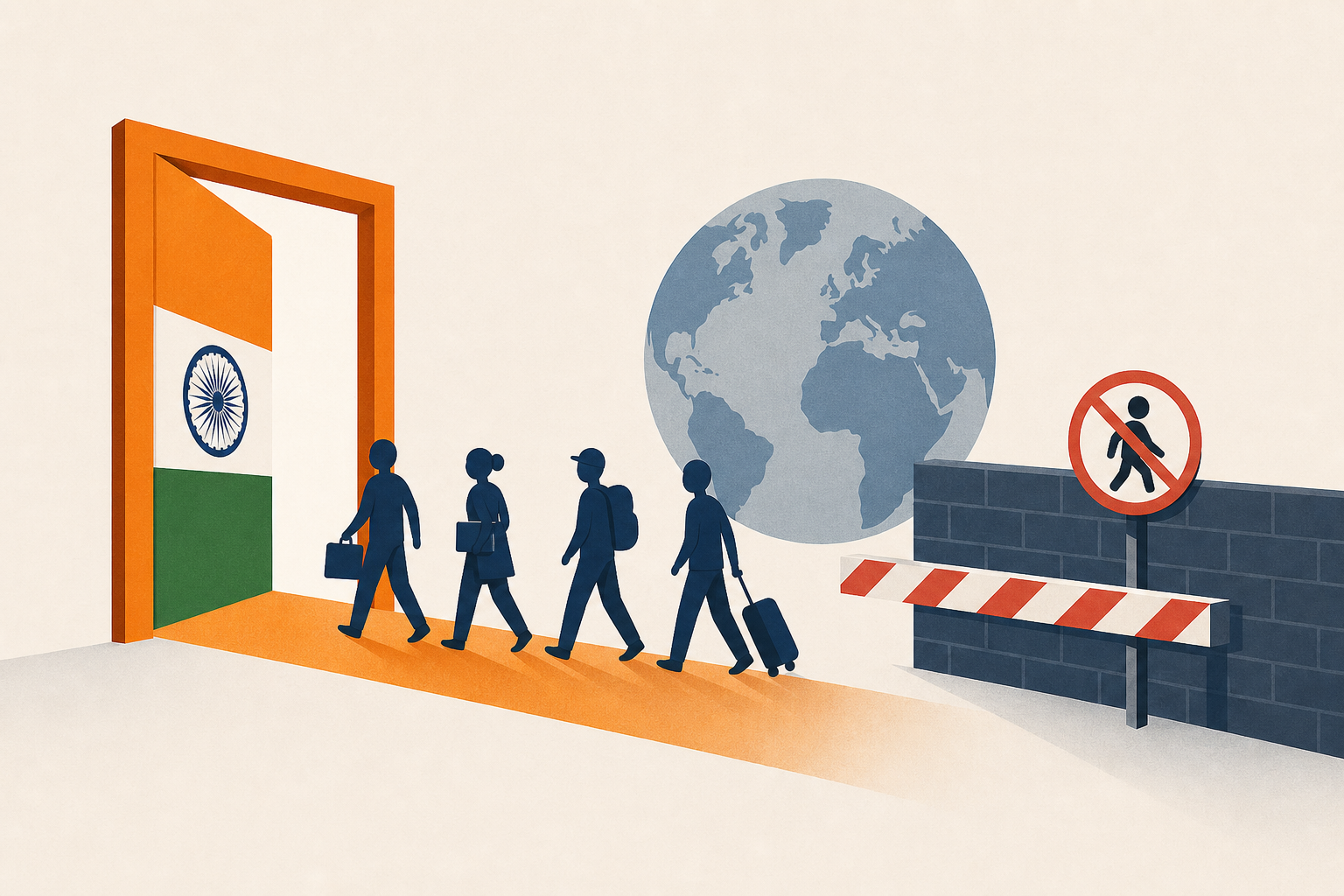
AI Generated Image
Modi is exporting India's workforce as countries slow immigration
CNBC • • world
Key Points:
- India is actively signing labor mobility agreements with trading partners worldwide to address domestic unemployment and capitalize on remittances, contrasting with China's strategy of attracting skilled workers back home.
- Despite economic benefits, these pacts face backlash amid rising global anti-immigration sentiments, exemplified by opposition in New Zealand and protests in Australia against increased Indian labor mobility.
- The U.S. is tightening visa rules, particularly for H-1B visas heavily used by Indian workers, prompting India to diversify labor export destinations to countries like Russia, Israel, and the European Union.
- Unlike China, which invests heavily in research and development to attract returning skilled professionals, India spends less on R&D and promotes labor export over retaining talent domestically.
- Recent economic updates include India's inflation rising to 4.38% in June due to geopolitical tensions and weather impacts, and India expanding missile sales in the Indo-Pacific region amid regional security concerns.


