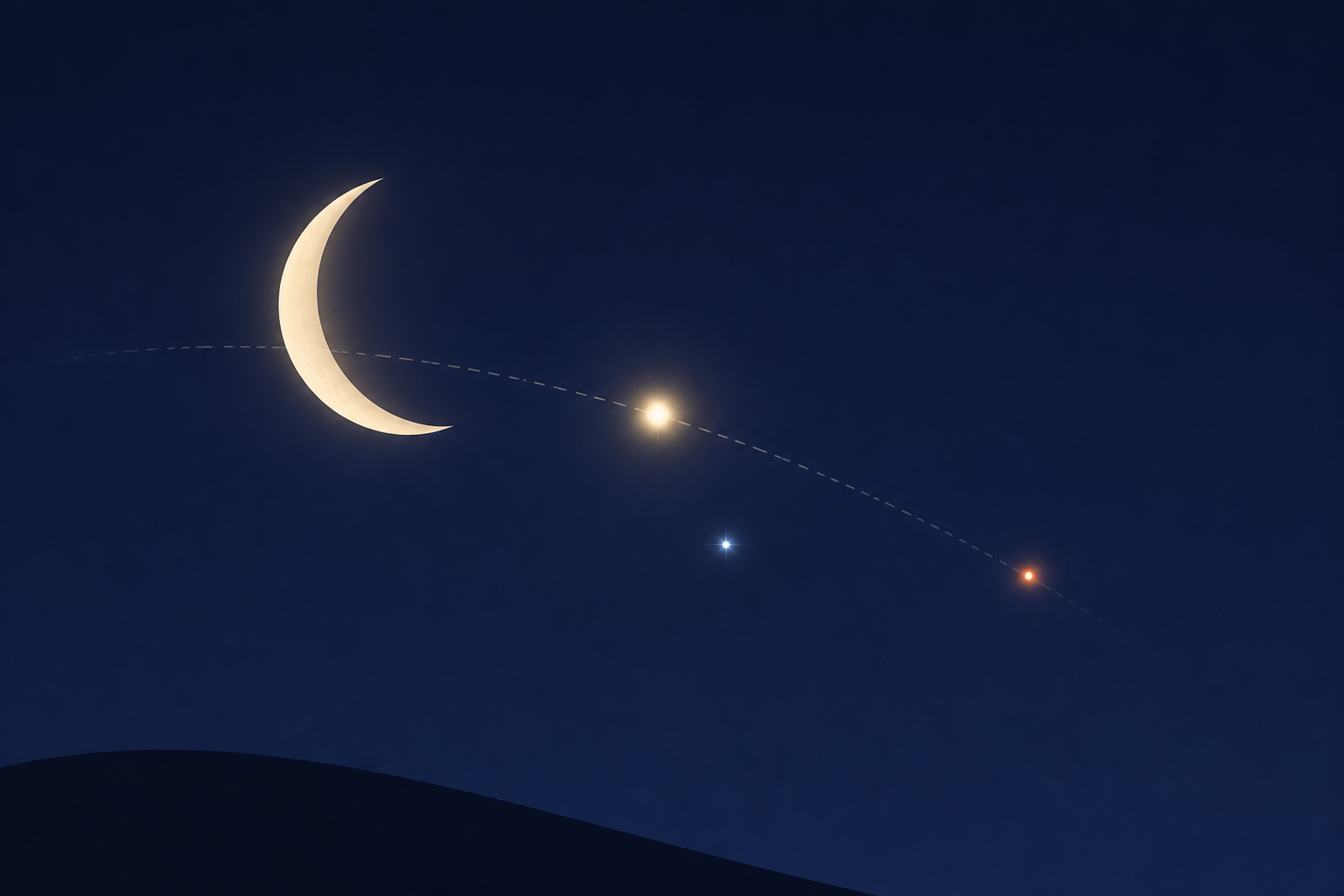
AI Generated Image
Moon Meets Venus, Spica And The ‘Anti-Mars’: The Night Sky This Week
Forbes • • general
Key Points:
- With the Perseid meteor shower fading and the total solar eclipse concluded, stargazers should focus on the Milky Way and a waxing moon passing Venus, Spica, and Antares this week (Aug. 17-23).
- The Milky Way is especially prominent in late August from the Northern Hemisphere, visible as a bright band of light rich with star clusters and dust lanes, best seen before the moon brightens the sky.
- A deep partial lunar eclipse will occur on Aug. 27-28, 2026, with 96% of the moon entering Earth's umbra, making it the most impressive lunar eclipse visible globally until 2028.
- The eclipse will display the moon glowing in copper and red hues, visible across the Americas, Europe, and Africa, lasting about 5 hours and 38 minutes in total, with the partial phase lasting over 3 hours.
- For precise viewing times and details, especially depending on location, stargazers are advised to consult online planetarium tools such as Stellarium.


