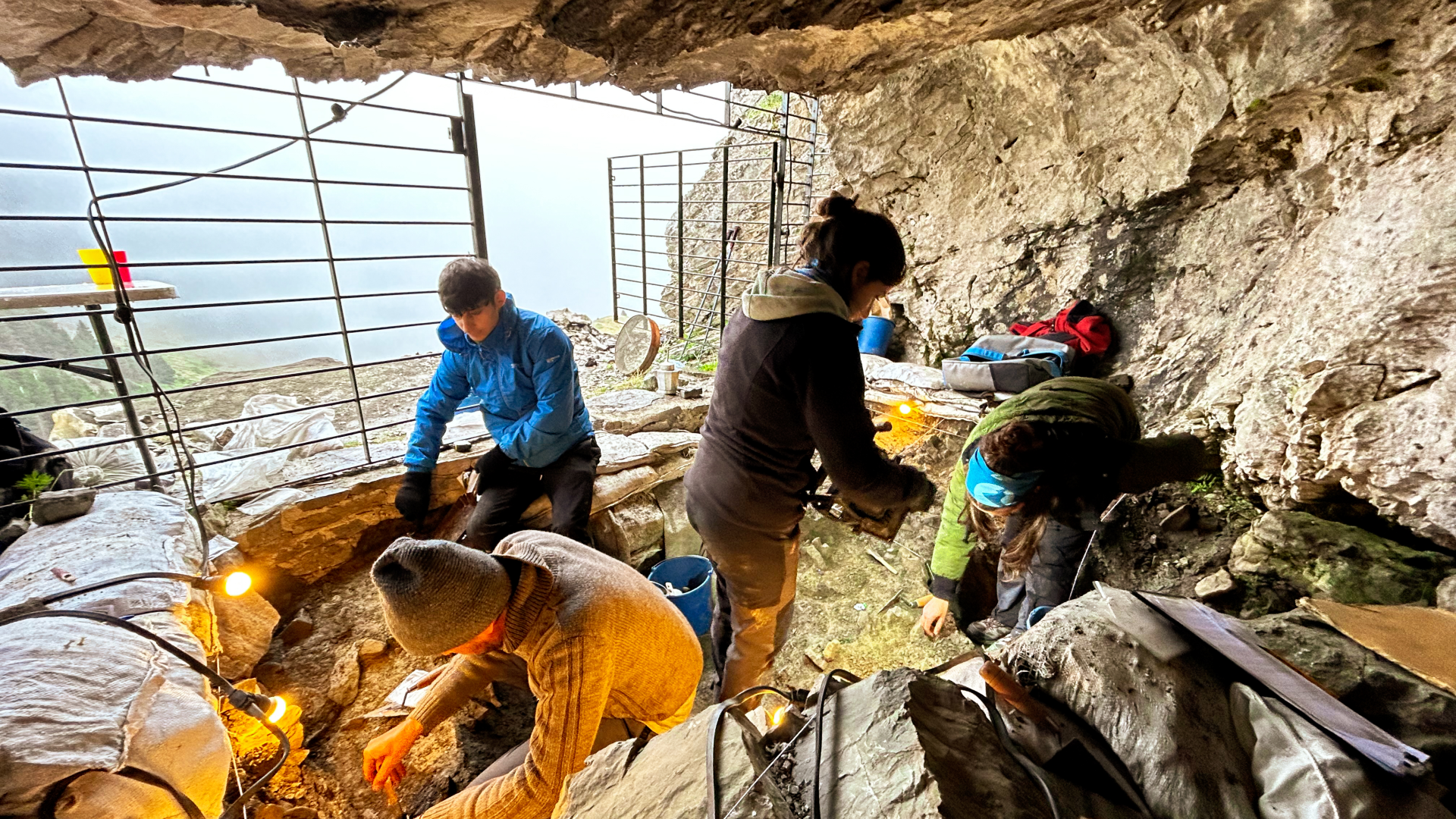
Mysterious green rocks in Pyrenees cave hint that prehistoric people were working copper there for 4,000 years
Live Science • • world
Key Points:
- Archaeologists discovered a high-altitude cave in the Pyrenees, Spain, used as a copper mining camp for over 4,000 years, evidenced by layers of green mineral fragments (likely malachite) and charcoal remains.
- The cave, located at 7,333 feet above sea level, contained human remains, animal bones, ceramic vessels, and fireplaces, indicating repeated seasonal occupation from 5000 to 2400 B.C., primarily during the Copper Age.
- The green mineral fragments were thermally altered, suggesting intentional processing of malachite to extract copper using heat and charcoal, marking one of the earliest known high-mountain mineral exploitation sites in the region.
- Personal ornaments and human remains found in the cave hint at possible funerary uses, while the long-term use implies generational knowledge transfer and integration of the Pyrenees into prehistoric mobility and resource strategies.
- Researchers plan to continue excavations and confirm the mineral's identification to further understand the cave's role in prehistoric copper production and community activities.


