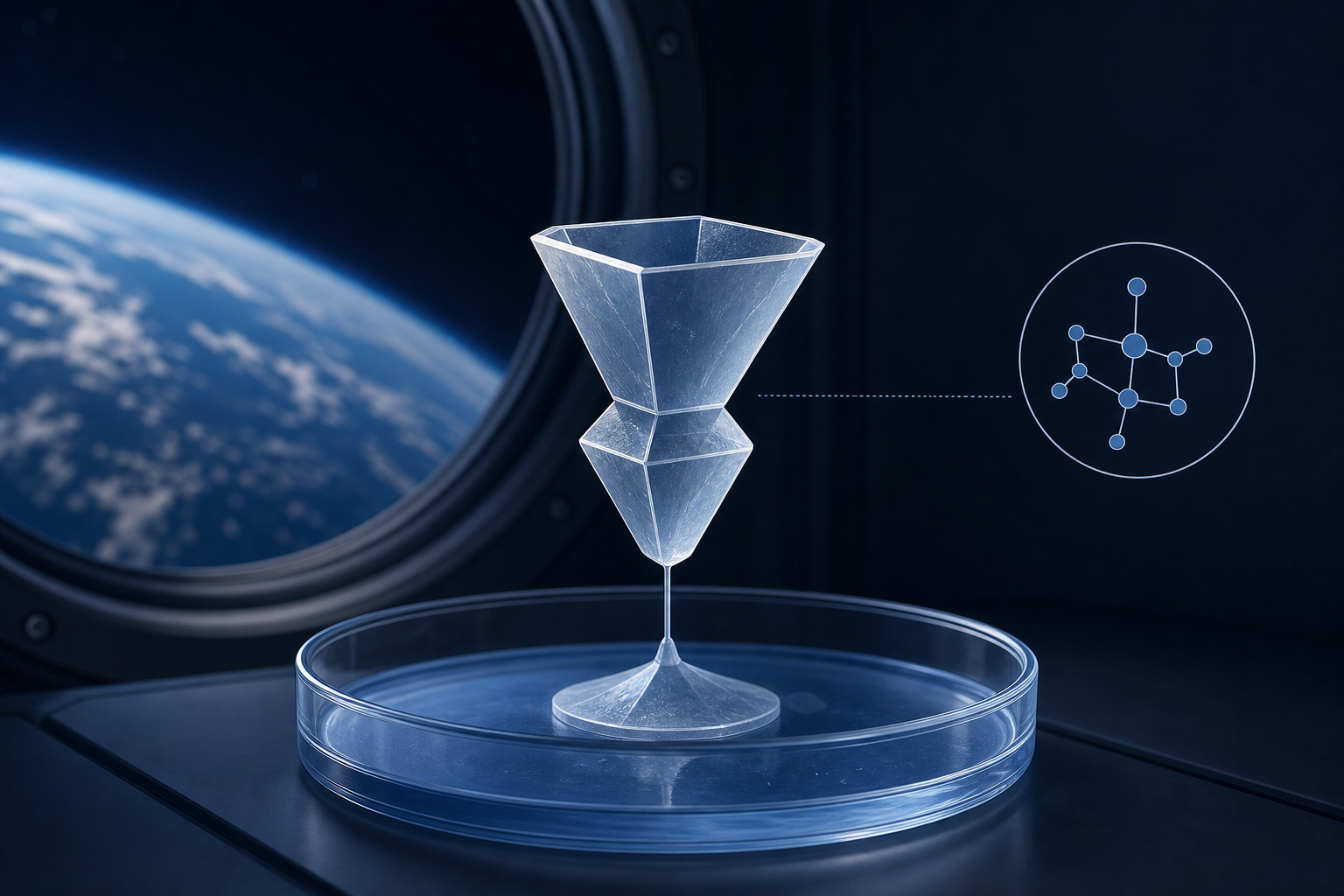
AI Generated Image
NASA astronaut shares image of impossible-looking 'hopper' crystal growing on the space station. What is ha...
Yahoo • • science
Key Points:
- NASA astronaut Don Pettit captured images and video of potassium chloride crystals growing aboard the International Space Station, revealing unique pyramid-like structures formed in microgravity.
- In the near-weightless environment of space, gravity's influence diminishes, allowing molecular forces to dominate and cause crystals to grow in stair-stepped, hollow-centered patterns known as hopper growth.
- Unlike on Earth, where crystals sag or settle due to gravity, these space-grown crystals expand outward from edges and corners, creating intricate, scrolling shapes difficult to replicate in terrestrial labs.
- Studying crystals formed in microgravity offers scientists insights into nearly defect-free structures, potentially improving manufacturing techniques for semiconductors and advanced materials.
- Beyond scientific value, these images highlight the fascinating and unexpected behaviors of common substances like potassium chloride in space, inspiring curiosity about material science and microgravity effects.


