AI Generated Image
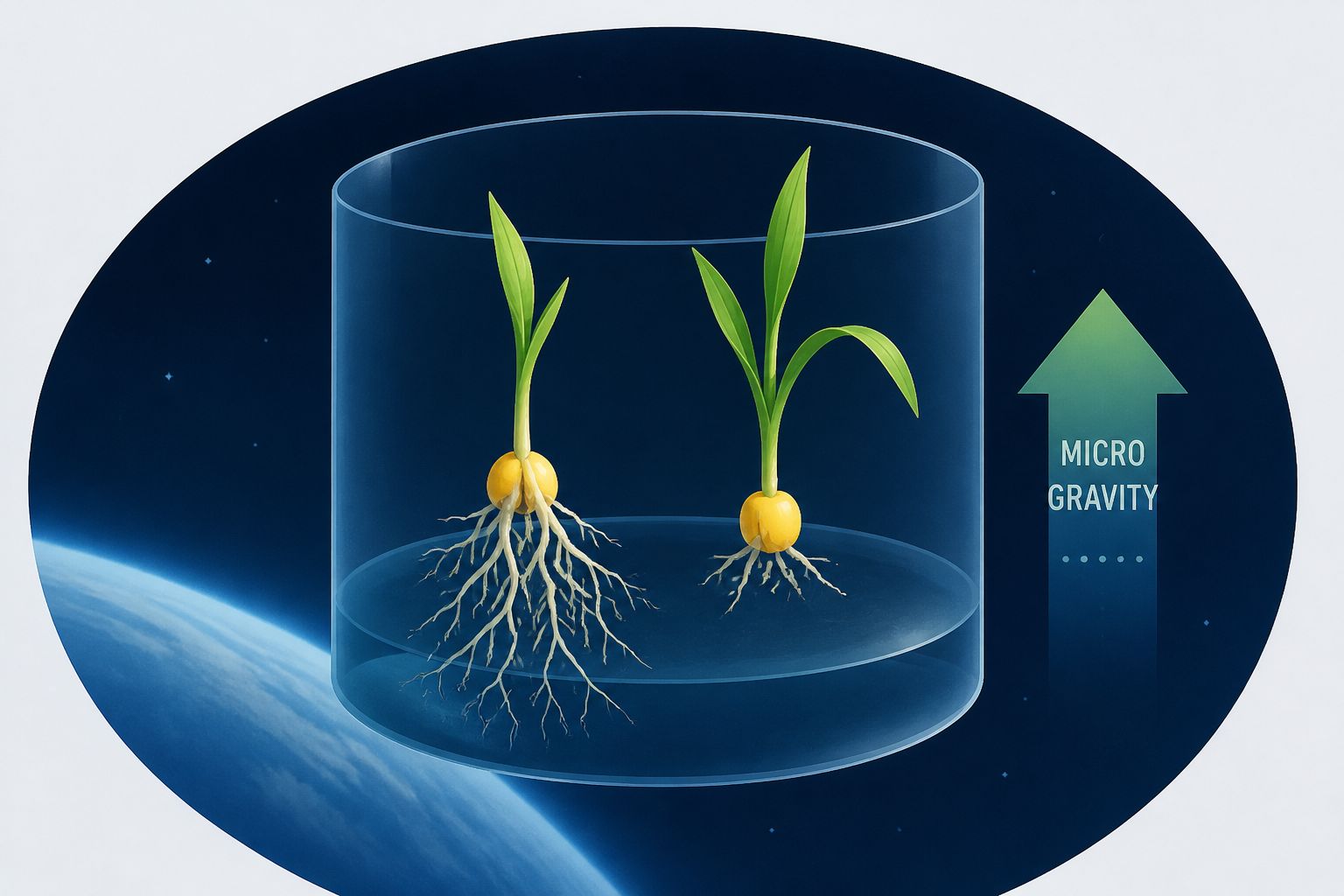
Nasa scientists grew corn seeds in space and found that microgravity changed how the seedlings’ roots and shoots grew
The Times of India • • science
Key Points:
- NASA's early 1990s space shuttle experiments showed that corn seeds can germinate and grow healthy tissue in microgravity, but their roots and shoots lose directional orientation without gravity's guiding cue.
- Gravity on Earth directs roots downward and shoots upward, but in space, plants grow in tangled, disorganized patterns due to the absence of this gravitational signal.
- Similar directional confusion has been observed in other plants like Arabidopsis thaliana, with spaceflight experiments revealing complex gene activity changes as plants attempt to adapt to microgravity.
- NASA is compiling decades of biological data in the Open Science Data Repository to better understand plant growth in space, aiming to develop systems or genetic modifications to support reliable crop cultivation during long-duration missions.
- These findings are critical for future crewed missions to the Moon, Mars, or beyond, where sustainable food production will be essential for astronaut survival.


