AI Generated Image
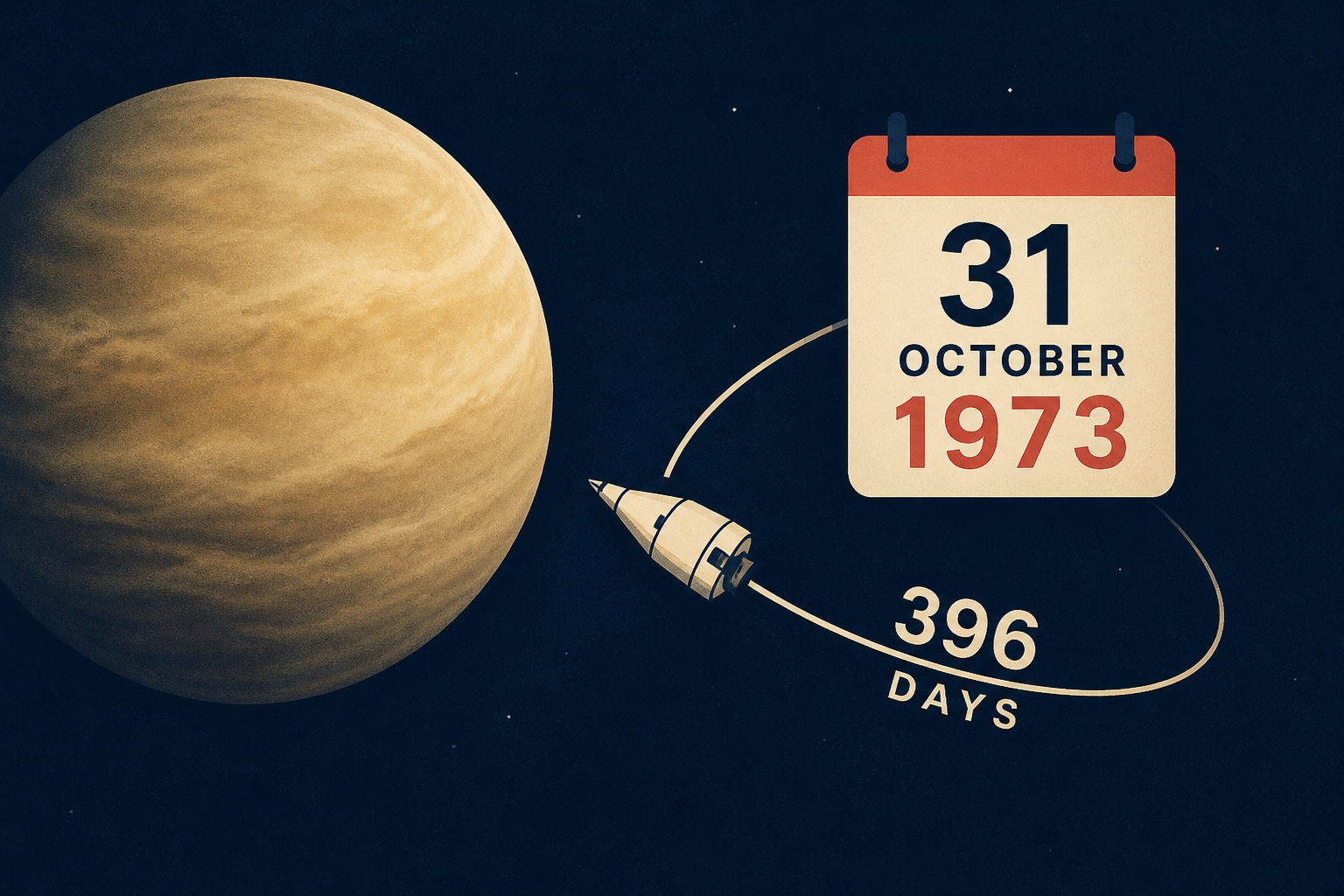
NASA Set a Launch Date of 31 October 1973 to Send Three Astronauts Past Venus. The Mission Would Have Lasted 396 Days.
19FortyFive • • science
Key Points:
- In the late 1960s, NASA studied an ambitious Apollo mission to send three astronauts on a 396-day interplanetary journey past Venus using modified Apollo hardware and a Saturn V rocket, which would have been humanity’s first crewed mission beyond the Moon.
- The mission aimed to validate long-duration human spaceflight, test life-support systems, and conduct scientific observations and robotic probe deployments during a close flyby of Venus approximately 6,000 km above its surface.
- Engineers planned to convert the Saturn V’s upper stage into living quarters using the "wet workshop" concept, significantly expanding habitable volume and incorporating redundant propulsion systems for safety on the year-long mission.
- Despite detailed technical studies and mission planning by 1967, the project was canceled due to declining public enthusiasm, shifting government priorities, budget cuts during the Vietnam War era, and the eventual focus on Skylab as the primary post-Apollo program.
- The proposed mission anticipated many challenges later addressed in space exploration, such as radiation protection, psychological isolation, and life-support recycling, marking it as a pioneering concept decades ahead of its time.


