AI Image
NASA's Curiosity Rover Burst Open a Rock on Mars And Found a Big Surprise
ScienceAlert • • technology
Key Points:
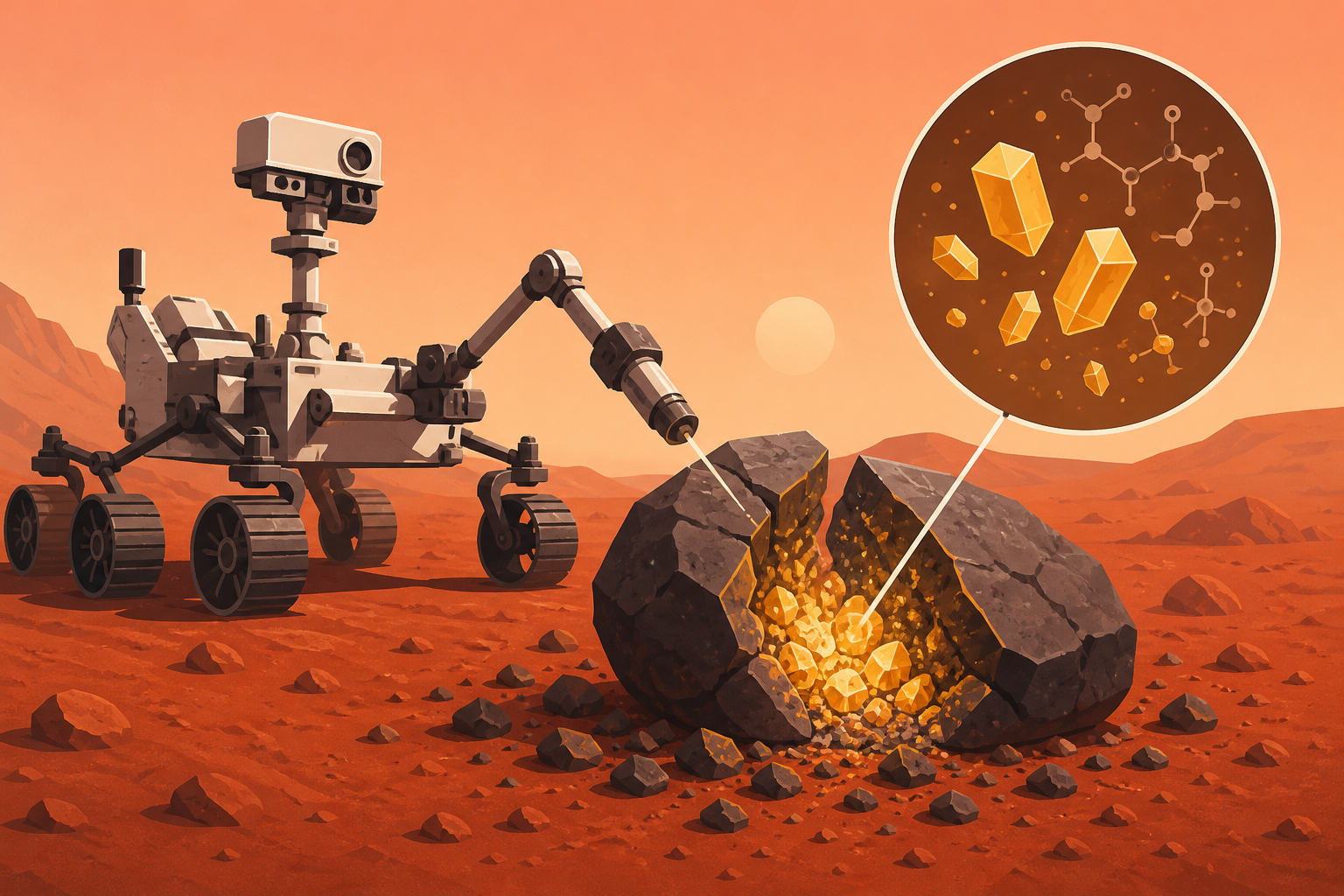
- In 2024, NASA's Curiosity rover discovered unusually pure elemental sulfur crystals on Mars' surface in the Gale Crater's Gediz Vallis Channel, marking the first such find distinct from the commonly found sulfates.
- A 2026 study led by Scott VanBommel suggests these fragile sulfur rocks formed in situ from ancient volcanic gases trapped under the surface and later released by erosion, dating back 3.1 to 2.8 billion years.
- Another 2026 study by Jiawei Wang demonstrated that elemental sulfur could form through chemical reactions in water involving sulfide and chlorate at low temperatures, without biological activity, potentially explaining sulfur deposits on Mars.
- The discovery of elemental sulfur is significant because sulfur is essential for life, and while no life has been found on Mars, the presence of life-supporting elements and conditions offers insights into the planet's ancient environment and its parallels to early Earth.
- Scientists view Mars as a "frozen snapshot" of early planetary conditions, providing a unique opportunity to study geological and chemical processes from billions of years ago that may inform our understanding of Earth's evolution.


