AI Generated Image
NASA's Curiosity Rover Finds a Vast Sea of Strange Honeycomb Patterns on Mars
Gizmodo • • general
Key Points:
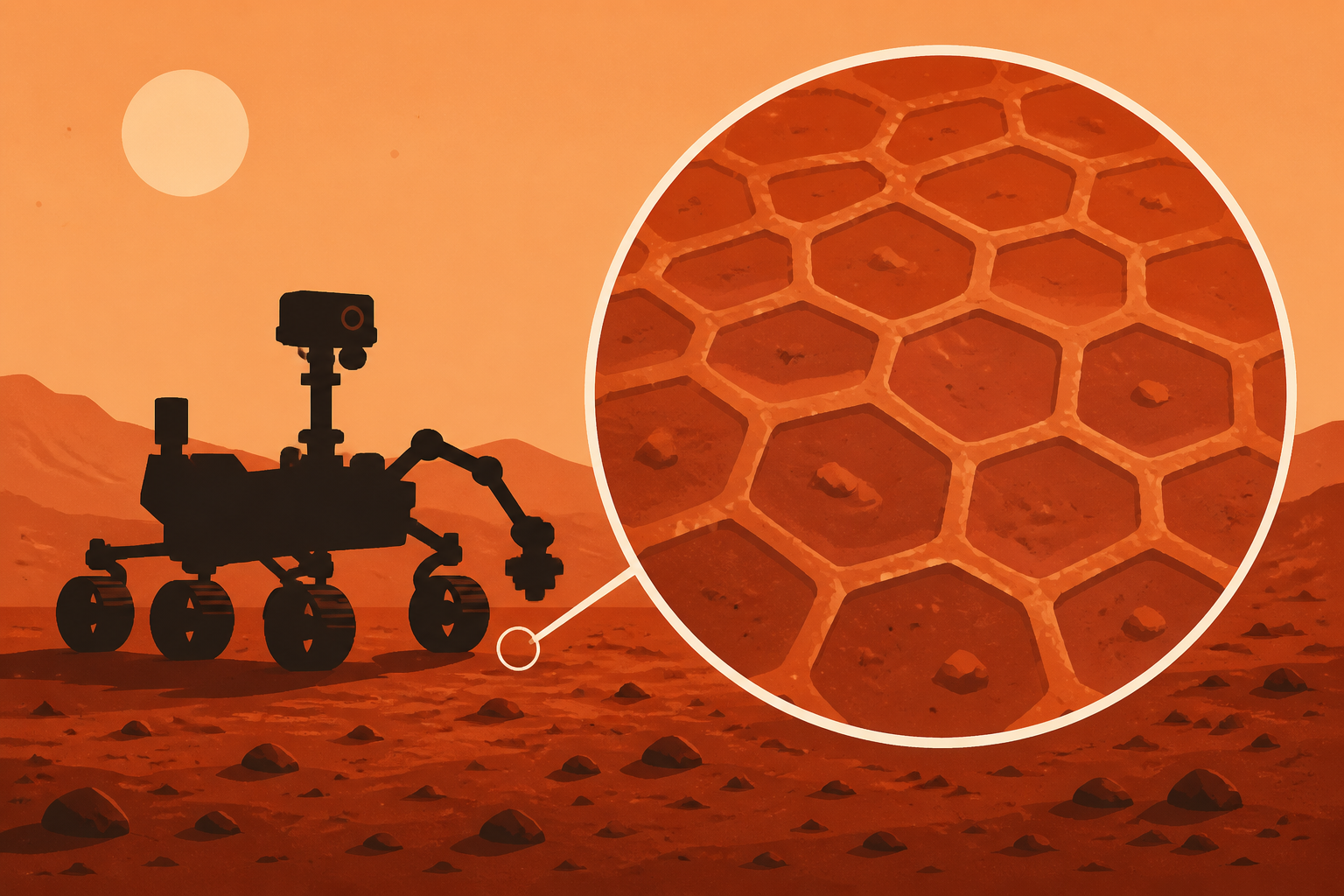
- NASA’s Curiosity rover has discovered a vast field of polygonal fractures in a Martian valley called Valle Grande, providing strong evidence that lakes and streams once covered the area billions of years ago.
- The polygonal fractures, measuring 4 to 8 centimeters wide, surround a butte named Miraflores and may have formed through processes like mud cracking due to temperature changes or sediment compaction.
- This finding adds to Curiosity’s decade-long mission uncovering signs of ancient water on Mars, including the recent detection of over 20 organic molecules in clay-rich sandstones, some potentially linked to the precursors of RNA and DNA.
- Scientists hope that analyzing the chemistry of these polygonal features will offer deeper insights into Mars’s watery past and its potential to have supported life.
- Curiosity’s ongoing exploration of Mount Sharp continues to advance understanding of the Red Planet’s geological history and its ancient environmental conditions.


