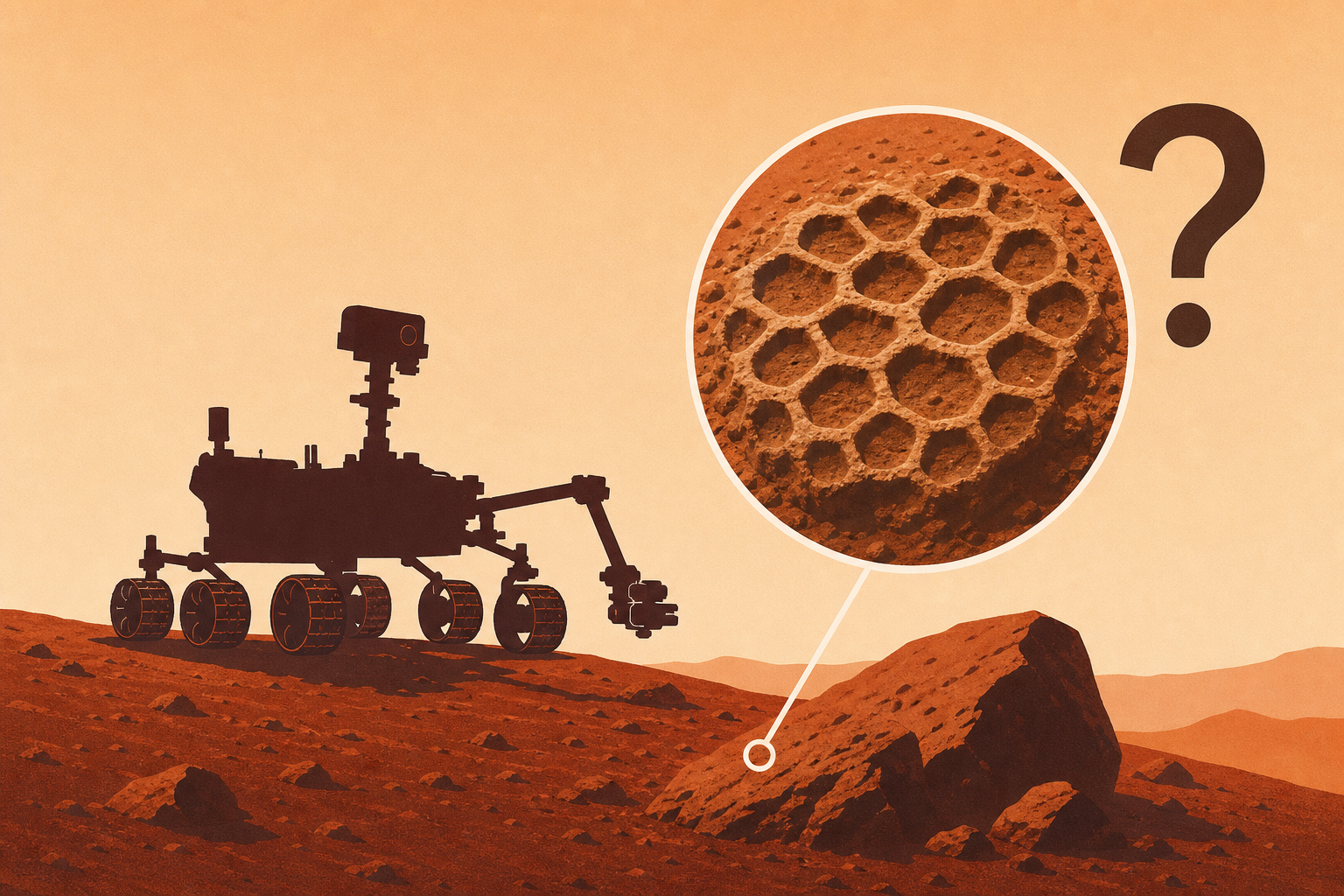
AI Generated Image
NASA's curiosity rover spots mysterious honeycomb pattern on Mars, leaving scientists puzzled over its origin
The Times of India • • general
Key Points:
- After 14 years on Mars, NASA’s Curiosity rover has discovered a mysterious honeycomb-like geological formation on the surface within Gale Crater, surprising scientists with its polygonal patterns.
- The origin of the honeycomb structure remains unclear, with possible formation processes including volcanic activity, water flow, sediment shifts, or freeze-thaw cycles, similar to some Earth geological features.
- Dark-toned rocks found near the formation add another layer of mystery, as they might be eroded fragments from higher strata, impact ejecta, or meteorites, with ongoing analysis to determine their composition.
- This discovery highlights Mars’ complex geological history and continues to challenge scientists’ understanding of the planet’s past environmental conditions and potential habitability.
- Curiosity’s ongoing exploration and data collection emphasize that despite years of study, Mars still holds many unresolved scientific puzzles.


