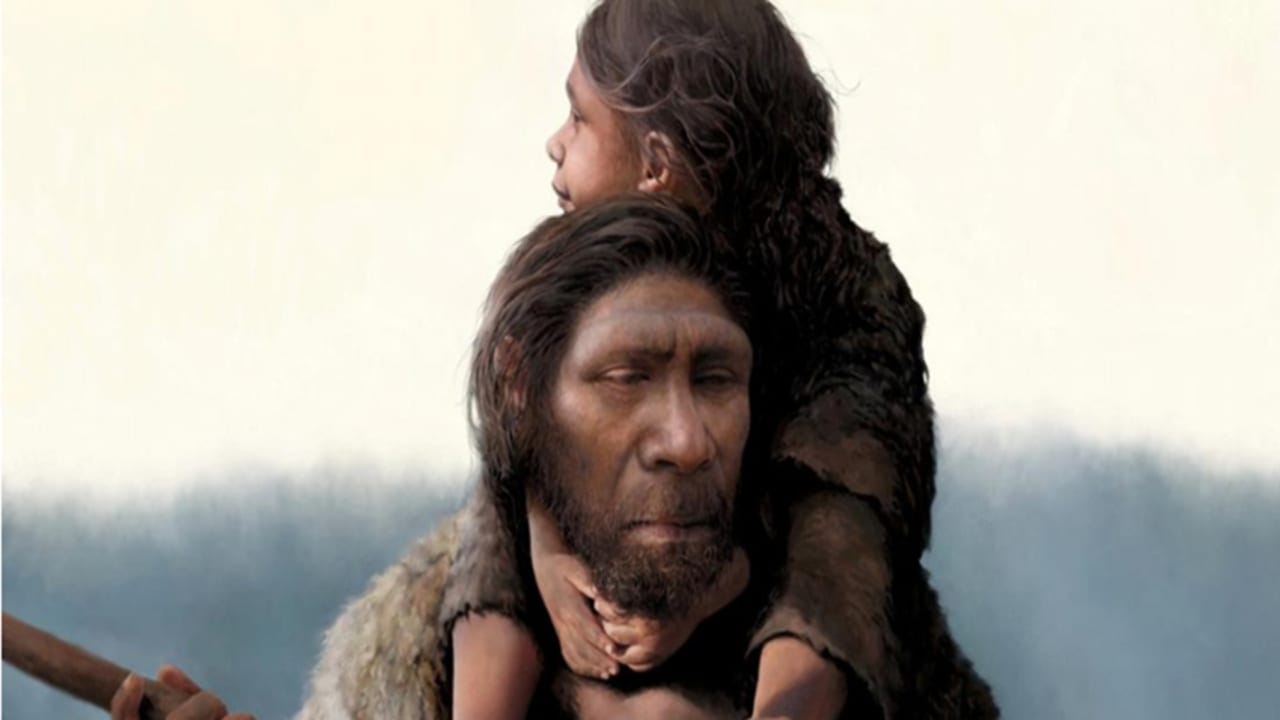
Neanderthal children grew faster than modern humans, Israeli study shows
The Jerusalem Post • • science
Key Points:
- A recent study published in Current Biology reveals that Neanderthal children developed faster than modern human children, likely as an adaptation to harsh environmental conditions.
- Researchers analyzed the remains of Amud 7, a Neanderthal infant from 51,000 to 56,000 years ago, found in Amud Cave, which is the most complete Neanderthal infant skeleton discovered to date.
- Age estimates based on limb bones suggested Amud 7 was about 13.7 months old, while tooth enamel analysis indicated an age closer to six months, implying accelerated bodily growth compared to dental development.
- The study found that Neanderthal infants had larger skulls and their bodies grew faster than their teeth during toddlerhood, contrasting with the more proportionate growth seen in modern human children.
- Despite diverging from Homo sapiens around 600,000 years ago, Neanderthals and modern humans interbred during the Middle Paleolithic era, indicating evolutionary compatibility despite separate development paths.


