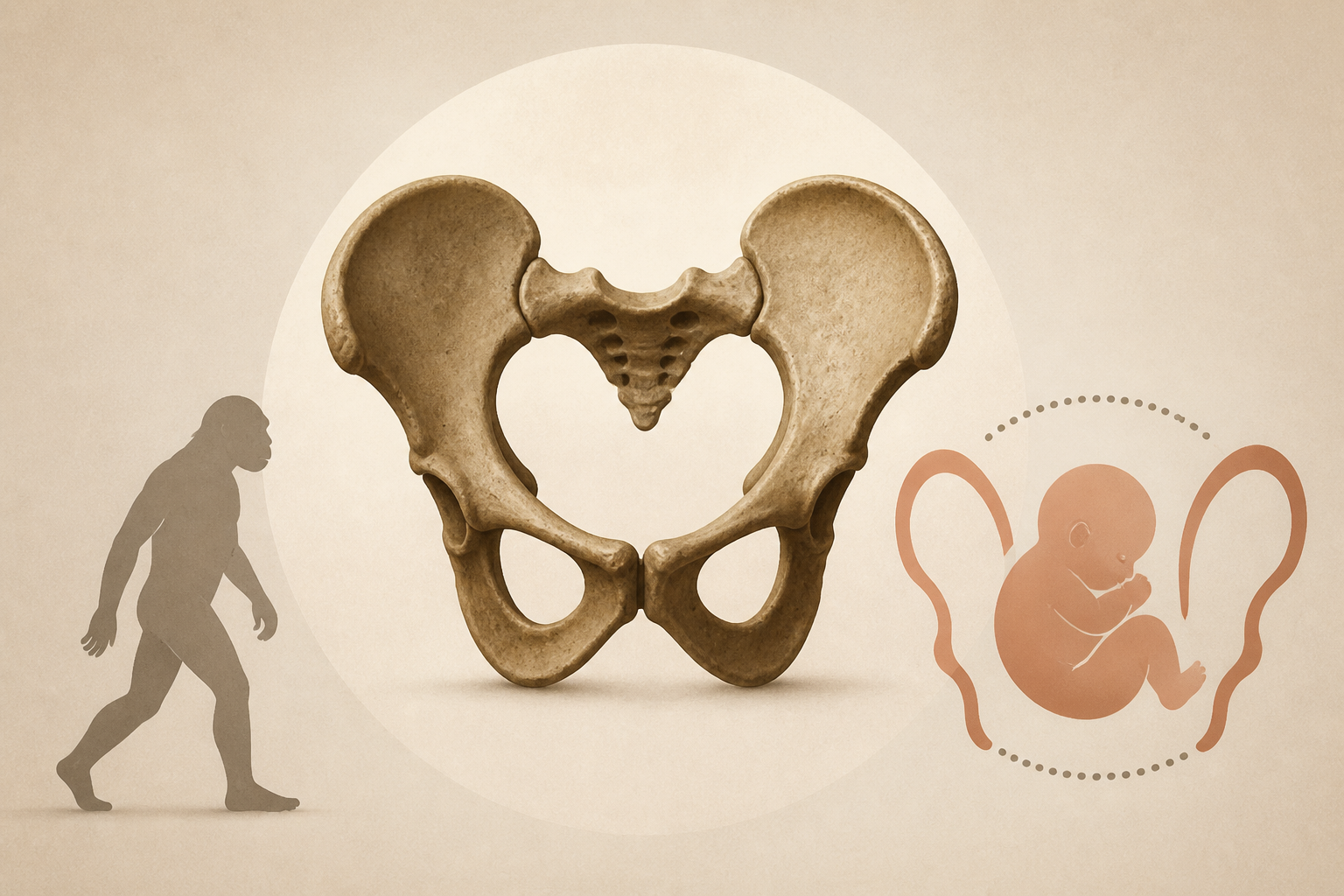
AI Generated Image
Neanderthal pelvises challenge a long-held idea about childbirth and walking
Archaeology News Online Magazine • • science
Key Points:
- A new study of two well-preserved Neanderthal skeletons reveals close similarities between Neanderthal and modern human female pelvises in childbirth-related areas, challenging the long-held Obstetrical Dilemma Hypothesis that evolution balanced childbirth with efficient walking.
- Researchers used advanced CT scans and 3D reconstructions to compare Neanderthal pelvises with modern humans, finding that while childbirth anatomy was similar, Neanderthals exhibited distinct pelvic features linked to different walking and standing styles.
- The findings suggest that pelvic evolution was influenced more by the need to maintain pelvic floor stability during childbirth rather than a trade-off between a wide birth canal and locomotion efficiency.
- The study highlights that Neanderthals and modern humans followed divergent evolutionary paths in pelvic form, with similar childbirth mechanisms but differing movement-related anatomy.
- This research shifts the focus from walking efficiency to the broader evolutionary demands on the pelvis, emphasizing the importance of pelvic floor stability alongside childbirth in human evolution.


