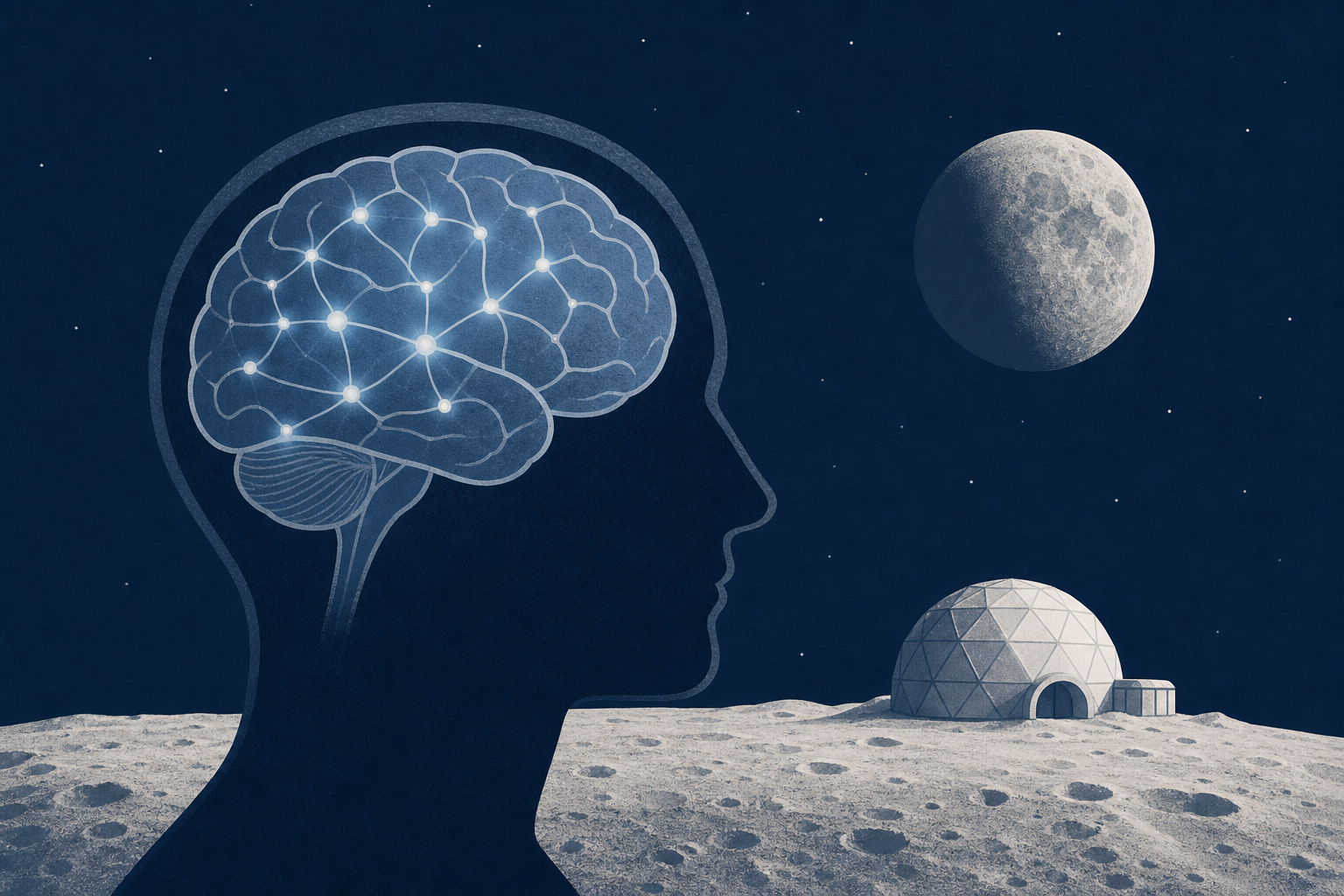
AI Generated Image
Neuroscientist Reveals What Living on the Moon Could Do to Human Mind
Newsweek • • science
Key Points:
- NASA aims to establish a long-term base on the lunar South Pole by 2032, which could subject future residents to unprecedented psychological challenges due to isolation, confinement, and separation from Earth.
- Experts warn that the moon's environment, lacking natural Earth cues like weather and wildlife, could lead to insomnia, anxiety, depression, cognitive difficulties, and a profound sense of disconnection or "existential vertigo."
- Reduced lunar gravity may indirectly affect emotional well-being by disrupting sleep, movement, cardiovascular function, and spatial orientation, further complicating mental health.
- Unlike temporary ISS missions, lunar settlers will need to build a functioning society amid monotony and sensory deprivation, requiring artificial environmental cues to maintain mental stability.
- The psychological adaptation to lunar life may result in a new human identity culturally shaped by distance from Earth, raising questions about whether settlers will see themselves as pioneers or exiles.


