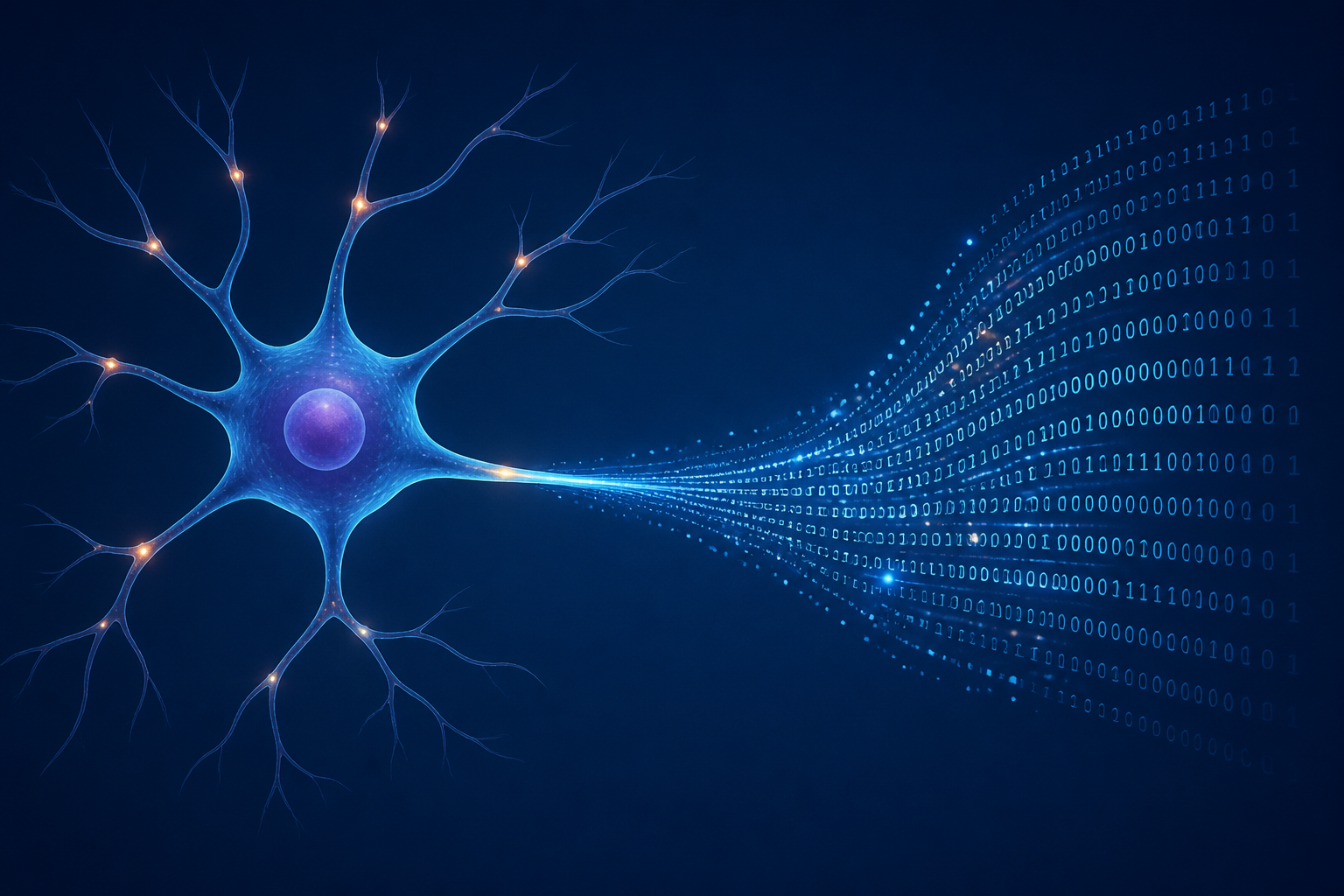
AI Generated Image
Neuroscientists have vastly underestimated brain cells’ computing power
Yahoo • • science
Key Points:
- New research provides the first direct evidence that neurons' dendrites can independently compute information, significantly expanding the computational capacity of individual neurons and the brain overall.
- Using voltage-imaging technology in mice navigating virtual environments, scientists observed dendrites processing spatial information ahead of the neuron’s cell body, suggesting dendrites act as local memory devices.
- This discovery challenges the traditional view of neurons as single computational units, proposing instead that each neuron functions like a complex neural network due to its elaborate dendritic branches.
- Experts highlight that dendritic computation adds a layer of flexibility and complexity to brain function, indicating much of the brain's power lies beyond what happens in the neuron’s cell body.
- The findings open new avenues for understanding how the brain efficiently processes vast amounts of information with limited energy, emphasizing the importance of dendritic structures in cognition.


