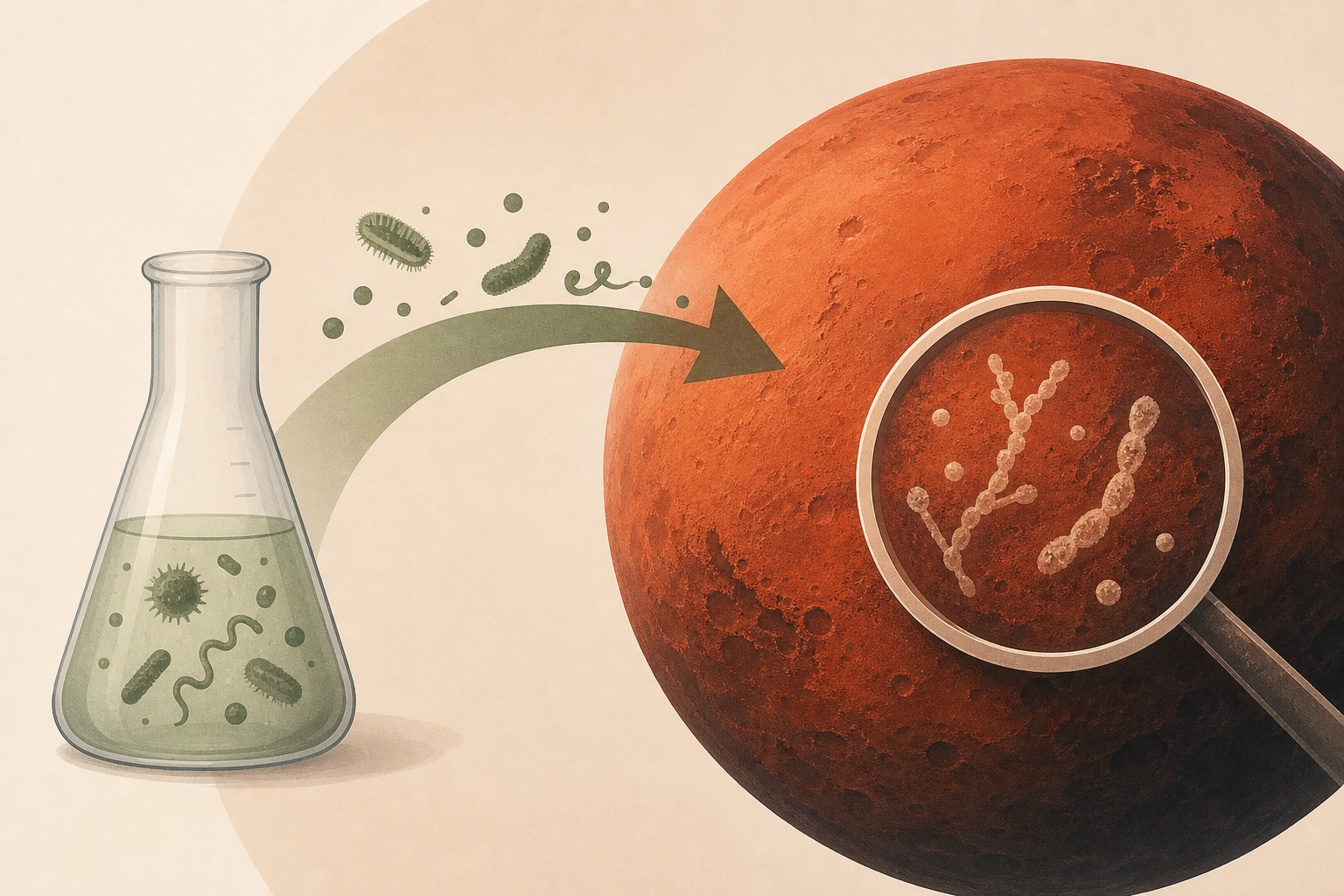
AI Generated Image
New analysis finds signs of life on Mars actually came from Earth
Yahoo • • science
Key Points:
- Researchers tested the stability and chirality of pristane and phytane, hydrocarbons linked to biological origins, using replicas of the Mars Organic Molecule Analyzer (MOMA) instrument planned for ESA's Rosalind Franklin rover on Mars.
- Analysis of the Murchison meteorite showed pristane and phytane in racemic (equal mirror-image) forms, inconsistent with fresh biological material and instead resembling contamination from mature petroleum likely acquired after the meteorite landed on Earth.
- The findings highlight the importance of chirality as a tool to distinguish biological from non-biological or contaminated organic molecules, which is critical for interpreting potential biosignatures on Mars where thermal alteration is minimal.
- This study validates MOMA's capability to separate chiral hydrocarbons and provides a method to screen meteorites for terrestrial contamination, improving the reliability of life detection efforts in planetary science.
- The research also raises awareness about how petroleum-derived aerosols contaminate exposed surfaces on Earth and may affect analyses of extraterrestrial samples, emphasizing caution in interpreting organic molecules found in meteorites.


