AI Image
New Parkinson’s drug approved in the US: What does it do differently?
ynetnews.com • • business
Key Points:
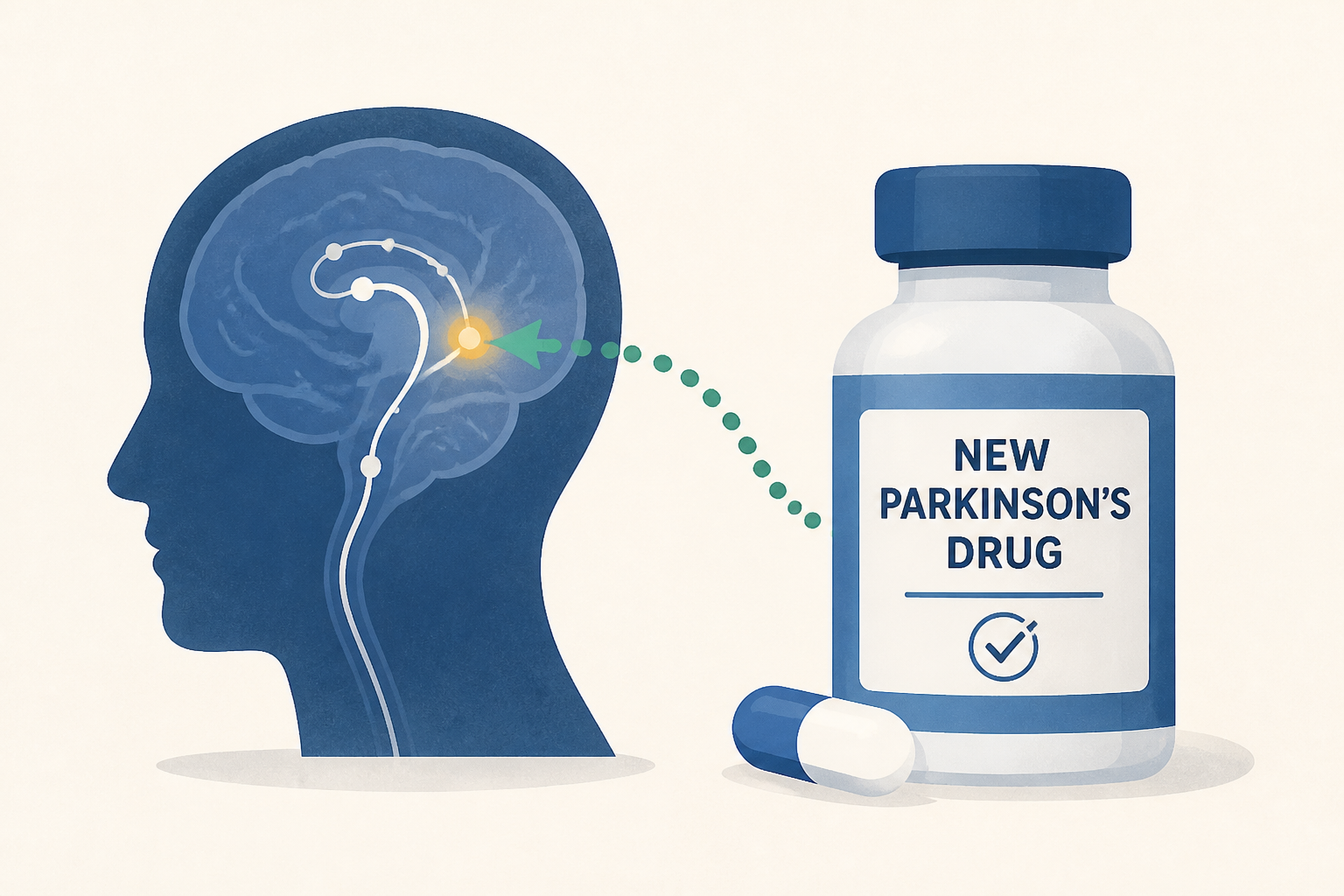
- The U.S. FDA has approved tavapadon, a new once-daily pill developed by AbbVie for treating Parkinson’s disease in adults, offering a novel approach by targeting D1 and D5 dopamine receptors primarily involved in voluntary movement.
- Unlike existing dopamine agonists that act mainly on D2 receptors and can cause side effects such as compulsive behaviors and sleep attacks, tavapadon partially activates D1 receptors to improve movement while aiming to reduce overstimulation-related involuntary movements.
- Clinical trials involving over 800 newly diagnosed patients showed that tavapadon significantly improved movement and daily functioning compared to placebo, with about 45% of patients reporting marked improvement; an additional trial found it extended good functioning by about one hour daily when added to levodopa treatment.
- Common side effects included nausea, dizziness, and headache, but rates of drowsiness, compulsive behaviors, and involuntary movements were low and comparable to placebo; however, longer-term safety and tolerability remain to be established in ongoing studies.
- Experts caution that tavapadon's advantages over existing Parkinson’s drugs are not yet fully established since trials compared it only to placebo, and further larger, longer-term studies are needed to determine its relative efficacy and safety.


