AI Generated Image
New Tech Resurrects End-Of-Life Lithium Batteries Back To 95% Capacity
SlashGear • • technology
Key Points:
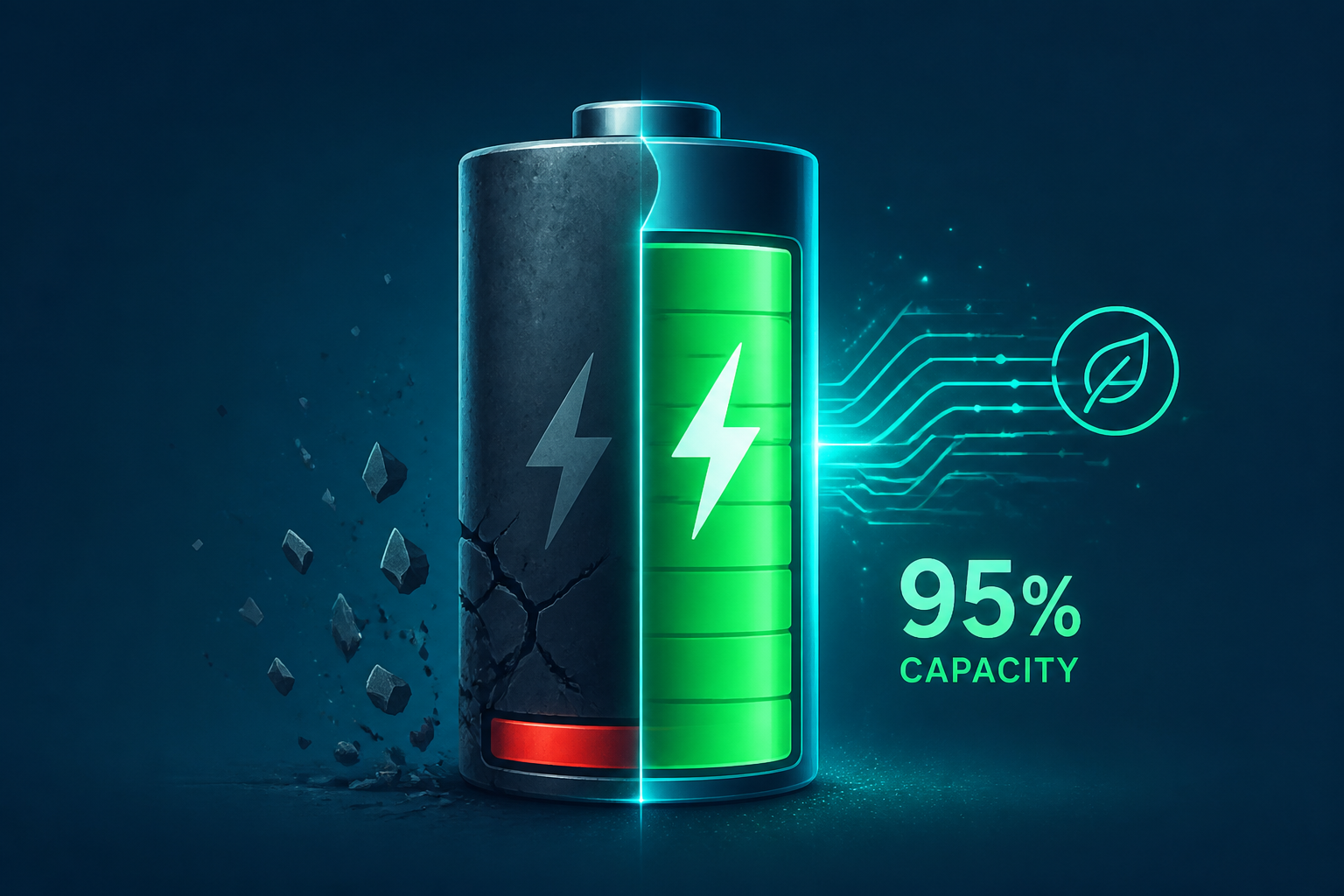
- Cornell University researchers have developed a novel recycling technique called Direct Electrode-to-Electrode Regeneration (DEER) that rejuvenates lithium-ion battery electrodes by chemically removing the solid electrolyte interphase (SEI) layer, restoring them to 95% of their original capacity without destroying the entire battery cell.
- Unlike traditional recycling methods that pulverize batteries to extract raw materials, DEER focuses on refurbishing electrodes by submerging them in an electrochemical bath containing 1,3-dimethyl-2-imidazolidinone (DMI), which improves battery longevity and reduces degradation rates significantly.
- DEER is particularly suited for EV batteries considered end-of-life at 70-80% capacity but still operational, as it cannot address capacity loss due to lithium depletion, mechanical failure, or structural damage, which require conventional recycling methods.
- Although the process currently requires dismantling and washing electrodes and faces challenges in scaling up for industrial use, DEER recycling is estimated to be more cost-effective ($15.25/kg) than traditional methods ($26.31/kg), with potential for further cost reduction through DMI solvent recovery.
- This technique offers a promising supplement to existing recycling approaches, potentially enhancing circularity in EV battery use, especially in countries with high EV adoption and battery recycling demands like China.


