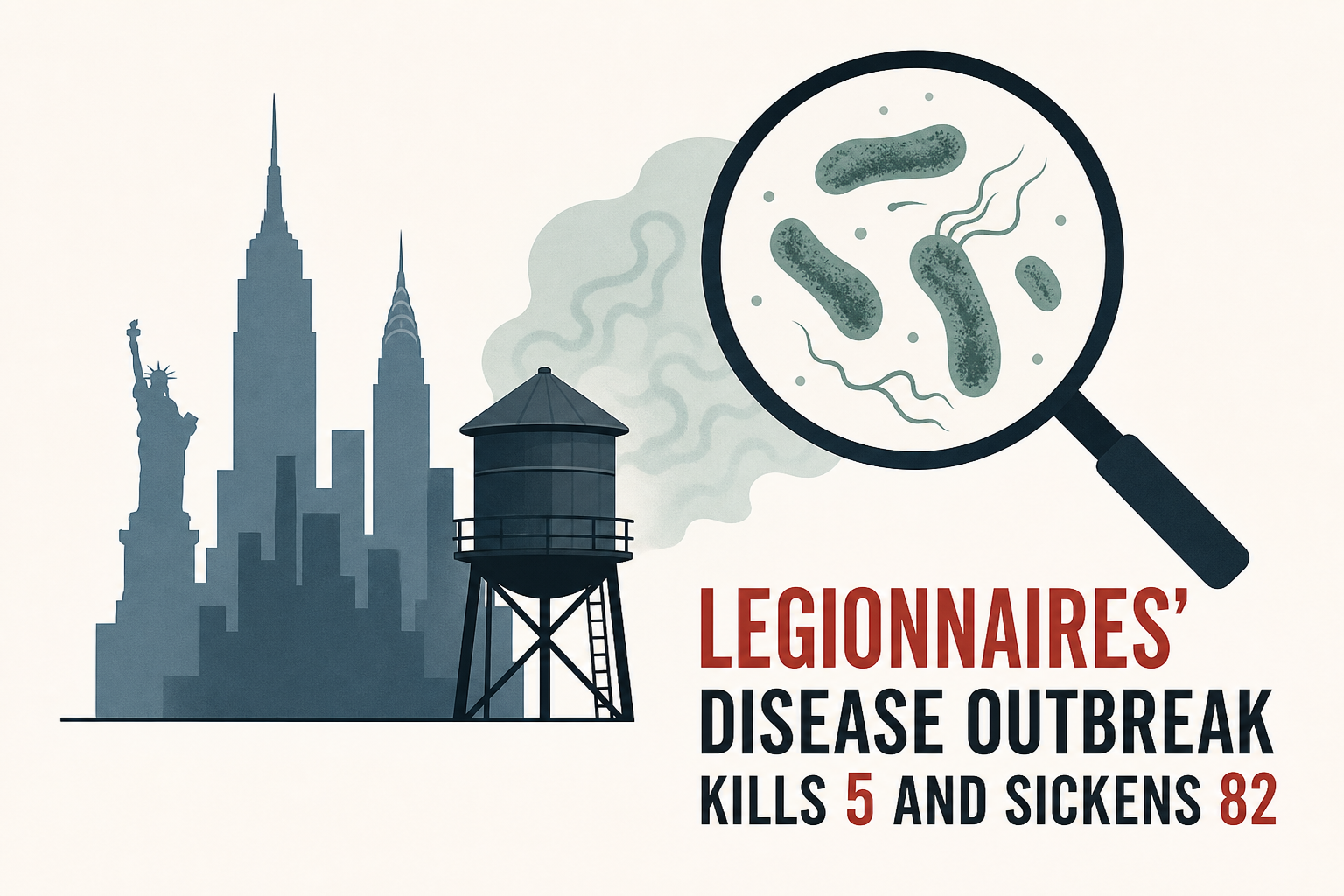
AI Generated Image
New York City Legionnaires' disease outbreak kills 5 and sickens 82
Fox News • • general
Key Points:
- New York City is investigating a Legionnaires' disease outbreak on the Upper East Side, with five deaths and 82 cases reported as of July 21; no new cases have emerged in the past six days, indicating the likely elimination of the exposure source.
- Legionnaires' disease, a severe pneumonia caused by Legionella bacteria, spreads primarily through inhalation of contaminated water droplets from sources like building water systems, cooling towers, and hot tubs, but rarely from person to person.
- Symptoms include cough, shortness of breath, fever, muscle aches, headaches, and sometimes gastrointestinal issues, typically appearing 2 to 14 days after exposure; treatment involves antibiotics, with higher risk for older adults, smokers, and immunocompromised individuals.
- Prevention focuses on maintaining and disinfecting building water systems, cleaning cooling towers, preventing stagnant water, and controlling water temperature and disinfectant levels to inhibit bacterial growth.
- Individuals who may have been exposed and develop symptoms are urged to seek immediate medical care for early diagnosis and treatment to reduce severe illness risk, especially those with risk factors like advanced age.


![Hasbro reveals The Legend of Zelda: Heroes of Hyrule toys [update: pre-orders live]](https://media-cdn.cashwalklabs.io/https%3A%2F%2Fstatic.cashwalklabs.io%2Fastro%2F09732a6623bc2662%2Fastro-public%2Fimages%2Fnews-placeholder%2Ftechnology.png?format=webp&w=120&h=80)


