AI Image
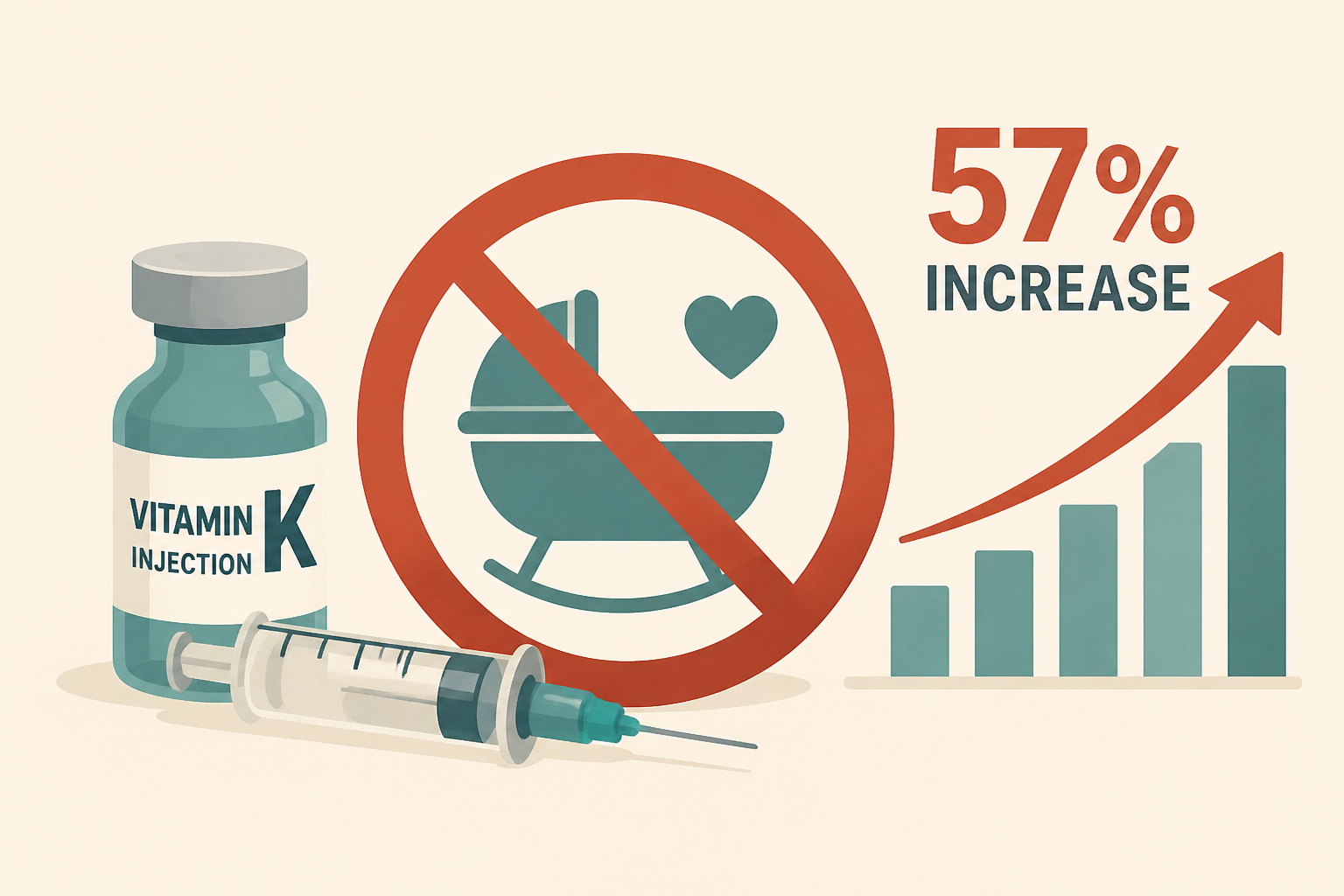
Newborn vitamin K shot refusal jumps by 57%
NewsNation • • health
Key Points:
- A rising number of parents are refusing the vitamin K shot for their newborns, increasing the risk of vitamin K deficiency bleeding (VKDB), a serious and potentially fatal bleeding disorder.
- Vitamin K shots, introduced in the 1960s, are critical for preventing VKDB by promoting blood clotting in newborns who naturally have low vitamin K levels.
- Recent data shows a sharp 57% increase in refusal rates over six months, rising from 5.2% in December 2025 to 8.1% in June, reversing decades of near-universal acceptance.
- VKDB can cause severe outcomes, with about 14% of affected babies dying, 40% suffering long-term neurological damage, and 63% experiencing brain bleeds, according to the American Academy of Neurology.
- Pediatric experts express concern that growing vaccine hesitancy is undermining efforts to protect infants from preventable, life-threatening conditions.


