AI Image
Newly found farthest quasar from Earth is also record-setting oldest, scientists say
CBS News • • science
Key Points:
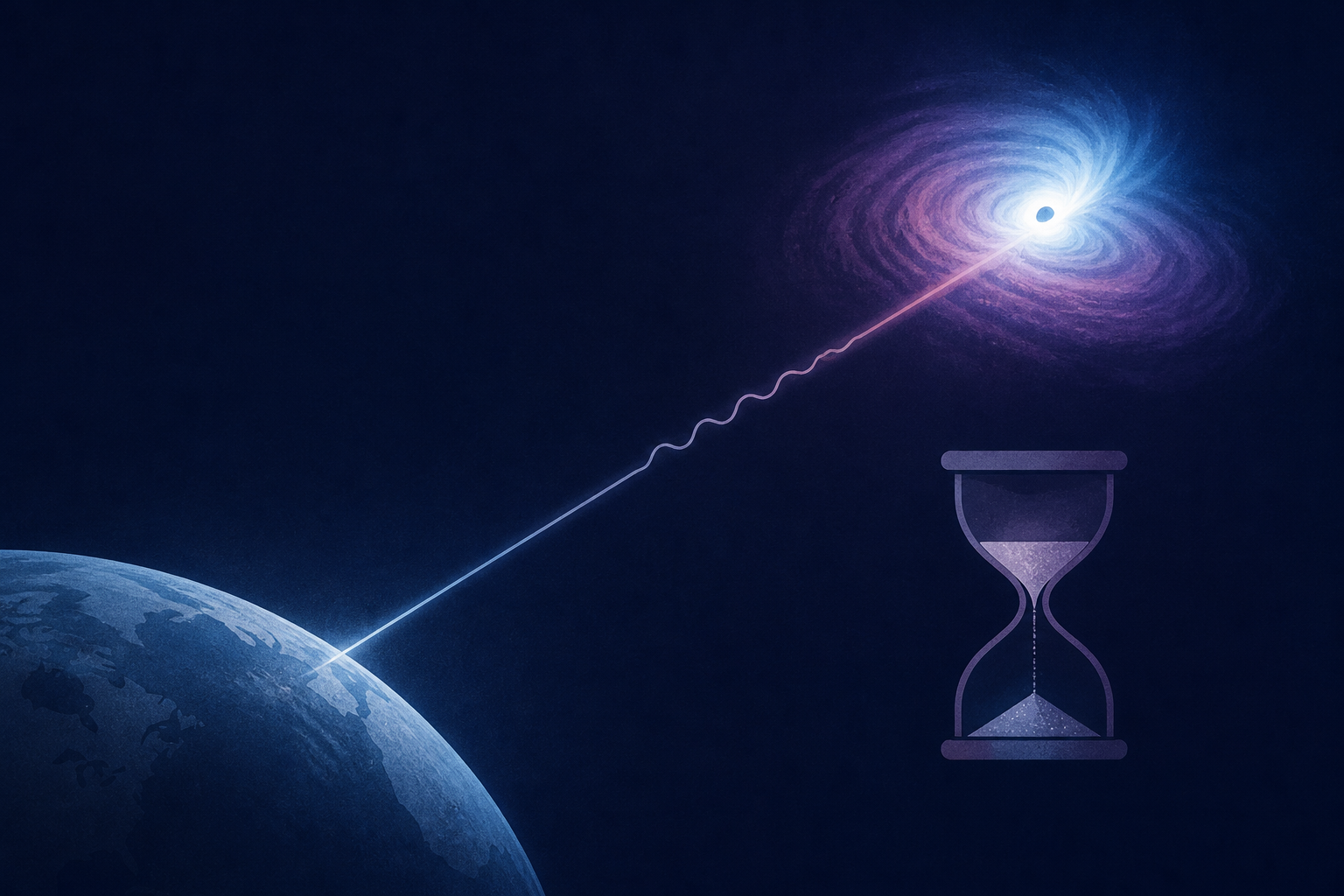
- Scientists have discovered the most distant quasar ever observed, dating back to just 630 million years after the Big Bang, significantly earlier than previous records by nearly 40 million years.
- The quasar, named Dun Aonghasa, hosts a massive black hole with a mass equivalent to 360 million suns, despite its relatively slow consumption of surrounding matter.
- The discovery was made using data from the European Space Agency's Euclid telescope and confirmed with observations from the Hubble and Webb space telescopes.
- This finding challenges current understanding of early black hole growth and sets a new benchmark for studying the universe's formative years.
- Researchers continue to explore the cosmic dawn, with the possibility that an even more distant quasar could be found in the near future.


