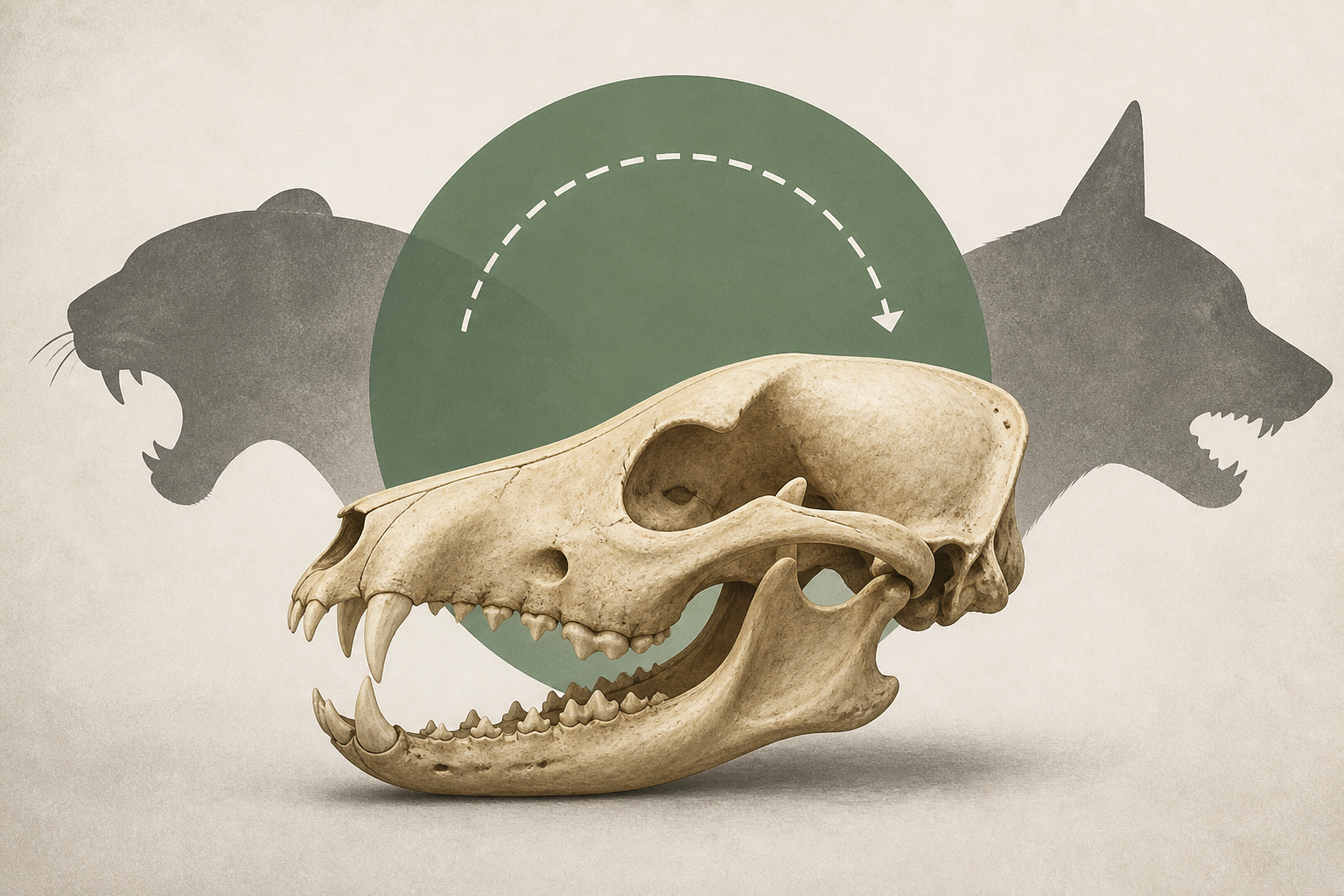
AI Generated Image
Not tiger, not wolf: Australian thylacine skull reveals a far different hunting style
Phys.org • • world
Key Points:
- A new study from Flinders University reveals that the thylacine, or "Tasmanian tiger," was significantly different from wolves and wild dogs, with jaws adapted for catching small to medium prey rather than large animals like sheep.
- The research shows thylacines had oversized skulls with long, slender snouts and powerful snapping bites, unlike the robust jaws of wolves, suggesting they preyed on animals such as rabbit-sized bandicoots.
- Thylacines are marsupials more closely related to kangaroos than canines, and their unique skull features represent an adaptation not seen in any living carnivorous mammals, resembling more the snapping jaws of crocodiles and predatory fish.
- The study challenges myths that led to the thylacine's extinction, emphasizing that they were not ferocious livestock predators, and calls for greater protection of Australia's unique wildlife and Indigenous custodianship.
- The findings also connect to genomic research showing similarities in skull growth patterns between thylacines and wolves, opening new avenues in evolutionary biology to understand the development of unique animal traits.


