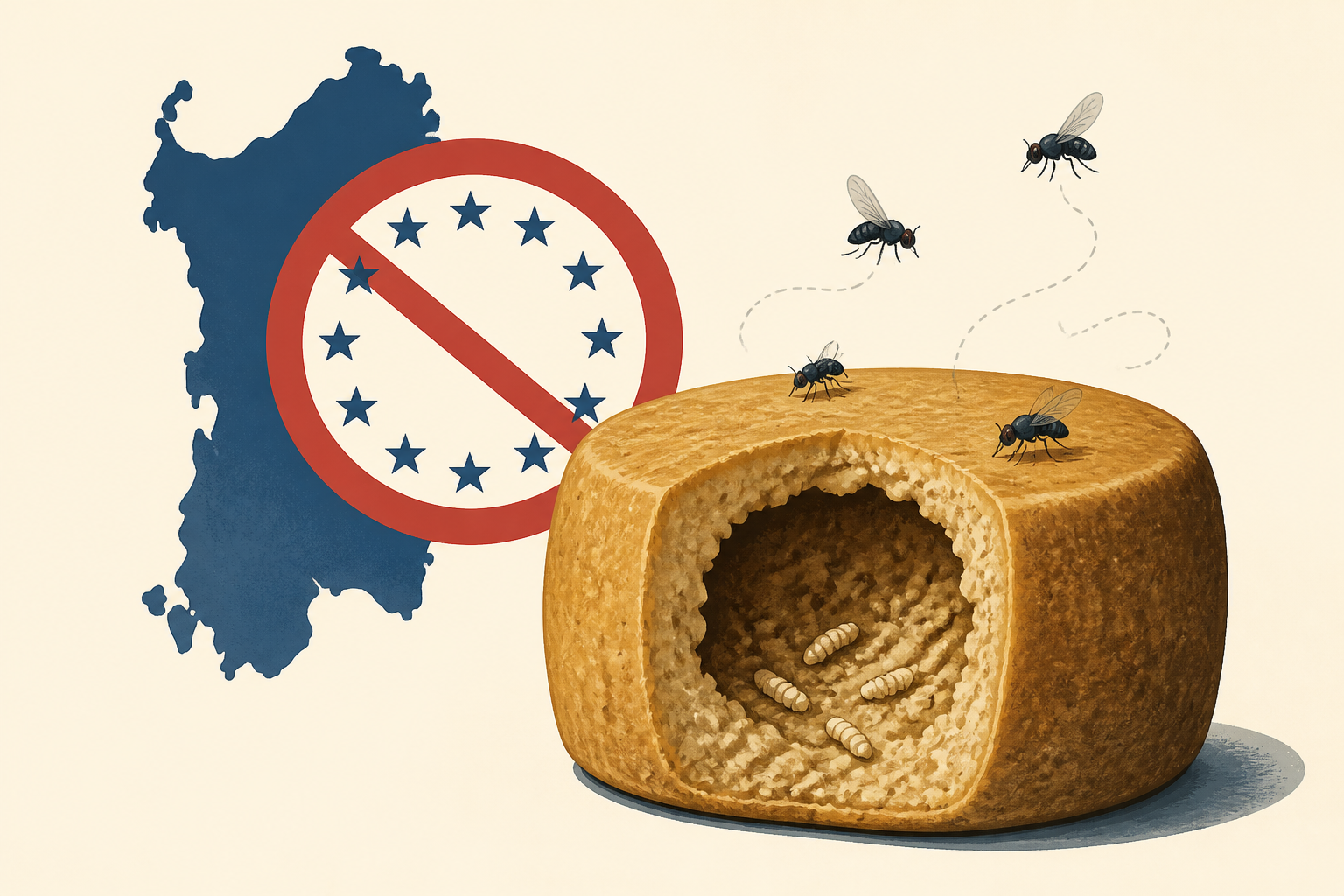
AI Generated Image
On the island of Sardinia there's a cheese so extreme it's been outlawed across Europe — a pecorino deliberately left open for flies to lay their eggs in, so that by the time it reaches the table it's
Space Daily • • health
Key Points:
- Casu marzu is a traditional Sardinian cheese made by allowing cheese fly larvae to digest the pecorino, resulting in a soft, liquid-weeping cheese that contains thousands of live larvae, which are eaten alive as part of the experience.
- Despite being illegal to sell commercially in Italy since 1962 due to food safety laws prohibiting foods with live larvae, casu marzu is recognized as a traditional product and is still made, traded quietly, and consumed privately, though it cannot be legally sold in shops across the EU.
- The cheese gained notoriety as the "most dangerous cheese" from Guinness World Records in 2009, based on potential health risks from larvae surviving stomach acid, but medical literature suggests these cases are rare and typically self-limiting, with no conclusive evidence larvae cause serious harm.
- Attempts to develop controlled production methods, such as the 2005 Sassari University experiment, showed inconsistent results and did not produce a reliable, regulator-approved protocol, leaving food safety concerns unresolved.
- A 2023 petition to reauthorize casu marzu production in the EU under regulated conditions was rejected, with Italian authorities maintaining it is dangerous; meanwhile, climate change is reducing larval colonization, further thinning the cheese’s production.


