AI Generated Image
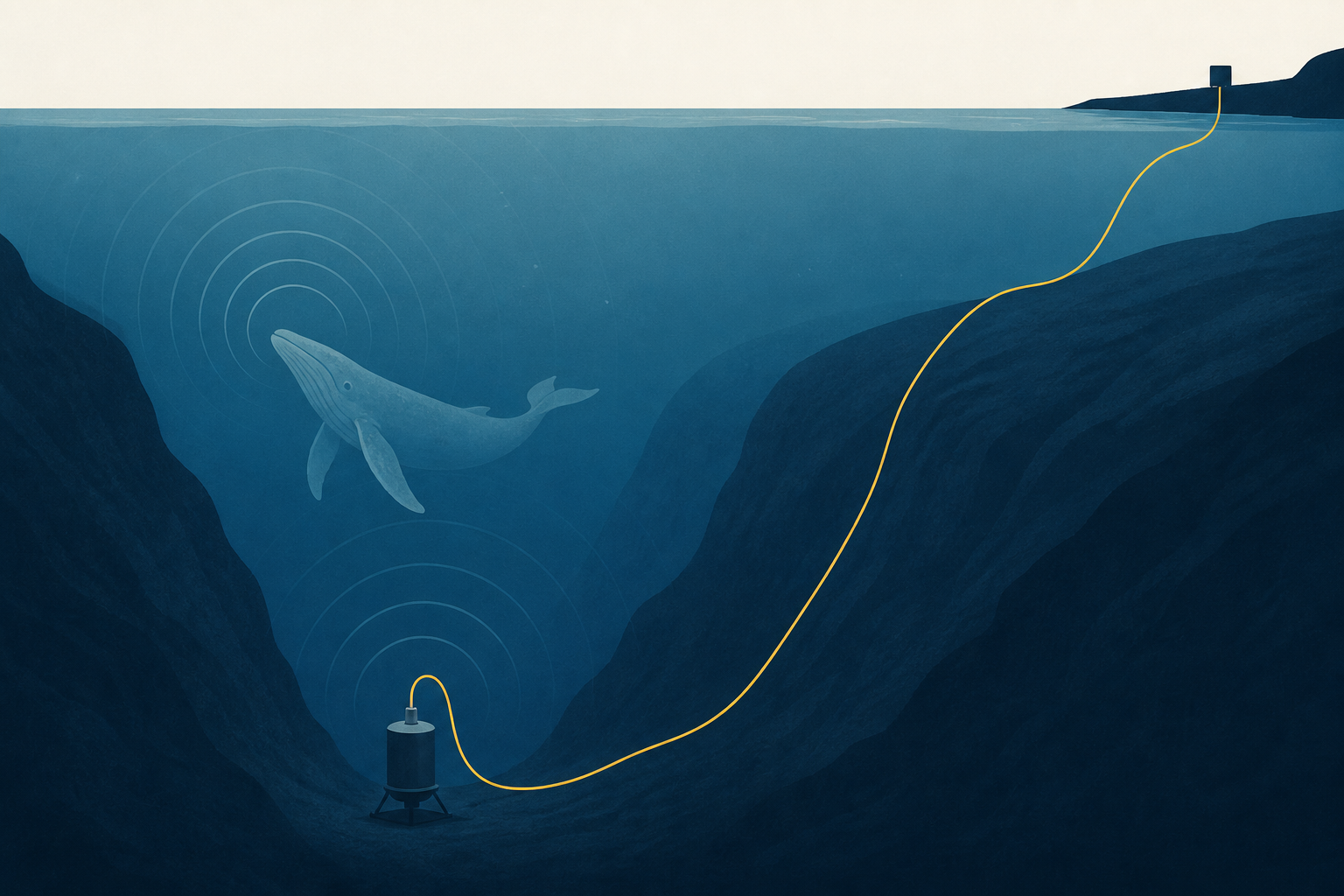
One hydrophone sitting 891 meters down in Monterey Canyon, wired to shore by 52 kilometers of cable, recorded 2,111 days out of 2,192 between July 2015 and June 2021, and humpback song climbed from 34
Space Daily • • science
Key Points:
- A hydrophone installed 891 meters deep off Monterey Bay collected near-continuous acoustic data on baleen whale behavior over six years, capturing 96% of days from 2015 to 2021 and enabling detailed tracking of whale song trends.
- The study found that humpback and blue whales responded differently to the 2014-2016 marine heat wave ("the Blob"), with humpback whale song steadily increasing over six years while blue whale song fluctuated in line with krill availability, their primary food source.
- Humpback whales' flexible foraging on both krill and small fish like anchovies allowed them to recover feeding success and singing rates faster than blue whales, which rely heavily on krill and showed more vulnerability due to this specialization and smaller population size.
- The continuous, cable-linked hydrophone data demonstrated the advantages of long-term acoustic monitoring over traditional visual surveys, providing a near real-time biological indicator of ocean conditions and food web health that can serve as an early warning system amid increasing marine heat waves.
- Researchers emphasize that single strong seasons do not confirm full population recovery, highlighting the importance of sustained acoustic monitoring to understand long-term ecosystem dynamics and inform conservation efforts, especially for endangered blue whales in the eastern North Pacific.


