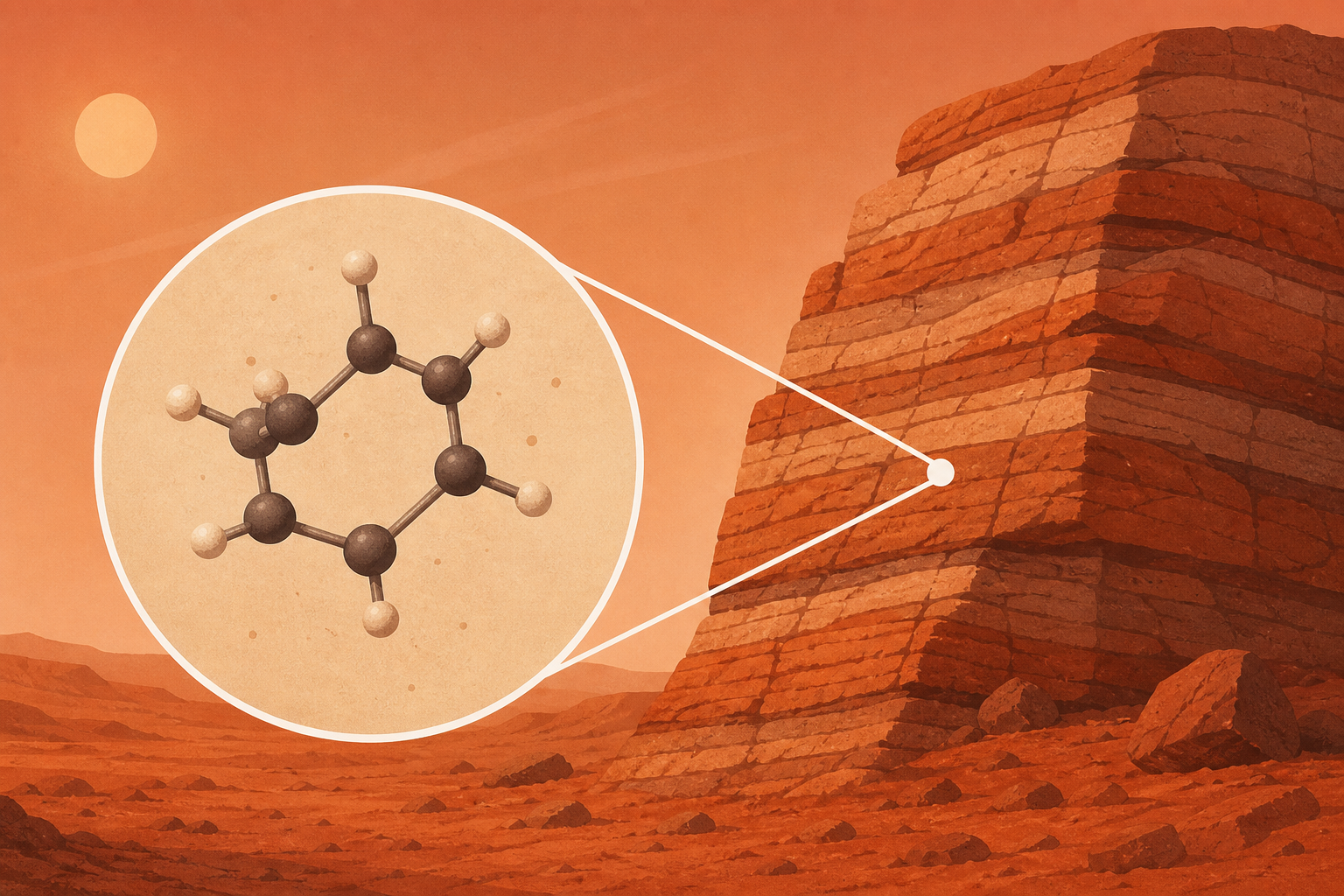
AI Generated Image
Organic carbon detected in Bright Angel rock formation on Mars
Phys.org • • science
Key Points:
- NASA's Perseverance rover has confirmed the presence of organic carbon, essential building blocks of life, in two rocks from Mars' Bright Angel formation, as detailed in a new Science Advances paper.
- Using the SHERLOC instrument's Raman spectroscopy, researchers detected macromolecular carbon (MMC) in fine-grained mudstone sediments, indicating organic matter may have been deposited during multiple geological events billions of years ago.
- The MMC was found just microns beneath the Martian surface, marking the shallowest detection of such organics on Mars, suggesting these molecules are either resistant to degradation or shielded by minerals despite harsh surface conditions.
- The discovery, located over 2,000 miles from previous organic findings by the Curiosity rover, implies that ancient Martian organics could have been widespread in lakes and rivers, enhancing prospects for past habitability.
- While Perseverance can identify potential biosignatures, definitive evidence of past life requires more advanced laboratory analysis of samples returned to Earth, which the team hopes to conduct in the future.


