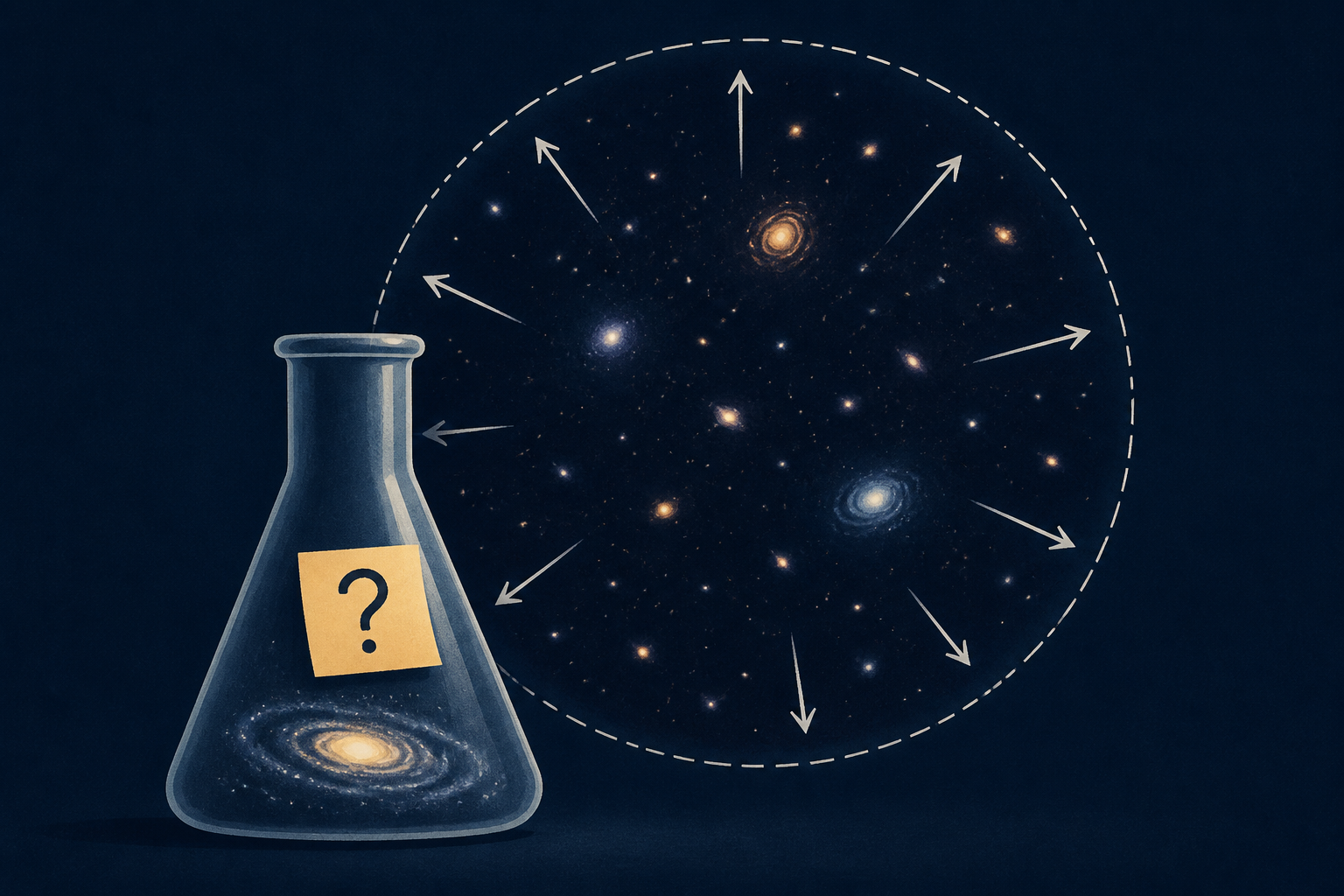
AI Generated Image
Our Models About The Expanding Universe May Be All Wrong
All That's Interesting • • science
Key Points:
- Scientists have long used two main methods to measure the universe's expansion rate, but these approaches have consistently yielded conflicting results, a problem known as the "Hubble tension."
- The discovery in the late 1990s that the universe's expansion is accelerating, attributed to dark energy and incorporated into the ΛCDM model, earned researchers a Nobel Prize but did not resolve disagreements over the expansion rate.
- Recent data from the Dark Energy Spectroscopic Instrument (DESI), combined with other observations, suggest that dark energy may not be constant over time, challenging the foundational assumption of the ΛCDM model.
- This evolving understanding has led some scientists, including Nobel laureate Adam Riess, to question the completeness of the standard cosmological model, indicating potential shifts in our grasp of cosmic expansion.
- Despite these findings, new analyses, such as those using the Lyman-alpha forest, have produced results more consistent with the ΛCDM model, leaving the true nature of dark energy and the universe's expansion rate still uncertain.


