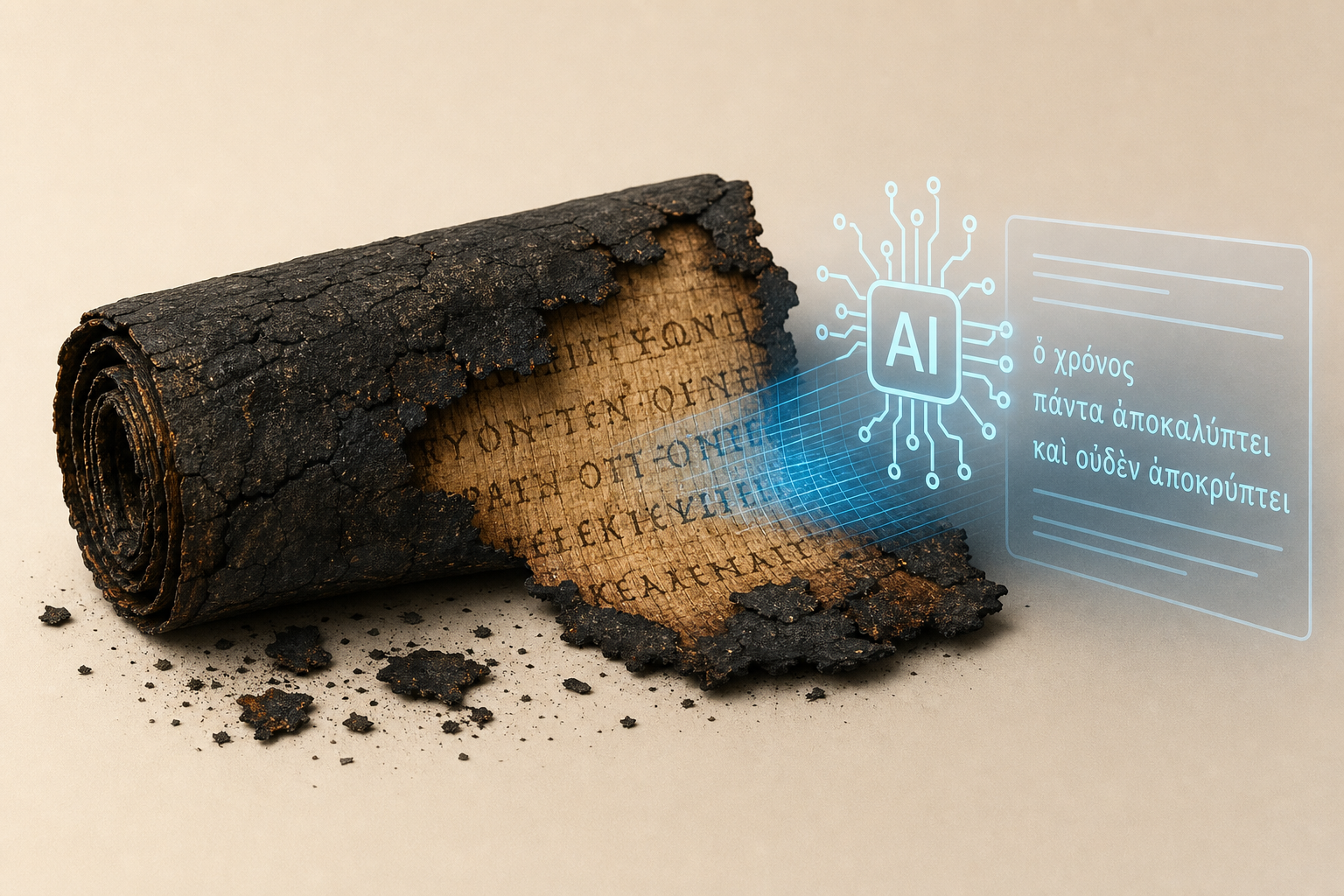
AI Generated Image
Papyrus scroll burnt to a crisp during Vesuvius eruption deciphered with help of AI
CNN • • world
Key Points:
- A carbonized papyrus scroll from the ancient Roman town of Herculaneum, buried by Mount Vesuvius's eruption in 79 AD, has been virtually unrolled and partially deciphered using AI, marking a historic breakthrough in reading these fragile texts.
- The scroll, PHerc. 1667, was scanned via CT and digitally flattened, revealing nearly 1.5 meters of text across 20 columns, containing a philosophical discussion likely rooted in Stoic thought on ethics, arts, and human behavior.
- Led by papyrologist Federica Nicolardi, the team used machine learning to interpret the text, which dates back to possibly the late third or second century BC, making it one of the oldest scrolls in the collection.
- Another scroll, PHerc. 139, was found to contain references to “Philodemus, On Gods, Book 8,” confirming the existence of a previously unknown series of at least eight books by the Greek philosopher.
- The Vesuvius Challenge project, initiated in 2023 by Brent Seales and others, has advanced from imaging and AI decoding to requiring expert scholars to read, edit, and understand the texts uncovered through virtual unwrapping.


