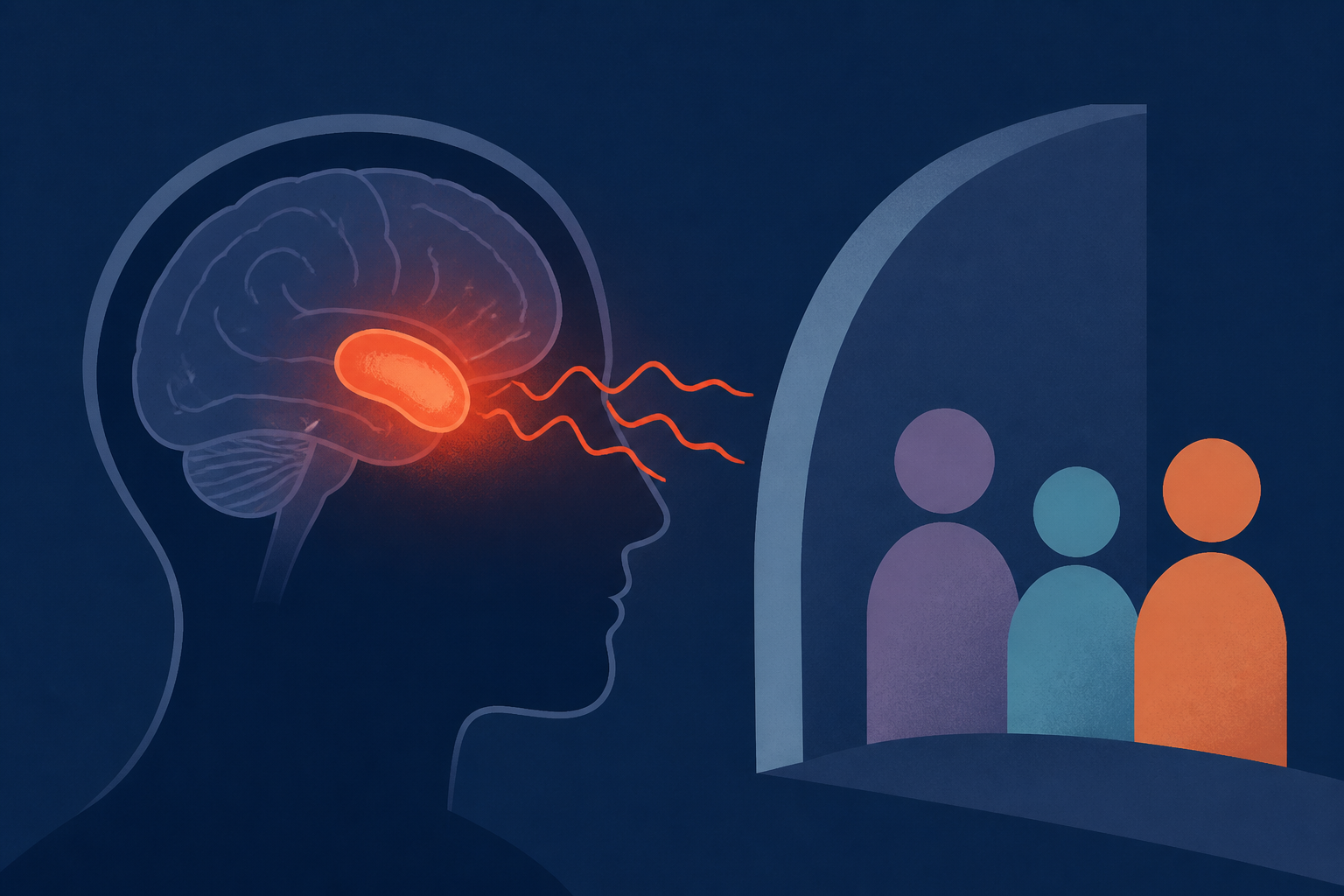
AI Generated Image
People who feel uneasy around those who think or live differently aren't simply closed-minded — brain imaging suggests their amygdala is physically larger, and fires harder in response to the unfamili
Space Daily • • health
Key Points:
- Research at University College London found a small correlation between larger right amygdala volume and political conservatism, while liberalism correlated with anterior cingulate cortex volume, though the latter did not replicate in a larger 2024 study.
- The amygdala is not simply a "fear center," but rather a significance detector involved in social interactions, with larger amygdalae linked to maintaining more complex social networks, though replication of this finding is weak.
- Functional MRI studies show stronger amygdala responses to unfamiliar or out-group faces due to slower habituation, indicating that amygdala activity reflects social familiarity rather than inherent threat response.
- Earlier physiological studies linking heightened threat sensitivity to conservative political views failed to replicate in larger, preregistered studies, weakening the biological threat-sensitivity hypothesis.
- Familiarity with individuals reduces amygdala response differences and prejudice, supported by meta-analyses showing that intergroup contact decreases bias, exemplified by the author's grand-aunt overcoming her avoidance of a new neighbor after personal interaction.


