AI Image
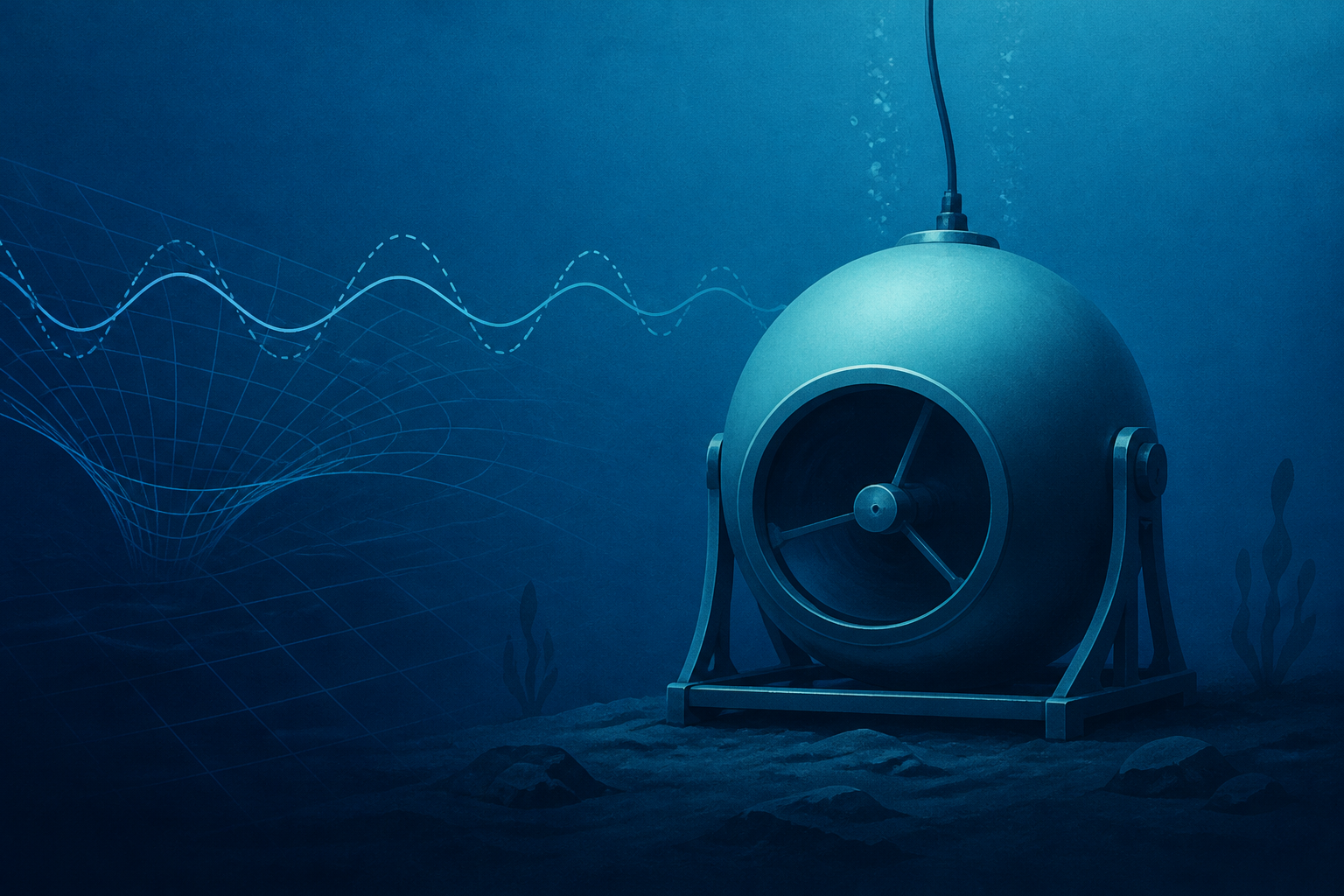
Physicists sank a telescope 1.5 miles under the sea to put Einstein's relativity to the test
Yahoo • • science
Key Points:
- The ORCA neutrino telescope, located 1.5 miles beneath the Mediterranean Sea off France, tested Lorentz invariance—a core principle of Einstein's relativity—and found no evidence of its violation, confirming that the laws of physics remain consistent regardless of direction or speed.
- Using data from its initial detection units, ORCA analyzed neutrinos traveling through Earth, observing their oscillations and setting competitive limits on Lorentz invariance violation, comparable to larger experiments like Japan's Super-Kamiokande and the IceCube detector in Antarctica.
- Neutrinos, due to their weak interaction and ability to travel vast distances, serve as ideal probes for detecting tiny potential violations of fundamental physics principles, which some quantum gravity theories predict might occur at extremely small scales.
- The study also established the first direct constraints on violations that would affect muon and tau neutrinos differently, helping to rule out certain theoretical models predicting stronger Lorentz invariance violations.
- With only a fraction of its planned detection units operational, ORCA's results are promising, and future research with expanded arrays and its sister detector ARCA aims to further explore high-energy cosmic neutrinos to test the fabric of space-time.


