AI Generated Image
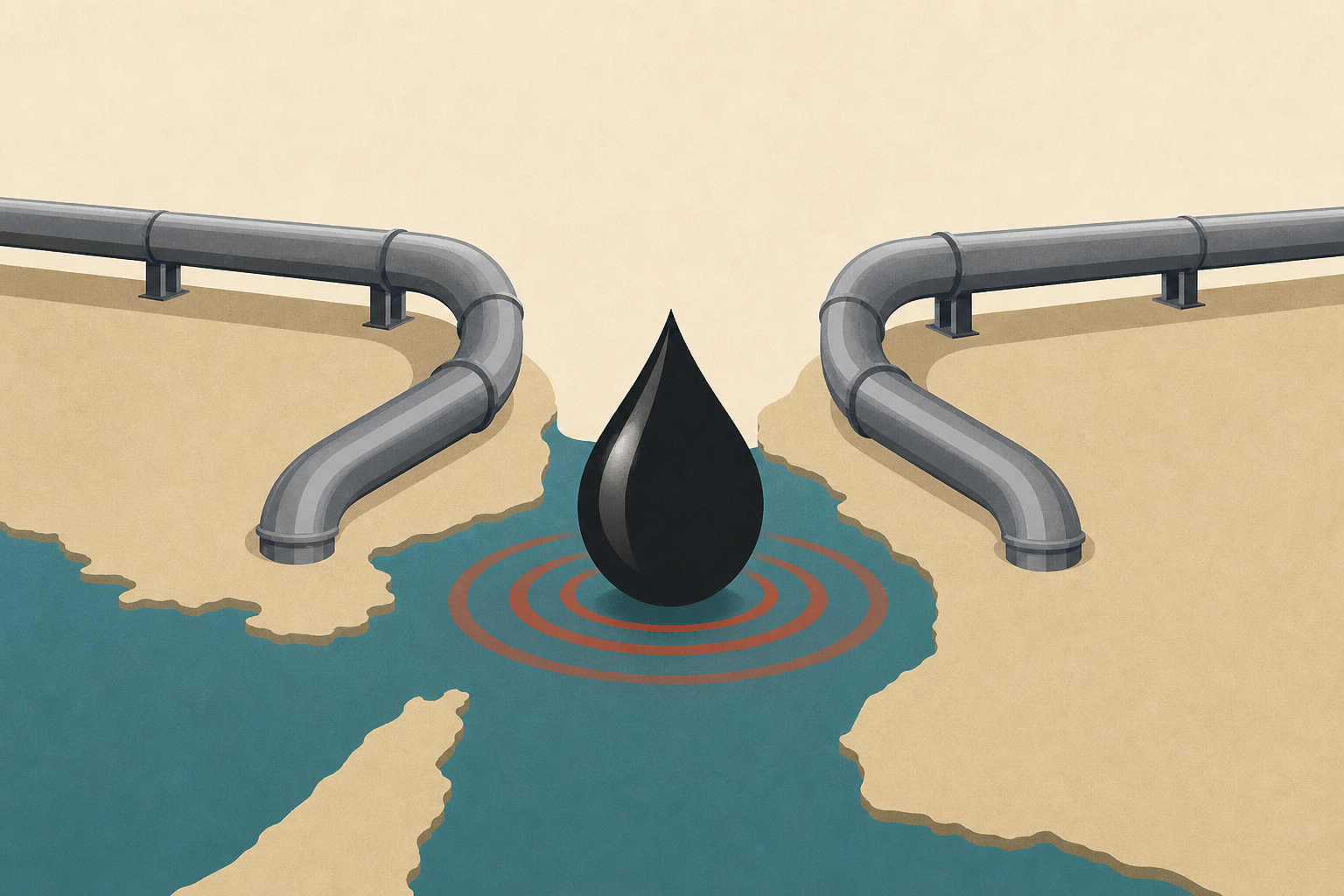
Pipelines around Hormuz won't end threat Iran poses to Middle East oil
CNBC • • world
Key Points:
- Middle East oil producers are developing new pipelines to reduce reliance on the Strait of Hormuz amid near-daily attacks on tankers by Iran, but experts warn these pipelines remain vulnerable to asymmetric attacks.
- The U.S. is backing Iraq's effort to rebuild a pipeline from Kirkuk through Syria to the Mediterranean, with U.S. companies expected to assist in construction, aiming to provide Iraq with alternative export routes beyond the Gulf.
- The UAE plans to double its export capacity via a second pipeline to Fujairah on the Gulf of Oman, and Saudi Arabia is considering expanding its Red Sea pipeline by 2 million barrels per day, with regional pipeline capacity potentially exceeding 14 million bpd by 2028.
- Despite these infrastructure projects serving as geopolitical hedges, analysts highlight that pipelines and related facilities remain targets, as demonstrated by Iran’s April attack on a Saudi pumping station, and threats from Iran-aligned Houthis to disrupt the Bab el-Mandeb Strait.
- The Bab el-Mandeb Strait is critical for Saudi oil exports through the Red Sea terminal of Yanbu, and any closure coordinated by Iran and the Houthis could significantly impact global oil markets.


