AI Generated Image
Plasma proteome profiling identified biomarkers for the differential diagnosis and molecular staging of neurodegenerative dementias
Nature • • health
Key Points:
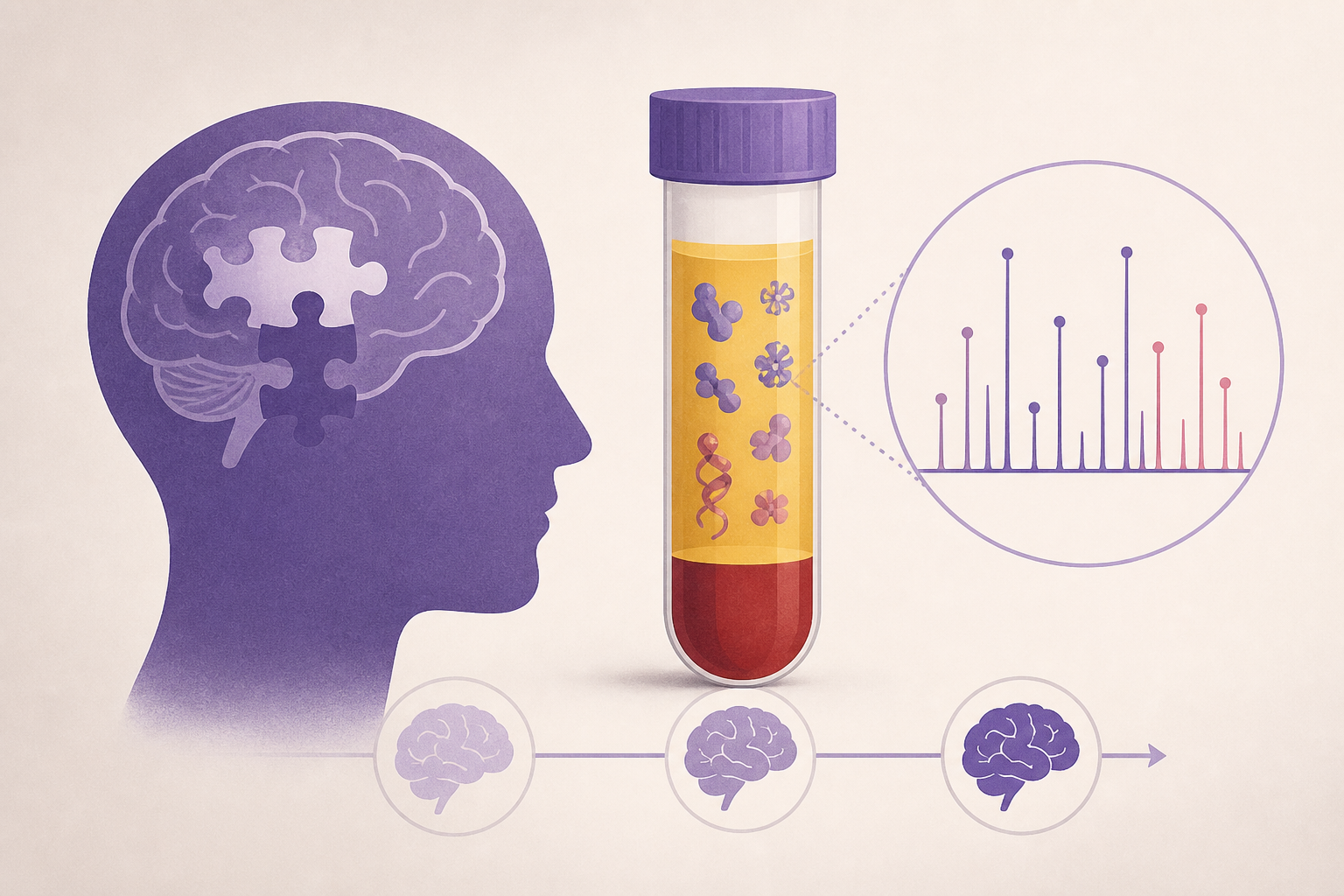
- The bPRIDE project profiled plasma proteins in 1,277 participants across AD, DLB, FTD, and controls, identifying disease-specific biomarkers and developing a 21-plex PEA plasma protein panel for differential diagnosis and AD staging, validated in an independent cohort of 722 individuals.
- Key plasma biomarkers for AD included predominantly downregulated proteins except GFAP, which was consistently increased; pathway analysis highlighted downregulation of autophagy-related pathways, with GFAP and NfL showing progressive changes along AD stages.
- For DLB, 71 dysregulated plasma proteins were identified, notably decreased integrins ITGAV and ITGAM, which, along with ERBB3, formed part of a biomarker panel achieving AUCs around 0.85 for distinguishing DLB from AD and controls; these markers also correlated with Lewy body pathology and were dysregulated in Parkinson’s disease.
- FTD-specific plasma biomarkers included increased NfL and OSM, with a multivariate panel including GFAP and NfL discriminating FTD from controls and AD with AUCs up to 0.92 and 0.83 respectively; however, heterogeneity within FTD subtypes may affect biomarker specificity.
- The study underscores the potential of plasma proteomics for improving differential diagnosis among dementia types, though limitations include clinical diagnosis reliance, mixed pathologies, and platform dependency; the validated 21-plex panel offers a promising tool for clinical and research applications.


