AI Image
Possible Roman Child's Coffin Included Toys and Lucky Charms
Gizmodo • • world
Key Points:
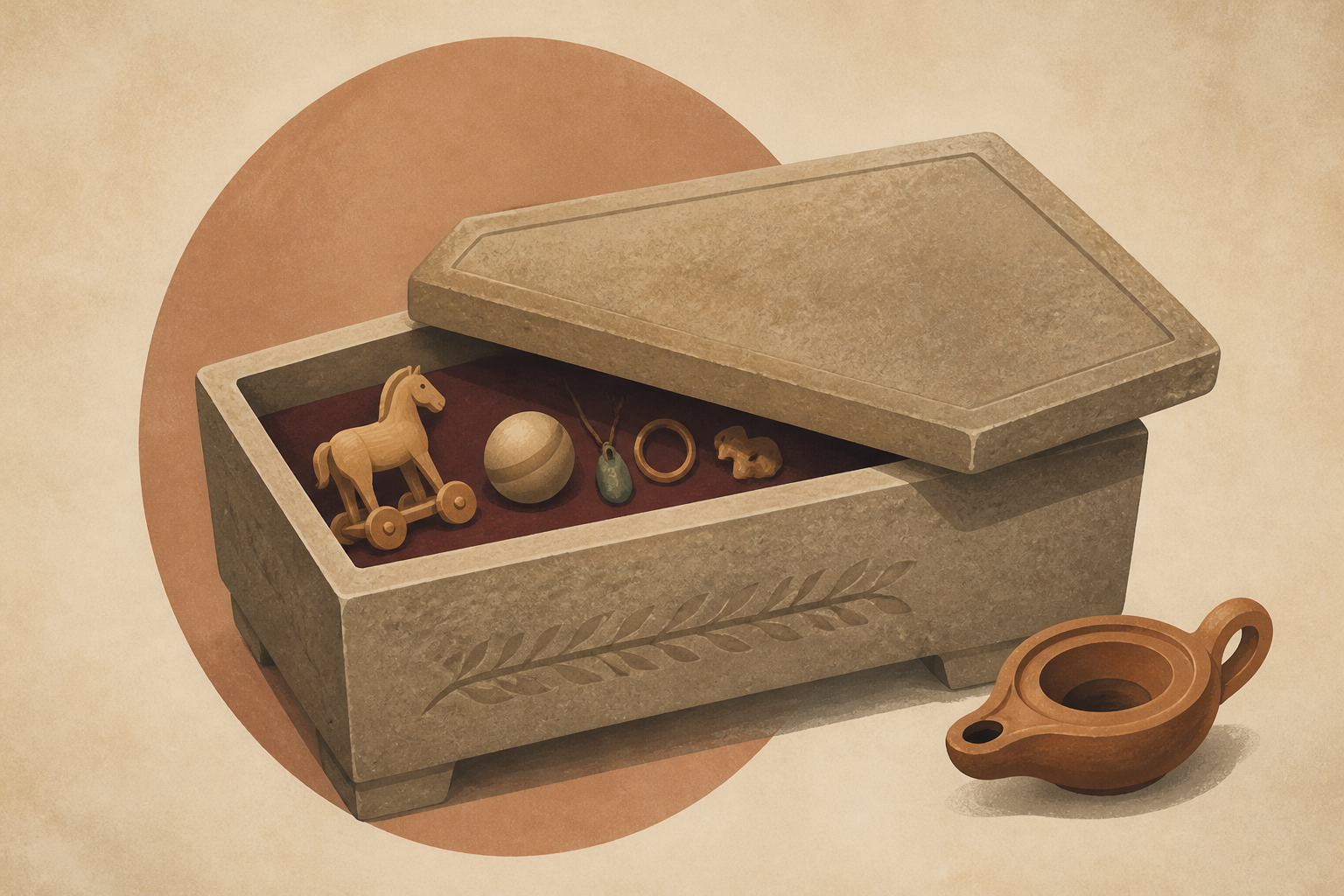
- Archaeologists uncovered a Roman-era sarcophagus near the ancient city of Tomis in southeastern Romania, containing rare grave goods such as clay toys, flower garlands, and bullae amulets typically given to male Roman children.
- The sarcophagus, dating from the 2nd to 3rd centuries CE, was found in intact condition, providing valuable insight into Roman funerary practices, especially regarding the burial of children.
- While Roman legal sources suggested limited public mourning for very young children, archaeological evidence indicates that infants often received elaborate funerary treatments, reflecting private grief within families.
- The discovery site lies along an ancient route connecting Tomis to Histria, potentially offering new information about the region's historical development during the Roman period.
- Researchers have yet to confirm whether the child’s remains survived, as the sarcophagus was only recently opened, but the presence of distinctive grave goods strongly suggests the burial of a young child whose life ended prematurely.


